Writing Beyond the Page: A Workshop With Eden Robinson
Reflections from Carleton English student Leo Richardson on their experience at the 2026 Ottawa Writers Festival
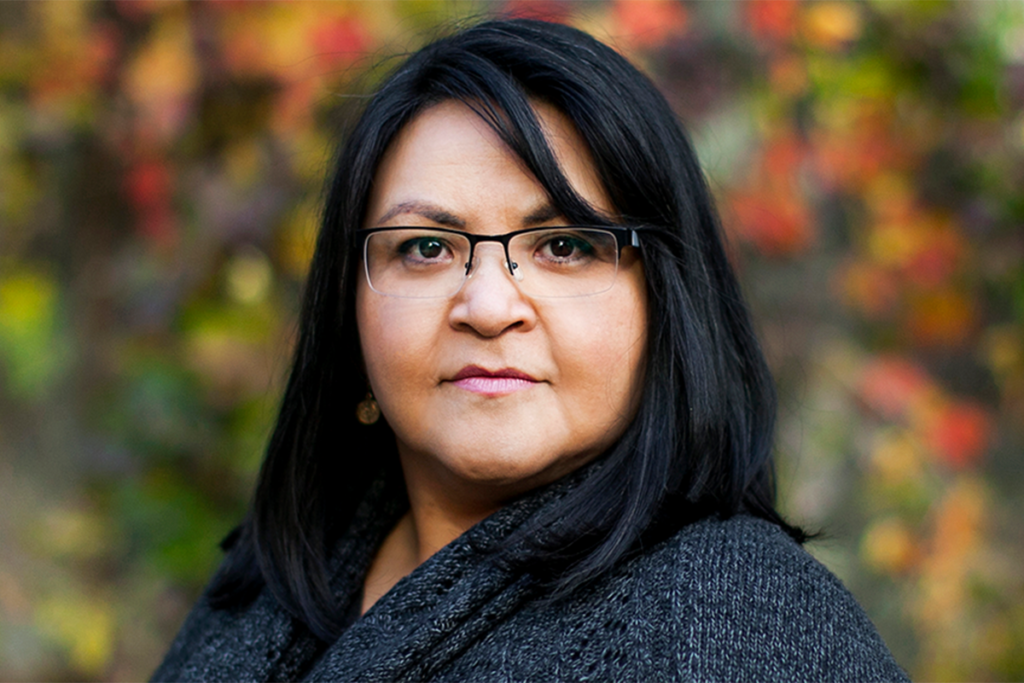
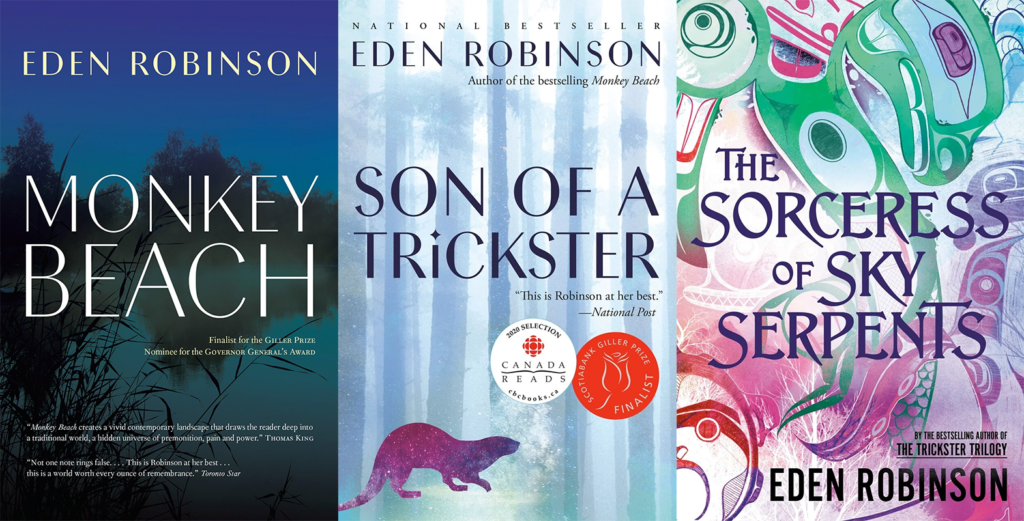
Eden Robinson is an accomplished author whose brilliant works of Gothic fiction capture the experiences of the Haisla Nation on Canada’s West Coast. Her first novel, Monkey Beach, won the Ethel Wilson Fiction Prize, and was shortlisted for the Giller Prize and the Governor General’s Award. Son of a Trickster, the first novel of her Trickster trilogy, was a Canada Reads finalist in 2020. Recently Eden Robinson visited Ottawa on her book tour for her latest novel, The Sorceress of Sky Serpents. I had the incredible opportunity to listen to her speak on a panel at the Ottawa Writer’s Festival, as well as in my 4th-year workshop class. In the intimate setting of the workshop, myself and my classmates were able to ask Robinson our questions about crafting stories, the publishing industry, and the responsibilities of story-tellers. Robinson’s insights into her writing process were illuminating for me, as an aspiring author and an English major in Carleton’s creative writing concentration.
Every writer knows the struggle of writer’s block, and has heard plenty of cliched advice on how to overcome it. Robinson’s advice, however, was fresh, humourful, and deeply helpful. One of my biggest take-aways from her visit was that the writing process doesn’t have to be linear and straightforward. Robinson doesn’t write each scene in the order that they will appear in the final novel. Instead, she flags emotionally difficult scenes to circle back to later, on a day when she feels strong enough to write them. Acknowledging her fear of writing certain challenging scenes helps her to overcome writer’s block.
Robinson also explained that sometimes the opening scene that she writes of a first draft is not necessarily where the final novel ends up starting. For example, she had originally intended for Karaoke, from her short story “Queen of the North”, to be the narrator of Monkey Beach. Once she started writing, however, she realized that she couldn’t maintain an entire novel with such an aggressive narrator. When a novel has stalled, a change of narrator can help.
Even if a certain character does not end up narrating your novel, writing from their perspective is still a useful exercise. When reading Robinson’s work, I was struck by how multi-dimensional and fully realized her characters were. In particular, when I read Monkey Beach the character Mick really came to life. Even though he’s flawed as a person — he’s a bit of a womanizer and an alcoholic — I couldn’t help but love him and root for him to get his happy ending. I asked Robinson for her advice on how to walk that fine line of writing a character who is flawed but also likeable. She responded that the key is to have empathy for all your characters, and even for your antagonists. Writing from the point of view of your antagonists can help develop a deeper understanding of them.
Furthermore, Robinson emphasized the importance of editing in the writing process. She writes drafts as long as 800 pages, then whittles them down. She edits her work by taking a novel apart and putting it back together again. For example, she described how she had printed out a draft, chopped it up into scenes, and pinned it to the walls and ceiling in concentric circles. This helped her to visually access the pacing of the novel. Her description of her editing process helped me to realize that cutting material from my own drafts is not a failure, because time spent writing is never wasted.
Robinson also touched on several important ethical topics related to writing. For instance, Robinson stressed the need for Indigenous data sovereignty, especially in the age of AI. Her books have been scraped by AI, against her will. Details about Haisla culture were combined with aspects of other cultures, and incorporated into the AI’s hallucinations. This is a horrifying appropriation of Indigenous knowledge, and yet another addition to the myriad reasons why writers must refuse the temptation to use AI in their work.
Additionally, I asked Robinson how she finds balance between writing for people from the Haisla Nation but also for a broader audience. She responded that she had had conversations within her community about what information should be shared with outsiders, as well as who gets to share this information. In these conversations, one community member asked her to reflect on the distinction between performing culture versus living it. As Robinson explains it, someone who performs their culture might show up to the feasts, but not help clean up after. If someone is going to speak for a community, then they should also be doing this work within the community. They should be committed to engaging with and learning about their culture, in order to strive for accuracy in their literary representations. Also, their writing should have a purpose which benefits the community. For example, the Sixties Scoop and residential schools are the underlying subtexts of Robinson’s writing. Therefore, her work has helped advocate for recognition of the trauma that colonialism has inflicted on Indigenous Peoples.
I would like to express my gratitude to the Ottawa Writer’s Festival, Carleton University, and my professor, David Stymeist, for providing me with the chance to learn from such a remarkable author. I was inspired by Robinson’s passion for her craft, or, as she calls it, her “random obsessiveness” about certain ideas. She shifted my perspective on my own writing, both in terms of its construction and its utility. As a young writer, it’s easy to succumb to the urge to be overly critical of your work — to expect it to be perfect on the first or second draft and to become discouraged when inevitably it is not. Robinson’s advice highlighted the necessity of creative flexibility throughout the writing process. Robinson also prompted me to contemplate my ethical duties as a writer, regarding my representations of other communities as well as my own. She expanded my conception of what it means to be a conscientious writer; a writer’s responsibilities extend beyond the words on the page.
About the author
Leo Richardson is an undergraduate student in the Department of English Language and Literature at Carleton University.