Arts and Social Sciences Fair 2026
Saturday, January 31 1:00-3:00 pm.
Carleton Dominion-Chalmers Centre
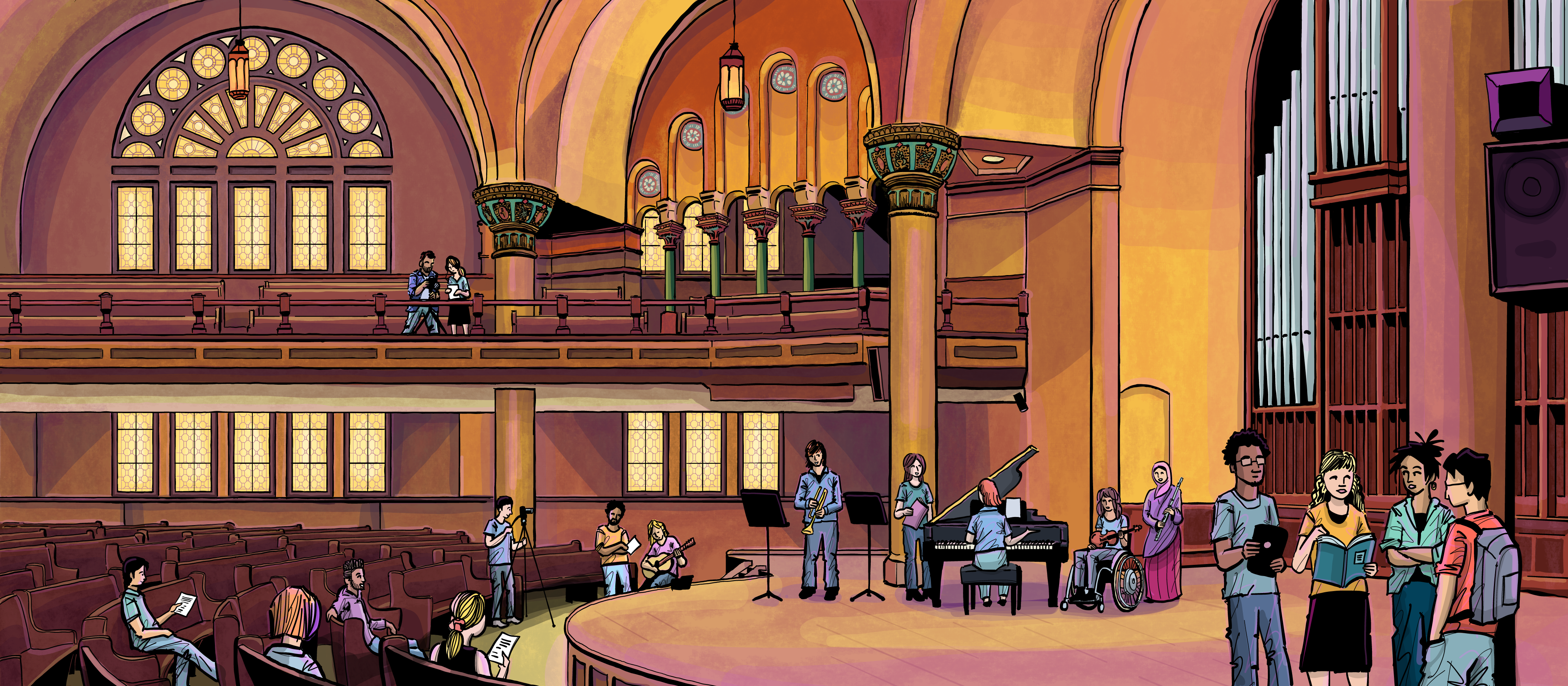
Our Arts and Social Sciences Fair brings students — current and future — and professors together at our downtown Arts, Performance and Learning Centre, the Carleton Dominion-Chalmers Centre, to celebrate what makes the Faculty of Arts and Social Sciences a great place to study. Attendees can pick-and-choose from panels, interactives, and informational booths to discover all the Arts and Social Sciences at Carleton University has to offer. Please register at the bottom of the page.
Table of Contents
| Time | Topic |
|---|---|
| 1:00 – 3:00 p.m. | Booths & Attractions are open to all participants throughout the entire event. |
| 1:15 – 1:35 p.m. | Welcome Remarks from Anne Bowker, Dean, Faculty of Arts and Social Sciences “Making the Most of Your Degree,” a mini lecture with Psychology Instructor Matt Sorley |
| 2:00 – 2:30 p.m. | “Learning That Works: Experiential Opportunities as Pathways to Career Success” student panel |
Participating Programs
| Affiliated Program (s) or Spaces | Title | Description |
|---|---|---|
| African Studies | Institute of African Studies | The only stand-alone program in African Studies in Canada is ideally suited for students who wish to enrich their training by developing advanced expertise in the field of African Studies through interdisciplinary dialogue and field research. It offers experiential learning opportunities in Africa or in organizations working on African issues in Canada’s capital region. The Institute provides students with in-depth knowledge of Africa to enable them to excel in careers in the public, private, or non-governmental sectors; or to continue post-graduate or professional degrees. The traditional classes are complemented with a study abroad course taught by a Carleton faculty member in an African country every summer, as well as an experiential placement course that enables students to undertake research and other academic activities at an organization (typically based in Ottawa) working in Africa. |
| Anthropology and Sociology | Sociology and Anthropology: Engaging the Community and the Wider World | Are you curious about how society works, and why gender, race and class are such persistent ways in which society is structured? Are you interested in cultures in other parts of the world? Do you want to develop a richer understanding of the world in order to improve society? Sociology and anthropology focus on big questions of social inequality, social change, climate change and colonialism in local and global societies. In sociology and anthropology courses students combine academic skills with a range of experiential learning opportunities to develop a richer understanding of society and influence social change. Experiential learning opportunities include courses in community-based sociology which focus on community-identified projects and working with community groups, anthropology courses in ethnographic research, and courses that focus on multi-media creative projects, and work placements in a variety of community organizations. |
| Applied Linguistics and Discourse Studies | Language in practice, meaning in action, where language gets real! | What is the difference between an applied linguist, a discourse analyst, and a theoretical Linguist? Explore how an Instagram feed dispels the myths associated with language teaching and learning, and reproduces ideologies in potentially harmful ways. Using social media as a tool, explore how language is central to the way we identify ourselves and how we think about the world through some of the following themes: 2SLGBTQIA+ rights, beliefs about language learning, teaching, and assessment, colonialized teaching methods, language and cultural challenges faced by immigrants and refugees, language and linguistic human rights, identity and the language learner, and AI literacy. |
| Archives & Special Collections, MacOdrum Library | Pages & Provenance: Archives, Book Arts and Special Collections | TBA |
| Art History and History and Theory of Architecture | Looking at the World | We live in a world made by humans. We’re surrounded by buildings, artworks, artefacts and places designed and decorated to express who we are and whom we aspire to be. Our students are interested in how our imaginations and experiences shape the world we create, and how that world in turn re-shapes us. They go on to work in places like architectural studios, museums, planning departments, art galleries, educational institutions, and more. Talk to us about our programs, our courses, our practicum placements, and opportunities for study abroad. |
| Centre for Initiatives in Education | The Centre for Initiatives in Education invites you to visit our booth and explore two supportive pathways to university success | Learn how the Enriched Support Program (ESP) offers a unique first-year experience with for-credit courses, small workshops and academic coaching. Meet our team and discover how ESP builds confidence, community, and a clear path into a Carleton degree. Also, learn about the summer course “Academic Prep: How to Be a University Student.” Whether you’re just starting or already in university, this summer course helps strengthen writing, critical thinking and study strategies. |
| Childhood and Youth Studies | Scroll down to “Institute of Interdisciplinary Studies” | |
| Cognitive Science | ACE Lab Demo | Meet members of Professor Chris Herdman’s Advanced Cognitive Engineering (ACE) Laboratory, who are available to discuss the many facets of the Cognitive Science program while offering a chance to try out a multi-monitor driving simulator, be a passenger in virtual reality and experience a portable mixed reality demo (Oculus Quest headset). |
| Co-operative Education | The Carleton Co-op Advantage | Co-operative Education allows students to combine traditional, in-class education with hands-on workplace experience. Co-op students alternate study terms at Carleton with four, eight, twelve or sixteen month work terms. Co-op helps students develop key employability skills, explore career options and tangible workplace experience, giving students a competitive edge in the job market after graduation. |
| Carleton University Art Gallery | CUAG: Carleton’s On-Campus Art Gallery | Check out the Carleton University Art Gallery’s booth! Pick up some information about the gallery’s current art exhibitions, a free catalogue and a treat! And, chat with the friendly gallery staff members. |
| Carleton University Mental Health and Wellness | Wellness at Carleton University | Discover the tools and resources Carleton offers to help understand, manage and improve your mental health and wellness while at university. You can also enjoy a visit with Therapy Dog Jazz! |
| English | Read. Write. Inspire. | In our department, we study literature, language, and literary culture to learn about our past and envision possible futures. We also offer a Creative Writing Concentration, a hands-on Book Arts Lab, Co-op, Digital Humanities, Environmental Humanities, a student-run literary magazine and more! Our small, supportive classes are taught by award-winning professors who take pride in the personal attention they offer students. Come meet professors and current students, check out books written by our community members, and pick up some bookmarks for your next great read! |
| Environmental Studies | Scroll down to “Geography and Environmental Studies” | |
| Feminist Institute of Social Transformation | When Justice Meets Tech: Virtual Worlds, Real Barriers | Interested in social justice organizing? How about technology and organizing? Want to learn how you can marry the two? Come and learn from Professors Manjeet Birk and Fady Shanouda, leaders in Critical Race Studies and Critical Disability Studies at the Feminist Institute of Social Transformation. Travel to India through Carleton’s first fully produced in-house virtual reality experience, Home, exploring themes of belonging, citizenship, and generations. Unpack the structural limitations of gendered and inaccessible bathrooms via Dr. Shanouda’s third-year class project, CU Access Washrooms, where students audited all 300+ bathrooms on campus! |
| Film Studies | We Love Movies | Find out what makes Film Studies at Carleton a unique destination for those passionate about film. Learn about our small class sizes and renowned professors, the diverse courses in global cinema, video games, Indigenous filmmaking, documentary and more. Ask us about opportunities to work for local film festivals and production companies. |
| French | The Bilingual Advantage: French at Carleton | Did you study French in High School? Or, did you never learn French but are curious to discover the language and new cultures? The Department of French offers a range of programs to practice and better your French (both oral and written French), and also offers courses about French literature and French linguistics to explore social issues in French-speaking contexts around the world. Our programs range from French as a second language courses to a minor or a major in French, with something to offer for everyone: new learners, advanced speakers, future French teachers or future government employees that want to improve their bilingualism. Our department is a friendly environment where you can benefit from free language support services, and our grant-holding professors offer students several opportunities to discover the world of academic research through research assistantships. |
| General Studies | Explore the BA General Studies | The BA General Studies at Carleton University is a flexible 15.0 credit degree that can be completed entirely online or through a mix of online and in-person courses. Students select two breadth areas (Culture & Communications, Humanities, Social Sciences), and use the remaining credits as free electives. This flexibility allows learners to tailor the program to their interests. |
| Geography and Environmental Studies | Geography is Everything, and Everything is Geography: Why Geography and Environmental Studies Matter. | Studying Geography and Environmental and Climate Change Studies is crucial to understanding today’s world and its major issues. A degree in Geography, Geomatics, or Environmental and Climate Change Studies helps you to understand what is happening globally and also in the places where you live. Come and find out what exciting things geographers are doing to help address and resolve global and local issues like climate change, urban sprawl, regional conflict, social inequality, resource exploitation, the spread of disease, and more. Perhaps you have never realized that these are areas of geographical research, that “geography is everything and everything is geography,” and that geography matters! |
| Greek and Roman Studies and Archaeology | Greek and Roman Studies and Archaeology | Why are people so interested in the ancient Greeks and Romans? They are at the very heart of our culture and are a constant, pervasive part of our lives. Their legacy includes elements of our democratic and legal systems, literary themes still inspiring modern storytelling, athletics, fundamental parts of the English and French languages and even the modern calendar. In Greek and Roman Studies we explore the history, mythology, language, religion, social and economic life, art, architecture, and archaeology of the ancient Mediterranean. We also offer study abroad travel courses and archaeological fieldwork experiences. |
| History and Theory of Architecture | Scroll up to “Art History and History and Theory of Architecture” | |
| Human Rights and Social Justice | Scroll down to “Institute of Interdisciplinary Studies” | |
| Humanities | Think Deeply, Live Fully: the Bachelor of Humanities (Great Books) Experience at Carleton | Come learn about the Bachelor of Humanities, Carleton University’s Great Books program. Humanities students read the world’s most influential books and explore the world’s most exciting ideas in philosophy, literature, religion, history, art, music and political theory. They study everything from Plato to Gandhi, from Medieval architecture to the Tao Te Ching, and from Italian Opera to contemporary film. The Bachelor of Humanities program delivers a comprehensive and structured liberal arts education, and yet is flexible enough to be combined with another major – for example, in Journalism, Biology, or English. And its small size encourages a strong sense of community. |
| Indigenous Studies | Scroll down to “Institute of Interdisciplinary Studies” | |
| Interdisciplinary Studies | Education for Personal Empowerment, Community Building and Social Justice | The Institute of Interdisciplinary Studies has three different programs: 1) Childhood and Youth Studies, 2) Indigenous Studies and 3) Human Rights and Social Justice. Each of these programs is designed to offer students multiple ways of understanding important issues and their roles and responsibilities as powerful agents who can achieve change. Our faculty draw not only from their scholarly expertise but from their different lived experiences to offer students a university education grounded in real world issues, and strategies for cultivating change to achieve a world that is more democratic and socially just. Our programs prepare students for employment in multiple fields including: early childhood education, not-for profit organizations, Indigenous organizations, government, law, the arts, museums and galleries, research institutes and think-tanks, international development, social services and many more. |
| Linguistics | What Does the Sound of Your Name Look Like? | Explore how linguists analyze speech, by recording your name and learning what each of its sounds look like on a waveform and spectrogram. These tools provide visual representations of speech signals and play an important role in psycholinguistics and understanding communication differences. |
| Modern Languages | Be a Polyglot: Discover, Speak, Connect! | Why settle for one language when you can explore a world of possibilities? Dive into new languages, rekindle your love for the ones you’ve started, and unlock the confidence to connect globally. Learning a language isn’t just about words—it’s about opening doors: studying abroad for a term, landing an exciting job overseas, or simply making new friends across cultures. The opportunities are endless when you speak more than one language. Ready to start your adventure? |
| Music | Carleton Music | Discover the diversity and depth of Carleton Music through discussion and interactive musical demonstrations. |
| Philosophy | Philosophy and the Art of Living | Professor Kyla Bruff and current students will be available to talk about different approaches to living well, engage in ‘thought experiments,’ and discuss all facets of the Philosophy program, including the Philosophy Honours, Combined Honours and Minor programs, as well as the concentration in Philosophy, Ethics, and Public Affairs. Watch philosophy clips with us and come laugh at intellectual memes! Find out more about our lively community, including information about CUPS’ activities (Carleton University Philosophy Society), the student-run blog Begging the Question, and departmental events. Learn about our Professors’ research and check out their published books. Stop by, share your thoughts, and ask us your philosophical questions! |
| Psychology | Being Mindful of Psychology | The Department of Psychology’s booth will be staffed by faculty and current students so that you can learn about the program from various perspectives. The booth will feature hands-on activities, and you can also preview some examples of capstone projects that students in our program are working towards in their final year. Learn how students customize their program based on their interests, along with information on gaining career and research experience, and the different concentrations that are available such as Health and Forensic Psychology. |
| Psycholinguistics and Communication Differences | Scroll up to “Linguistics” | TBA |
| Religion | Studying Religion as a Human Phenomenon | In the Religion program, we approach religion as a cultural phenomenon that has influenced art, politics, philosophy, and more throughout human history. Explore how myths, rituals, religious art, and religious communities have shaped and continue to shape the worldviews of billions. Understanding religion is a key area of cultural competency for anyone dwelling in a multicultural country like Canada. |
| Sociology | Scroll up to “Anthropology and Sociology” | |
| Undeclared | Explore the BA Undeclared | For new students, deciding on your primary area of study can be an overwhelming process. With all the degree programs and majors to choose from, how do you decide which major you’d like to declare? The Bachelor of Arts Undeclared is a great way to start your university career while giving yourself room to explore the variety of programs and majors that Carleton offers. |
Getting to the Event
Carleton Dominion-Chalmers Centre (CDCC) is located at 290 Lisgar Street in Ottawa, Ontario. Click here for more details about visiting the CDCC.
If you are interested in participating in a campus tour of Carleton University, we encourage you to register for the 10:00 a.m. (ET) tour on January 31 (the campus tour will include a complimentary lunch in our residence dining hall). A shuttle will be available to take you to the Carleton Dominion-Chalmers Centre following lunch.
If you do not want to take a campus tour and would only like to attend the Fair, please note that paid city parking is available at the Carleton Dominion-Chalmers Centre. Overflow parking (paid, street or otherwise) is available nearby along Cooper Street, Lisgar Street, and O’Connor Street. Click here for more details about parking at the CDCC.
If you would like to take advantage of free parking on Carleton’s main campus, please park in any visitor lot on campus, and meet with our representative in front of Pigiarvik ᐱᒋᐊᕐᕕᒃ (formerly Robertson Hall) on University Drive by no later than 12:25 p.m. (ET). A shuttle will be available to take you to the Carleton Dominion-Chalmers Centre. The shuttle will depart at 12:35 p.m. (ET). The shuttle will depart from the Carleton Dominion-Chalmers Centre at 3:00p.m. to return to Carleton University.
Registration
Prospective Student Registration
Are you a prospective Carleton student interested in the Arts and Social Sciences? If so, please click the button below to register.
Current Student Registration
Are you currently a student at Carleton University? If so, please click the button below to register.