Program Spotlight: Sociology and Anthropology
Thursday, November 26, 2026 from 6:30 pm to 8:30 pm
- In-Person event
- A720, Loeb Building, Carleton University
- 1125 Colonel By Drive, Ottawa, ON, K1S 5B6
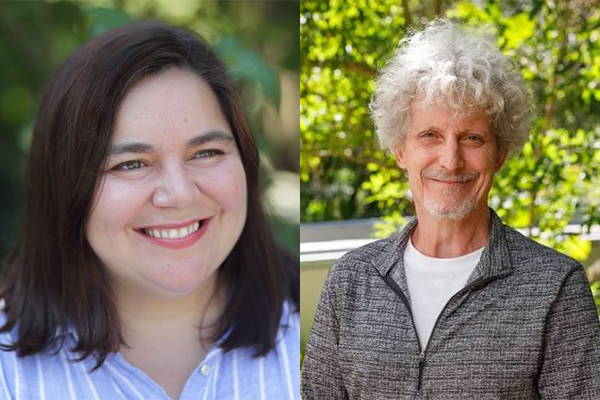
Profs. Tonya Davidson and Blair Rutherford from the Department of Sociology and Anthropology are hosting two workshops designed to help high school students discover how sociologists and anthropologists study the world around us.
This event will include a panel discussion with current undergraduate students and a tour of the Loeb Building led by Prof. Davidson.
Visit Carleton360 to register to attend this program spotlight event.
An Introduction to Sociology with Prof. Tonya Davidson
One of the central tasks of sociologists is to look at aspects of society that we take-for-granted as normal, and ask questions about and research these phenomena. An attention to the everyday world is what makes sociology so exciting, broad-ranging, and widely applicable.
In this workshop, we will begin with two key ideas of sociologist C. Wright Mills:
- Thinking sociologically means understanding the relationship between “personal troubles” and “public issues.” Take, for example, the very personal trouble of having a good night’s sleep. Sleep—a time when one is unconscious—is imagined to be the one time when an individual is freed from the constraints and norms of society. Access to good sleep—eight hours of deep, cozy slumber—is often presented to be the responsibility of individuals, a condition that can be achieved by engaging in what psychologists refer to as sleep hygiene. Insomnia, likewise, is imagined as an individual problem. Yet, yet… sleep is incredibly social. When (at a set bedtime), where (in a bed, on a futon, under the stars), how (well, restlessly), are all shaped by historic, and cultural conventions. Here, we will collectively trouble over some pervasive and vexing “personal troubles” of our time: insomnia, vaping, social media.
- Sociologists must think about the relationship between personal biographies and history. We will engage in a game of “timelines,” putting historic events in order, and then align key moments in the lives of different generations (birth, young adulthood), along this timeline. Through this activity, we can begin to make sense of how different generations hold on to different beliefs and practices. Why is there an expression “OK Boomer”? or the so-called “Gen Z stare”?
Our beginning sociological musings will help to answer these questions.
An Introduction to Anthropology with Prof. Blair Rutherford
Anthropologists pursue a similar task to sociologists in providing a new perspective on everyday life around the world through a combined strategy of defamiliarization and recontextualizing in wider historical and translocal dynamics.
In this workshop, we will help you develop this anthropological perspective by defamiliarizing everyday ideas and practices. Drawing on examples that range from serious topics such as race to the seemingly innocuous ones such as pets, we will show through discussion and exercises how anthropologists examine these parts of everyday life as a product of meaning-making, informed by cultural understandings (the meanings different humans give to everything) as well as relations between different people and institutions that themselves are shaped by local, translocal, and historical dynamics.
In so doing, participants will hone their ability to recognize how so much of human life is driven by cultural assumptions and social and historical contexts; in other words, participants will be developing an anthropological perspective.