Building Futures Through African Indigenous Knowledge
Carleton researcher Samuel Ojo Oloruntoba is leading an international effort to re-centre Indigenous knowledge systems in entrepreneurship and development initiatives across Africa.
By Nick Ward
Across Africa, Indigenous knowledge systems carry generations of lived experience, ecological understanding and collective wisdom.
But when it comes to development, those ways of knowing have been sidelined and marginalized in favour of imported models that place decision-making power outside the communities they are meant to serve.
A major Carleton-led international research initiative is working to change that.
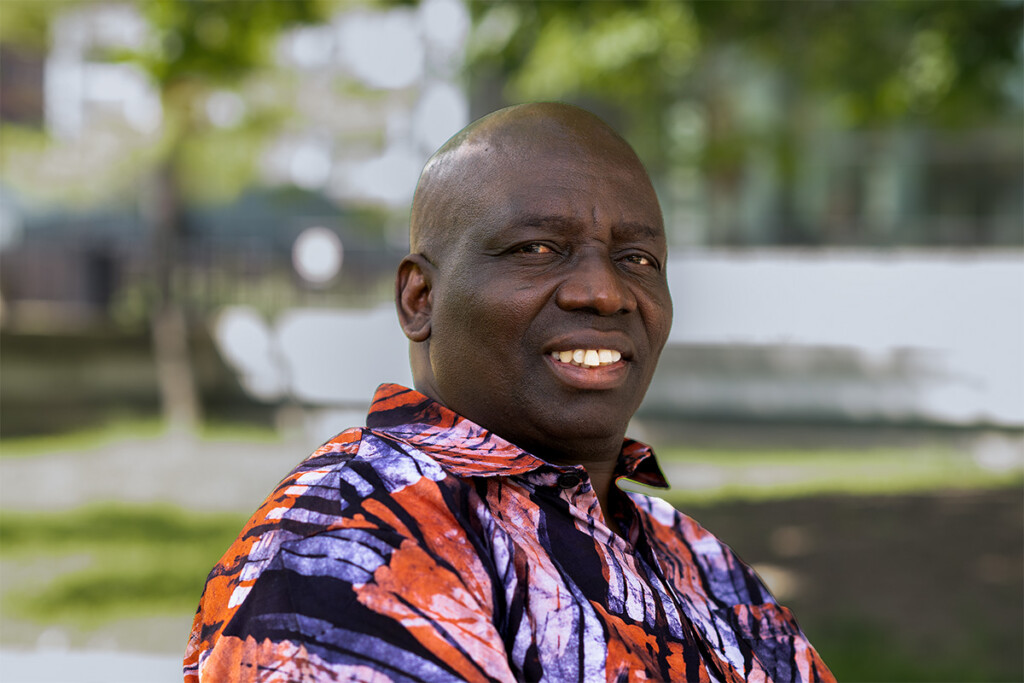
From 2023 to 2026, researchers, local partners and students across Kenya, Nigeria, South Africa, Tanzania and Uganda have been working together through a community-based project led by Dr. Samuel Ojo Oloruntoba, assistant professor in Carleton University’s Institute of African Studies and founder of the Africa Indigenous Knowledge Research Network (AIKRN).
Supported by the Mastercard Foundation, the “Unlocking Sustainable Solutions for Youth Employment and Entrepreneurship through Indigenous Knowledge in Africa” project brings together eight research working groups examining how Indigenous knowledge systems shape youth livelihoods and entrepreneurship in areas such as agriculture, health, ecotourism, cultural entrepreneurship, climate adaptation and environmental sustainability.
At the centre of this work is the simple but powerful methodological premise that communities are not simply participants in research, but knowledge holders in their own right. For Oloruntoba, that conviction is shaped as much by his training as a critical political economist as it is by his lived experience witnessing the repeated failures of many postcolonial development programs to address basic challenges around poverty, health and employment in Africa.
“Because I was personally affected by these challenges, I felt the need to look back and ask the question: What types of knowledge existed in Africa before colonialism and how can these forms of knowledge be studied, recorded, disseminated and recentred in ways that they can be applied to solve the challenges facing the people?”
“Historically, we know that Africans have lived and achieved great things, such as building empires and kingdoms, using their own knowledge systems before the colonial intrusion.”
That vision is the heartbeat of AIKRN’s work: re-centering African Indigenous knowledge not as an artifact of history, but as a living framework for innovation, resilience and sustainable economic development.
Promoting Knowledge Sovereignty in Africa
The project responds to a gap in what Oloruntoba calls “epistemic freedom and knowledge sovereignty.”
In applied terms, that means foregrounding the knowledge, practices and lived expertise of communities whose perspectives have too often been excluded from development policy, university curricula and formal research systems. It also means having community members and holders of knowledge as co-creators of policies and programs that have direct effects on their lives.
“Indigenous knowledge is critical to conversations around youth entrepreneurship, sustainability and development, because it contains the context-specific resources needed to address the challenges facing the communities across various sectors,” he says.
Valuing that knowledge, he continues, gives community members a central role in decisions that affect their lives and futures.
“As the African saying goes, it is impossible to barb someone’s hair in his or her absence.”
That principle of community agency is increasingly shaping how funders and development partners think about consequential and sustainable change.
For example, Oloruntoba says organizations like the Mastercard Foundation are recognizing the limitations of development strategies created without meaningful input from those most affected.
“For too long, development strategies and interventions in Africa have been designed from outside,” he says. “Funders are realizing that having the targeted beneficiaries at the table, bringing in their knowledges, ideas and perspectives can help to provide sustainable solutions to both immediate and long-term problems.”
Expanding Global Research Networks
Through AIKRN alone, Carleton now helps anchor a network of more than 750 participants across 40 countries, linking scholars, students, Indigenous communities and institutional partners in Africa and Canada. For Oloruntoba, that growing network reflects an emerging future: one where Carleton serves not simply as a site of research, but as a convening space for global collaboration, knowledge exchange and community-centred scholarship.
“Carleton University has provided a very strong support base for me to do this work,” he says, pointing to administrative, technical and institutional support, as well as the university’s growing commitment to international partnerships.
The project also aligns closely with Carleton’s renewed focus on expanding its research and educational partnerships across Africa through collaborations with universities in South Africa, Ghana and Uganda and by serving as the Canadian anchor institution for the South Africa-Canada Universities Network (SACUN).
For Oloruntoba, that alignment creates opportunities not only for research, but for the wider university community. He says Carleton’s growing network of partnerships and memoranda of understanding with African institutions could create pathways for new faculty collaborations, joint academic programs and international student recruitment.
That momentum will continue this summer when Carleton hosts the 2nd Annual International Conference of the Africa Indigenous Knowledge Research Network (AIKRN) from August 25 to 27. Held in a hybrid format at Carleton, the conference will bring together over 200 scholars, students, community members and knowledge holders from around the world to explore this year’s theme: “Indigenous Knowledge Systems and Transformative Wisdom: International Perspectives on Indigenous Economies, Entrepreneurship, and Sustainable Livelihoods.”
Mentorship, Scholarship and Belonging
For students and early career scholars, AIKRN has also become a space for mentorship, publishing, fieldwork, conferences and opportunities for international research collaboration.
Sika Kudjawu, a Carleton PhD student researcher and development professional involved with the project, says the work reinforced the importance of moving beyond extractive models of research.
“What stood out was the challenge of translating theory into practice, particularly in engaging research participants as members of a collective research community rather than as subjects of study,” she says.
Kudjawu explains that researchers must remain attentive to positionality, power and accountability.
“Researchers have a responsibility to portray participants’ experiences with nuance, dignity and accountability.”
For Chikezirim Nwoke, who recently completed his PhD in Anthropology at Carleton and received the Governor General’s Gold Medal, the network offered an opportunity to deepen his own work on youth livelihoods and empowerment while connecting with a broader scholarly community.
“The knowledge mobilization activities, research papers, podcasts, documentaries and reports we produced all complemented my own research,” he says.
Nwoke also points to Carleton’s growing role as a centre for African and Black-centred scholarship.
“Carleton is exceptionally well positioned, both geographically and intellectually, as a site for knowledge production on development studies, livelihoods and policy. It is also an emerging hub for African and Black-centric scholarship.”
That environment, he adds, has made a real difference.
“The support structures I encountered at Carleton ensured that these challenges were addressed in ways that never left me feeling out of place. Indeed, feeling that I belonged made all the difference.”
That sense of belonging also shaped Joy Karinge’s path to Carleton.
A PhD student in Anthropology and African Studies, Karinge came to Carleton after searching for an institution in Canada with a dedicated African Studies unit. She found that in Carleton’s Institute of African Studies — the only institute of its kind in Canada — and in Oloruntoba’s mentorship.
“I think it’s rare to find a professor that is both brilliant and kind,” she says. “He has really created space at the table.”
Working as his research assistant and now as an associate editor on an oncoming book project on comparative Indigenous entrepreneurship and innovation, Karinge credits that mentorship with helping her think beyond academic outputs and toward the wider social and policy relevance of research.
Natacha Ngoie, project administrator with AIKRN and a Carleton graduate in Environmental and Climate Change Studies, says one of the project’s greatest strengths is its ability to connect people and perspectives across disciplines, institutions and countries.
“The project recognizes that environmental, social and economic challenges are all interconnected and cannot be addressed in isolation,” she says. “It creates opportunities for meaningful knowledge exchange and demonstrates that sustainable development is most effective when different knowledge systems, lived experiences and voices are valued and included in the conversation.”
And while her role has been primarily administrative, Ngoie says she has never felt removed from the work itself. “There is a strong sense of shared purpose among everyone involved,” she says. “Being part of a network where researchers, students, community members and practitioners learn from one another has been one of the most rewarding aspects of my experience with AIKRN.”
The Africa Indigenous Knowledge Research Network (AIKRN)
The Africa Indigenous Knowledge Research Network is generating a growing body of research outputs, including podcasts and videos, policy briefs, conference papers and blogs exploring Indigenous knowledge systems, entrepreneurship and sustainable development across Africa.
From Research to Policy
Earlier this year, Oloruntoba and Carleton colleague Dr. James Milner were awarded $1.8 million USD from the Carnegie Corporation of New York to support a new international project focused on advancing indigenous and refugee knowledge on migration in Africa. The project seeks to co-create knowledge with community partners to foster peacebuilding and cooperation in border and refugee communities across Africa. This new project builds directly on relationships and networks established through AIKRN, the Local Engagement Refugee Research Network (LERRN) and the IDRC Research Chairs Network on Forced Displacement.
Together, these initiatives point to a growing area of strength for Carleton: that meaningful solutions emerge when research is globally connected, and community engaged.
Oloruntoba maintains that the goal remains straightforward.
“We envisage a change in mindset among the youths about the value of Indigenous knowledge and its usefulness in fostering sustainable livelihood through job creation, innovation, entrepreneurship, inclusive and accountable governance, and better management of the environment.”
In that vision, Indigenous knowledge remains a living, evolving force, shaping not only how communities endure, but how they imagine and build their futures.