Carleton History Alum Pens Biography of Hockey Star and Soldier Scotty Davidson
Matthew Walthert (BA ‘07) examines the life of Toronto’s first Stanley Cup captain and the disputed accounts of his military service in a new book.
Scotty Davidson could skate, score and played with an undeniable edge. A defensively responsible forward who wouldn’t hesitate to drop the gloves, he was the captain of the first Toronto hockey team to win the Stanley Cup.
He then volunteered for the Canadian Expeditionary Force and earned the admiration of the men who served alongside him.
Tragically, like so many other Canadians, he never returned from the Western Front.
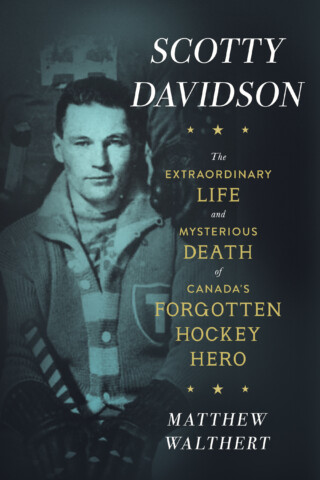
This is the kind of distinction that should secure a player’s place in the memory of a city, particularly one whose hockey lore is so familiar to the rest of the country. Yet even devoted Toronto fans could be forgiven for not recognizing the name of their city’s first Stanley Cup captain.
For Carleton University history graduate Matthew Walthert, this gap presented a compelling research problem, one that drew on his intellectual training and his longstanding personal interests in hockey and military history. Here was a player whose life connected two extensively documented areas of Canada’s past, yet whose own story remained surprisingly unsettled and little known.
“I was looking for a story that hadn’t been told before and I wanted a story that blended hockey and military history,” he explains. “As soon as I started reading the few short pieces that had been written about Scotty Davidson, I saw errors and things that didn’t make sense.”
What began as an article grew into a biography. Published by Sutherland House, Walthert’s Scotty Davidson reconstructs the life of a hockey star and soldier, offering readers a fascinating analysis into Canada’s often difficult past and examining the distance between the stories a country celebrates and the lives behind them.
Ice Hockey, Military Service and Canadian Identity
Toronto hockey has long been part of how Canadians understand themselves, a presence that extends well beyond arena walls.
We buy our morning coffee from a chain named after a legendary Maple Leafs defenceman. The team’s fortunes command national newspaper headlines, lead sports broadcasts and occupy a considerable share of the country’s sporting, and frankly, its general conversation.
Hockey also provides a familiar setting in which many Canadians tell stories about themselves and their towns, celebrate the glory of both ruggedness and grace, and honour physical courage and sacrifice. Those parallel ideals, have made the game a fitting place for military remembrance.
Generations of viewers will recall former coach and since-dismissed broadcaster Don Cherry delivering teary-eyed, voice-cracking tributes to Canadian servicemen and women on Coach’s Corner, just before the second-period puck drop. For decades, within the familiar rituals of Hockey Night in Canada, the game became an occasion to acknowledge those who had served and those still serving abroad.
Davidson, who belonged to both histories, would seem an obvious figure to remember, for a country so invested in both hockey and its connections to military service.
Part of the explanation behind this curious omission lies in the administrative parameters of hockey history. Davidson’s final season was 1913–14, before the National Hockey League existed and before Toronto’s team became the ‘Maple Leafs.’ Legal disputes and franchise distinctions have garbled his place in the city’s hockey lineage, leaving Davidson outside the history most fans know and celebrate.
The story of his military service suffered a different kind of distortion. Although those who served alongside him knew the circumstances of his death, subsequent accounts became muddled by competing stories, myths and errors.
From the Rink to the Front Line
Davidson’s hockey career began with considerable promise. He captained Kingston to consecutive junior championships, played a year in Calgary and returned to Ontario to play pro in Toronto. During the Stanley Cup season, he led his team in scoring. By all measures and records of his era, Davidson was a star.
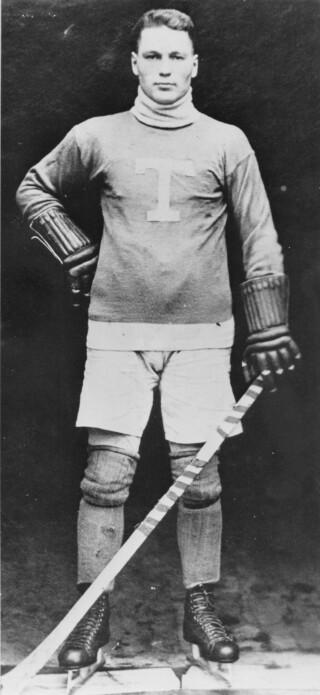
Walthert’s biography also explains that leadership came intuitively. From a working-class family, Davidson was as comfortable chopping it up with his teammates as he was socializing with the wealthier men who owned and managed their clubs. His natural ability to earn people’s confidence followed him into military service where he volunteered for the infantry and was selected to serve as a scout and grenadier, two particularly dangerous assignments. And although he was not an officer, fellow soldiers respected him, and some believed his bravery deserved the Victoria Cross.
Investigating that claim required Walthert to look beyond the accounts that had come to define Davidson’s story.
“My biggest find was at the national archives, stumbling across the medal nominations from the three main battles Davidson was involved in: 2nd Ypres, Festubert and Givenchy. Most of the nominations have been lost, but somehow these survived and they helped piece together what happened with Davidson’s supposed Victoria Cross, but I don’t want to give too much away here.”
Contemporary newspapers yielded another revealing discovery. Letters from men who had served alongside Davidson suggested that the circumstances of his death, so muddled in later accounts, had once been widely understood.
“The most surprising thing to me was that everyone at the time, Davidson’s family, friends and fellow soldiers, knew what had happened to him,” Walthert says.
“In the book, I try to unpack where the different stories came from and how they proliferated, but I don’t know if we’ll ever have the full picture.”
Finding Mentorship in Carleton’s Department of History
Walthert’s mandate was to establish how an account known to Davidson’s contemporaries had become so obscured by subsequent retellings. That meant tracing claims to their origins, weighing conflicting evidence and recognizing where repetition had come to stand in for proof.
Walthert began developing those habits in the Department of History at Carleton. He arrived at university without a fixed career plan, knowing that he loved history and writing, and was struck by the personal attention his professors gave to helping him develop those interests into scholarly skills.

“I still remember professors I had in my first year like Dr. Paul Nelles, Dr. Jennifer Evans, Dr. Collett Tracey and Dr. Carter Elwood taking the time to make sure we understood what was expected for university-level writing, how to use the library and answering individual questions whenever I had them.”
Among those who helped shape Walthert’s development as a historian, Dr. Tim Cook had the greatest influence. Cook taught at Carleton while working at the Canadian War Museum and maintaining a demanding publishing schedule. Walthert had initially been more interested in the Second World War, but Cook’s teaching drew him into the history of the First.
In Cook’s fourth-year Honours seminar, Walthert researched the largely overlooked Battle of Hill 70. Cook helped him navigate the War Museum and national archives, bringing a working historian’s familiarity with both institutions to an undergraduate project. The paper was eventually published in Canadian Military History.
The seminar also marked the beginning of an influential relationship that would endure well beyond Walthert’s time at Carleton.
“Tim and I stayed in touch after I graduated and he became a mentor and a friend,” Walthert says.
Cook read the Davidson book proposal, offered suggestions and encouraged Walthert to contact publisher Ken Whyte at Sutherland House. Years after helping an undergraduate find his way through the archives, Cook was helping that same historian find a publisher for his first book.
Cook died in 2025, before he could see Scotty Davidson finished, but his guidance had helped bring it into being.
“I’m sorry he never got to see the finished product, but the whole book is a testament to the care and mentorship he offered to so many young historians and the bond we forged at Carleton,” Walthert says.
“If Canadians Don’t Tell Our Own Stories, No One Else Will”
That grounding in historical research shaped Walthert’s efforts to understand Davidson as both a public figure and a person. Walthert tracked down Davidson’s grandnieces and grandnephews who shared unpublished photographs and memories of his parents and siblings, allowing Walthert to place the celebrated player within the family that knew him as Allan, rather than Scotty.
Visiting the battlefields in France and Belgium with his wife brought him closer to another part of Davidson’s life and proved decisive for the writing. He had completed considerable research but written little before the trip. Upon returning home, he immediately wrote an account of their visit that became the book’s epilogue. With that finale on the page, the rest of the manuscript began to flow.
As Walthert reconstructed Davidson’s family history, his own family became involved in telling the story. His wife was his first reader and editor; his children helped with research, drew maps and took his author photograph.
Walthert hopes readers will find their own connection to Davidson, particularly those whose interest in hockey might draw them toward a history they would otherwise leave unread. The career of one familiar kind of Canadian figure, a gifted hockey player, offers a way to approach the experiences of thousands of soldiers.
“I was eager to tell his story because I think it is a quintessentially Canadian one: a hockey star who volunteered to serve in the Canadian Expeditionary Force and never came back.”
“More than 60,000 Canadian soldiers were killed in the First World War,” Walthert explains.“I wanted to use Davidson’s story as a gateway for someone who might be a hockey fan but wouldn’t normally read a history book to learn a bit about what those men went through on the Western Front.”
It is an ambition informed by something Walthert remembers Dr. Cook often saying: “If Canadians don’t tell our own stories, no one else will.”