Changing How We Study Kurdish Linguistics
This story was originally published in the 2026 Faculty of Arts and Social Sciences Research Review.
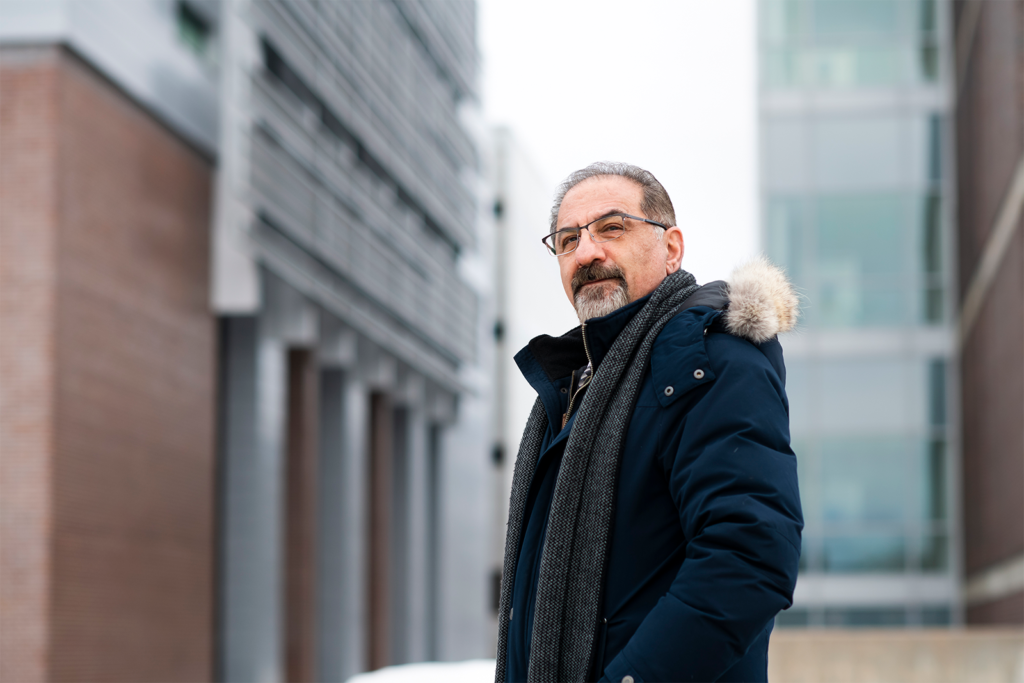
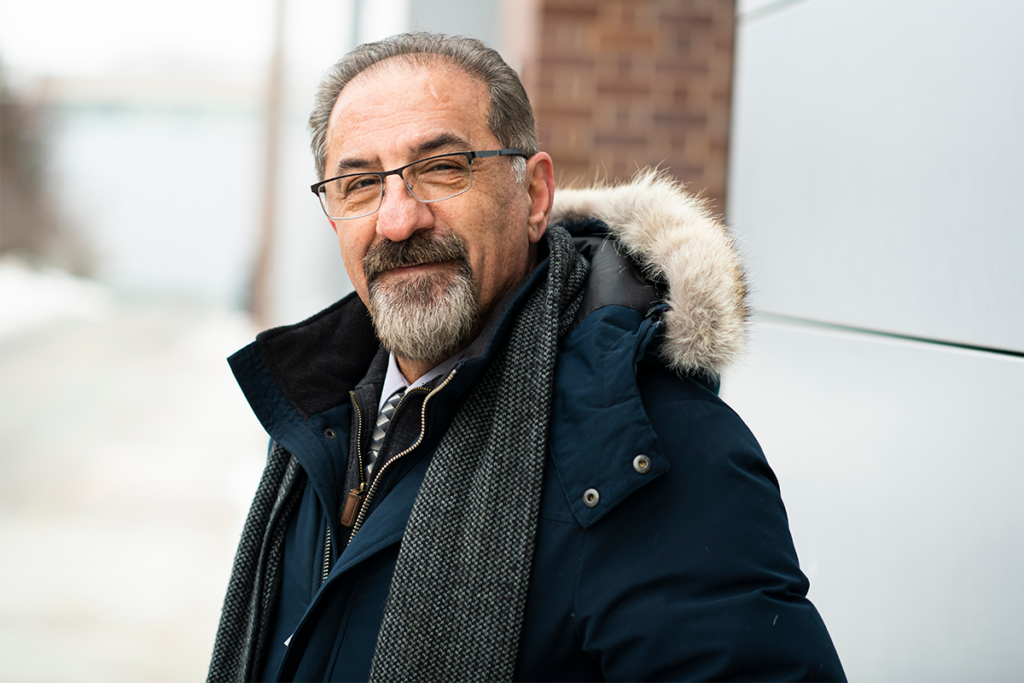
A sociolinguist in Carleton’s School of Linguistics and Language Studies and co-editor of the forthcoming Oxford Handbook of Kurdish Linguistics, Dr. Jaffer Sheyholislami is helping to produce a momentous scholarly volume: one that is expansive in scope, rigorous in structure, and is open for all to access.
Years of collaboration across continents have led to the first comprehensive resource on the Kurdish language. Sheyholislami’s handbook brings together contributors with connections to and across Kurdistan and the Kurdish diaspora, representing a fulsome range of linguistic traditions from structural and applied linguistics to literary, cultural, and historical perspectives.
Equally notable is the fact that the book will be published as an open access resource, ensuring that it can be read, cited, and built upon by scholars, students, and communities around the world, regardless of geopolitical or financial barriers.
“This volume is academic, yes,” Sheyholislami says. “But for me, it’s also deeply personal. It’s a love letter to a language that has endured so much, and a promise that it will keep thriving.”
The idea for the handbook emerged from what Sheyholislami recognized as a critical gap.
“Since my days as a mature student at Carleton, I noticed the absence of a book that brought together core concepts and branches of linguistics related to Kurdish,” says Sheyholislami.
No such comprehensive resource had ever existed in any language. The Oxford Handbook of Kurdish Linguistics is the first to do so, and with the English edition now complete, Sheyholislami hopes to see it translated into Kurdish itself.
The need was clear, but there were plenty of challenges. When he and a small group of colleagues first proposed the idea to Oxford University Press, they knew it would require not just scholarly depth but editorial agility, so they expanded their team to include five editors, four of whom are native Kurdish speakers, based across Canada, the United States, the United Kingdom, France, and Germany.
“We made a deliberate effort to reflect the linguistic and geographic diversity of the Kurdish-speaking world,” Sheyholislami explains. That meant including contributors from all four regions of Kurdistan (in Iran, Iraq, Turkey, and Syria) and the diaspora, as well as a strong gender balance and a mix of theoretical orientations.
The editorial process spanned multiple years and three rounds of peer review. Then came the pandemic.
“COVID caused delays across the board,” says Sheyholislami. “But we adapted. We didn’t give up.” With the support of Carleton and two Kurdish institutions, one in Paris and the other in Iraq, he hired research assistants, coordinated international timelines, and kept the project moving forward.
By fall 2024, the complete manuscript had been submitted. At over 27 chapters, it is a project of scholarly ambition and cultural urgency. It is also a triumph of collaboration, the kind of work that defies academic silos and geopolitical boundaries.
As the final chapters came together, a new issue emerged. Several contributors asked whether their work could be made open access; a request complicated by the publisher’s all-ornothing policy. Either the entire volume would be open access, or none of it would.
It wasn’t a minor question. In many parts of the Kurdishspeaking world, a $200 academic book is simply unaffordable. “For a professor in Iran, that might be half a month’s salary,” Sheyholislami states. “For a student, it’s out of reach entirely. And even if they can pay, will their university libraries carry a book that addresses linguistic rights and political marginalization?”
To Sheyholislami, the answer was clear: open access wasn’t a bonus, it was the soul of the project. “This isn’t just about convenience. It’s about justice,” he says.
“Kurdish scholars, students, and educators deserve to be part of the global conversation. Open access ensures they can be.”
What followed was an intensive campaign to raise the funds needed to cover the open access fees. With help from institutional partners and Carleton’s own staff, the team navigated international banking hurdles, coordinated multicurrency transactions, and persisted through months of logistical setbacks. “We’re nearly there,” he says. “And we’re grateful to everyone at Carleton who’s helped us get this far.”
For Sheyholislami, this project is inseparable from personal history.
He grew up in Kurdistan-Iran, where Kurdish was spoken but not taught, where children could be punished for using their mother tongue at school. He didn’t learn to read or write in Kurdish until he was fifteen, when he found a forgotten book of Kurdish poetry in a remote village and taught himself. “That book changed everything,” he says.
Decades later, he still carries the memory of handwritten cassette labels and broken typewriters, of preserving poetry in the margins of exile. “When I left Kurdistan, I couldn’t bring much with me. But I brought my language,” he says. “It’s been my companion, my memory keeper, and my quiet form of resistance.”
The Oxford Handbook of Kurdish Linguistics is, in many ways, a continuation of that resistance, transformed into a resource for future generations. “I want Kurdish students to see that their language belongs in the academy,” he says. “Not just as a subject of study, but as a language of education, identity construction, theory building, critique, and imagination.”
Beyond linguistics, Sheyholislami hopes the handbook will shape the broader fields of Kurdish studies, Middle Eastern studies, and even global perspectives on a wide range of aspects of language from structuralist linguistics to language policy and planning. “This is a volume that shows Kurdish not only as a linguistic system, but as a living archive of cultural depth, resilience, and creativity,” he says.
“Too often, Kurdish voices have been viewed through external lenses. This book is written by scholars who live the language.”
At a time when languages without official status are often pushed to the margins, the handbook brings Kurdish to the centre of the conversation. And it does so with precision, cultural care, and ethical clarity.