Internment, Empire, and the Politics of Displacement
Dr. Laura Madokoro’s research examines migration, displacement, and the legacies of empire in refugee history.
This story was originally published in the 2026 Faculty of Arts and Social Sciences Research Review.
Dr. Laura Madokoro’s research asks how states define belonging, exclusion, and refuge, and how those definitions are shaped by empire, race, and power. An Associate Professor in the Department of History, her work examines migration, humanitarianism, and settler colonialism, with particular attention to refugee history and human rights.
In 2021, Madokoro received an Ontario Early Researcher Award to begin work on The Disaster Lab, a project exploring the history of disasters, humanitarianism, and migration in Canada, with a focus on what she calls “diasporic disaster citizenship.” Her current research builds on that work, returning to longstanding questions about the politics of refuge and displacement through a project that blends personal history, archival research, and global perspectives on forced migration.
“This new project is about histories of internment and displacement in the context of the Second World War,” Madokoro explains. “Many of these stories, whether it’s the internment of German or Austrian nationals in Europe, or Japanese and Japanese Canadian populations in North America, are often written strictly in national terms. I want to look at them differently.”

Her research focuses on a pivotal period in Canadian history, when nation-building shifted from the framework of the British Empire toward a post-imperial order. Madokoro examines the internment of Japanese Canadians alongside that of German nationals, including thousands of Jewish refugees who were forcibly relocated across the British Empire.
“In the years before the Second World War, German nationals, including Jewish refugees, had made their way to the UK,” she says. “When war broke out, the British government declared them enemy aliens, and they were interned. These internees were then dispersed to Canada, Australia, and other parts of the British Empire. I’m interested in how the British government made these decisions, and how the refugees themselves navigated displacement.”
A year later, Japan attacked Pearl Harbor, and the United States and Canada declared war in response. In both countries, first- and second-generation citizens were displaced from their homes and interned on the grounds of being security threats. People born in the United States and Canada were treated as disloyal, a dynamic compounded by restrictive citizenship policies and Japanese imperial expansion abroad.
Madokoro emphasizes that empire shaped the politics of internment in this case as well.
“There’s an imperial story to be told in the Japanese context too,” she says. “Empire doesn’t operate the same way in every instance, but it shaped how people were classified, displaced, and treated during the war.”
Her interest in this research is also deeply personal. Both her maternal grandfather and paternal grandmother were interned during the Second World War, one a German Jewish refugee, the other a second-generation Japanese Canadian.
“For me, these histories are entangled in a very immediate and intimate way,” she says. “My family history helps me think more broadly about the relationship between settler colonialism and empire. It allows me to ask what happens after internment, and how forced displacement shapes claims to belonging as people, and their descendants, navigate settler colonial societies.”
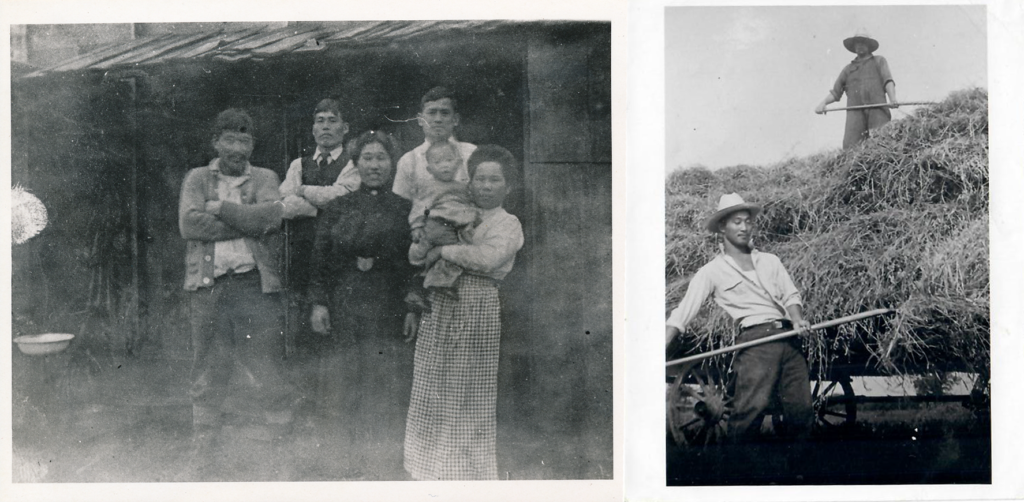
Alongside her focus on displacement and empire, Madokoro is interested in the agency of those who were interned. She challenges the idea that internment camps were empty or static spaces.
“So much of the literature treats these camps as places where people are deprived of rights and reduced to objects,” she explains. “That is true in some ways. But people remained fully human, interacting with aid organizations, family, and broader society. The camp wasn’t necessarily the defining aspect of their lives, and many internees went on to live complex, multifaceted lives.”
“I want people to understand that even in spaces designed to isolate and control, internees exercised agency and maintained their humanity.”
Madokoro’s project spans multiple geographic regions, including Canada, the United States, Australia, and Britain, tracing both the movement of people and the state responses that shaped their displacement.
“The Canadian government was reluctant to accept Jewish refugees, and yet the British government dispersed them here anyway,” she notes. “These movements show how imperial legacies shaped migration, displacement, and resettlement.”
She also draws connections between historical and contemporary forms of displacement, observing that governments continue to exercise this power in ways that echo imperial practices.
“What’s striking about these historical displacements, whether of Japanese Canadians, Japanese Americans, or German Jewish refugees, is the significant geographic spread,” she says. “People were moved across provinces, continents, and even across oceans. The resonance with today is unmistakable.”
Madokoro’s earlier research examined the exclusion of Asian refugees within the international refugee regime, focusing on how white settler societies maintained barriers to entry as part of their imperial heritage. Her current project extends those questions, tracing the intersections of race, settler colonialism, and imperial power.
By reframing internment not as empty space but as lived experience, Madokoro’s research exposes the enduring legacies of empire and settler colonialism, and the ways these histories continue to shape contemporary refugee policy. Remembering these stories is not only an act of historical reckoning, but a way of understanding the stakes of displacement in the present, and the responsibilities that come with it.