Resource Extraction, Violence, and the Limits of Peacekeeping
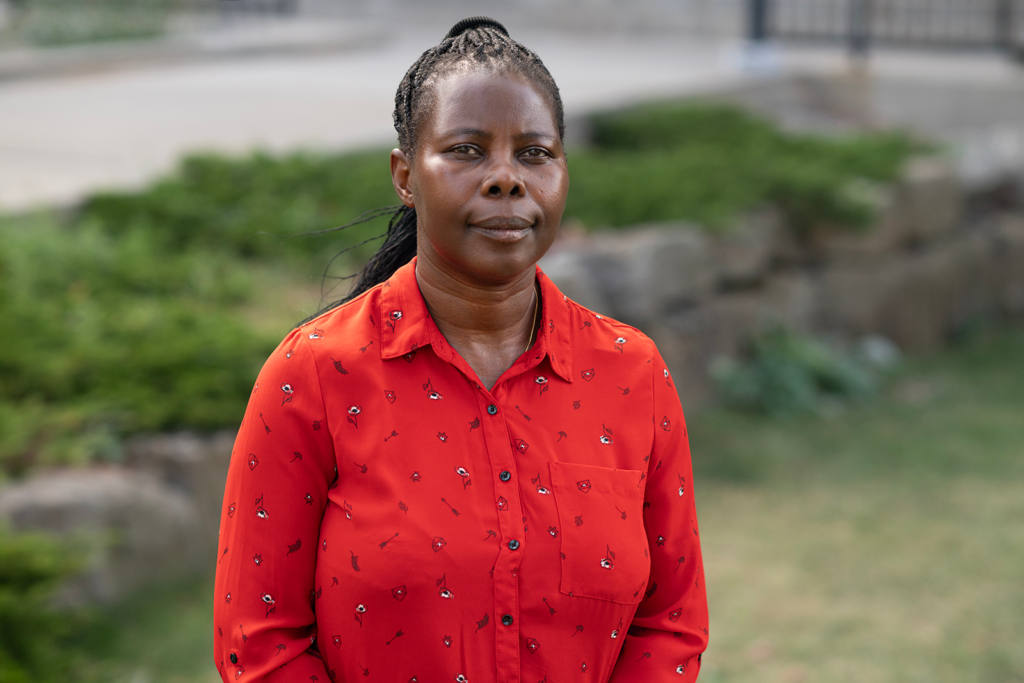
Dr. Evelyn Namakula Mayanja’s research examines mineral resource conflicts, peacekeeping, and humanitarian crises in the Democratic Republic of the Congo.
This story was originally published in the 2026 Faculty of Arts and Social Sciences Research Review.
Dr. Evelyn Namakula Mayanja is an interdisciplinary scholar whose research confronts the realities of global peace and security, particularly within African contexts. Her work centres on mineral resource–based wars and their human, environmental, and cultural consequences, as well as the role of peacekeeping in the Democratic Republic of Congo (DRC).
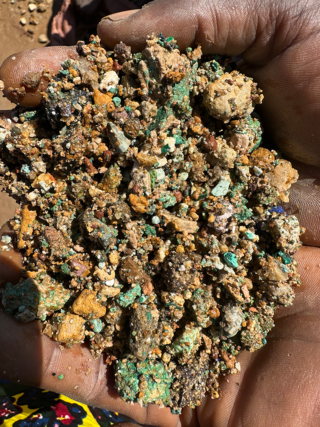
The DRC is a resource-rich nation, particularly in critical minerals and metals such as copper, lithium, and cobalt, which are widely used in electronics and in technologies tied to the green energy transition, including electric vehicle batteries, solar panels, and wind turbines. The country is also rich in gold, diamonds, cassiterite (tin), wolframite (tungsten), and coltan (tantalum).
This abundance of resources has come at an extraordinary cost. The exploitation of Congolese minerals has directly contributed to one of the worst humanitarian crises in Africa, and arguably the world.
Since 1996, Congolese communities have endured sustained violence, environmental destruction, human rights violations, and deep insecurity as their natural resources are siphoned into the global North. Multinational corporations profit not only from the minerals themselves, but also from the weapons used to access them.
Mayanja says witnessing the realities of this violence is what drew her to pursue research in the field.
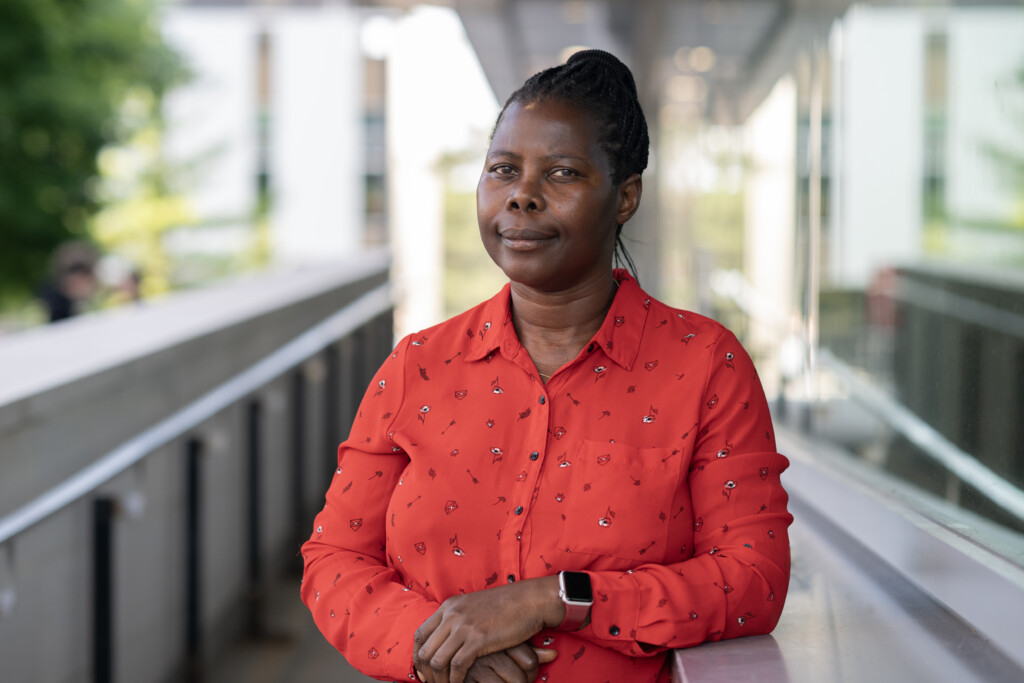
“I don’t know how people are going to survive [in the DRC] in the next 10 years. The environment on which their livelihood depends has been destroyed beyond recognition, and communities have been displaced. Some are living in cities without employment or homes, while others are languishing in internally displaced camps.”
Mayanja conducts interviews in the DRC and has authored several publications aimed at exposing how violence and extractivism impact everyday life in affected communities. She points to colonialism as a key driver of this violence, rooted in external demand for resources.
When Scottish inventor and veterinary surgeon John Dunlop reinvented the pneumatic tire in the late 1800s, Congolese people were massacred and enslaved to collect rubber.
“Violence has been used to access Congo’s resources,” Mayanja explains. “There are also issues of misgovernance of the state and the resources, but this continues the manipulation of Africa.”
Although peacekeeping missions have been active in the DRC since 1999, Mayanja argues that their presence has often proven problematic.
“I always question – how can they be interested in both peace and exploiting resources at the same time? There is an incongruency between them. Even the word is a misnomer, because how do you dare say that they’re keeping peace where it does not exist?”
“Instead of maintaining or trying to bring about peace, they [peacekeepers] are contributing to destabilizing countries,” she says.
For Mayanja, meaningful and sustainable peace must come from within.
“No country can achieve sustainable peace and security from outside. It is the local people who have to devise strategies for peace.”
“As far as Africa is concerned, we need an Afrocentric peacebuilding, peace-making, and resource governance.”
She notes that international actors still have a role to play, particularly in enforcing laws that govern mining companies, both in the DRC and in the countries where those companies are based.
When mining operations destroy ecosystems or displace communities, Mayanja argues, companies must be held accountable not only in Congo, but also in their home jurisdictions.
“There’s a limit on justice. They need first to prosecute all the criminals, all the people who have perpetuated violence in Congo.”
“There’s a lot of dialogue that is needed at the community level to devise homegrown and meaningful interventions.”
Looking ahead, Mayanja hopes future research will more fully embrace decolonial and Afrocentric forms of knowledge interrogation and dissemination.
While universities often rely on traditional academic channels, she argues there is an urgent need to develop new ways of sharing knowledge.
“There are so many different ways of collecting knowledge and transmitting it. New digital platforms like YouTube or podcasts may help, but many of the communities I work with do not have access to podcasts, as they have difficulties accessing the internet. Afrocentric approaches such as music, theatre, and dance are more appropriate for knowledge dissemination.”
Mayanja believes universities could play a more active role in creating spaces where community voices are heard directly.
“It would be so impactful if there was a way for me to bring five women from Congo here to listen to them and write down or record their experiences. Because when I’m there, I don’t have time to write all that they have gone through.”
She also stresses the urgency of preserving Indigenous knowledge beyond the Canadian context.
“We are talking about Indigenous knowledge. Yes, in Canada we are doing a lot. But in Congo, where I do my research, you’ll find that elders who know a lot about communities are gradually dying, and I feel so sorry that we are going to lose all that knowledge because they die with it. So how can we work to preserve and protect this knowledge?”
She reminds us that the human stories at the heart of her research must not be lost.
“It is not all about violence. It is not all about resources. We are humans too. We have stories to tell.”