Who Moves, Who Stays? The Human Side of Climate Policy
Carleton geography alum Dr. Andrea Carrión explores how climate policies affect communities and reflects on the people and experiences that shaped her research.
Dr. Andrea Carrión Hurtado studies how public policies take shape in communities and affect people’s everyday lives. A graduate of Carleton University’s doctoral program in geography, her work explores climate resilience, disaster risk and the relationships between people, place and power.
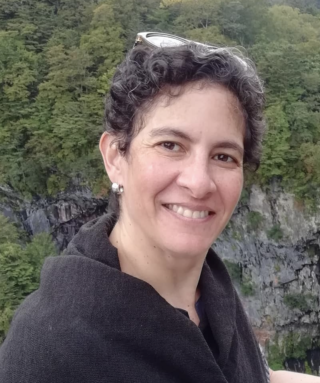
Based in Quito, Ecuador, Dr. Carrión is the Partnerships, Projects, and International Mobility Coordinator at FLACSO Ecuador, where she also serves as an Adjunct Professor in the Department of Economy, Environment, and Territory. On Oct. 5, 2026, Dr. Carrión returned to Carleton to present “Governing Climate Mobilities in the Andean Region,” a talk organized as part of the Latin American and Caribbean Studies’ Conversation Series.
“I’ve always been passionate about observing people and landscapes, and the relationships between them. That’s what drew me to geography.”
Carrión spoke with the Faculty of Arts and Social Sciences about the human side of climate policy, the community she found at Carleton and what she’s learned from working across borders.
This interview has been edited for length and clarity.
What stands out when you think back on your time studying Geography at Carleton?
At Carleton, I found an amazing group of people looking at questions of power relations and governance structures. My supervisors supported me throughout the process, helping me frame my questions and understand how to approach the actual research.
One of the things I really valued about studying geography at Carleton was the opportunity to look beyond my own frame of interests or research. Although I’m a human geographer, I often interact with researchers working in physical geography and with Indigenous populations. These encounters enhance my perspective.
My connection with the Institute of Political Economy was especially important to me. I had the opportunity to explore overlapping questions and build relationships with colleagues in anthropology, sociology and political science. Those colleagues eventually became friends.
Doing a PhD is challenging, and it’s not just about the research. Having people who support you through the process matters.
How has working in both Canada and Ecuador shaped the way you approach research?
Sometimes you gain another perspective just from being out of your comfort zone, and that is a fantastic experience. It’s challenging as well, but it’s worth taking the step and the risk of going forward in research.
When I returned to my home country, I was able to build connections between what we’re developing in Ecuador and what my colleagues are working on in Canada. This helped me better understand how we each frame questions differently, and how both perspectives are valid in their own contexts.
Is there a community or a group of people you’ve worked with who have stayed with you?
There is a group of women in Guayaquil, Ecuador, who are migrants from Venezuela, Colombia, and the lowlands of Ecuador. They live in very harsh conditions, yet they still have hope and a sense of humour.
No matter how hard your life may be, you have to put forward what we call a politics of care: caring for others, for the youngsters, and for the people around you. It’s not just about violence, displacement, or unequal relations. There is also space for hope.
What do you hope your research will change for those communities?
Before my doctorate, I worked as a public officer in national planning. In that role, you have to address questions, make decisions and move forward. Working in academia allows you to slow down a little and think about those questions from a broader perspective.
I’m looking to produce knowledge that can influence public policies in a meaningful way.
When we talk about evidence-based policymaking, we sometimes think only of numbers and statistics. I’m working more from a qualitative perspective, and I think that has a value of its own.
For someone who couldn’t attend your talk, “Governing Climate Mobilities in the Andean Region” what’s the main idea you’d want them to take away?
My talk examines how global climate agendas are implemented at the local level, focusing on local governance and power relations. This is more complicated than simply translating a concept into policy. It requires understanding the local context, the people involved and their experiences and perspectives.
The takeaway is that we need to think about knowledge and practices grounded in the circumstances of particular communities. Building a world of opportunities requires a sensitive, human approach that goes beyond a bureaucratic perspective.