Narges (Fariba) Sahebi
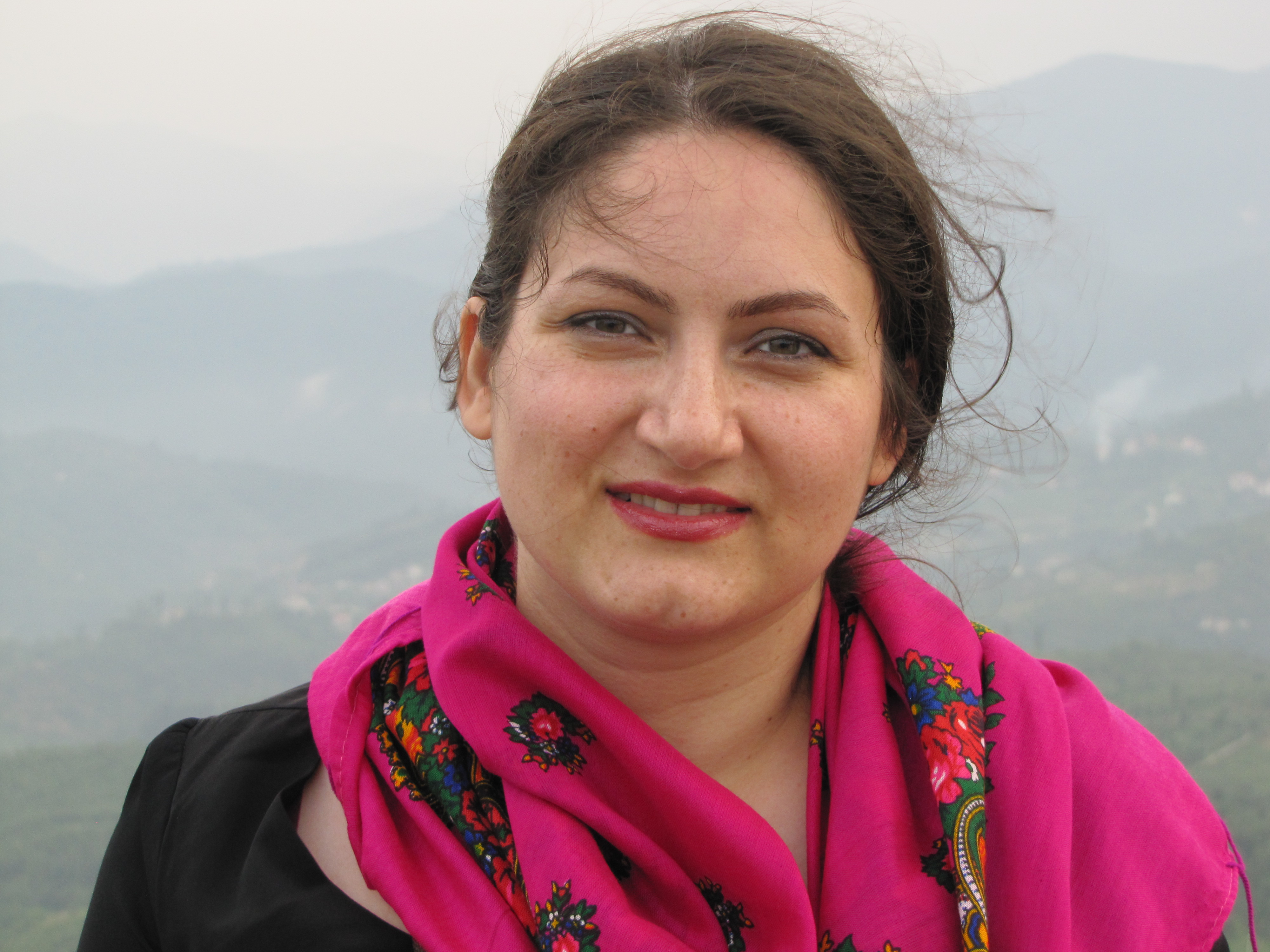
MA Alumni, 2015
MA candidate, Narges (Fariba) Sahebi, emigrated from Iran to Canada with her husband prior to starting her Master’s Program in Women’s and Gender Studies. She took an immediate liking to the Ottawa area despite how different it was from Tehran: “Although Tehran is a beautiful city, it is very big and crowded. I adore nature, and so the first thing I liked about Gatineau was that you could bike for five minutes, or walk for ten minutes and find beautiful scenery in Gatineau Park. It is so nice!”
Fariba earned her Bachelor’s degree in Statistics, but her true passion is in Women’s Studies. In particular, she is interested in Muslim women’s sartorial discourse in western societies. She explains, “I like to help women have better lives, it helps me to have a better life, too. This was my main goal in entering Women’s and Gender Studies.” Her passion was unmistakable and, upon taking an Introduction to Women’s and Gender studies course at the University of Ottawa, her professor realized her potential: “She actually recommended me to Carleton. She said she would ‘put money on me’ and that was really memorable!”
“My motivation to study Women’s and Gender Studies comes from being a woman and having experienced many problems as a woman,” Fariba explains, and “I realized that I needed to know more about this field, and to educate myself in order to have a more peaceful life. I have faced discrimination and have often heard comments being made about women, but I never knew how to respond in a proper way. I could not make people understand my point of view and accept what I was saying. My education is preparing me to live my life fully as a woman, and to fight for change—even if only a small change—for my possible future daughter.”
Fariba’s research paper will explore debates over Muslim women’s attire in Western societies: “Muslim women are treated as others in Western societies. Veiled women are often seen as a symbol of terror or of Islam fundamentalism, which is incorrect in my opinion. There is a lot of pressure put on these women, and additionally they must deal with stereotypes that present them as being oppressed and passive individuals in need of being rescued. Although Islam, as an institutional religion, can be understood as oppressive, it is important not to single it out—but rather to take into consideration the patriarchal culture in which this religion is practiced.” Fariba hopes to further explore how a simplistic focus would deny Muslim women diversity as well as agency.
When asked what she likes best about Carleton, Fariba says that “there are lots of resources available to help students and TAs to have an excellent, well-rounded experience at Carleton. The people in the Women’s and Gender Studies department are very understanding and willing to help students to work towards their chosen path in life. Also, there were eight of us who started in the MA program last year, and they are the best cohort ever!”