Shannon Lectures – Fall 2025
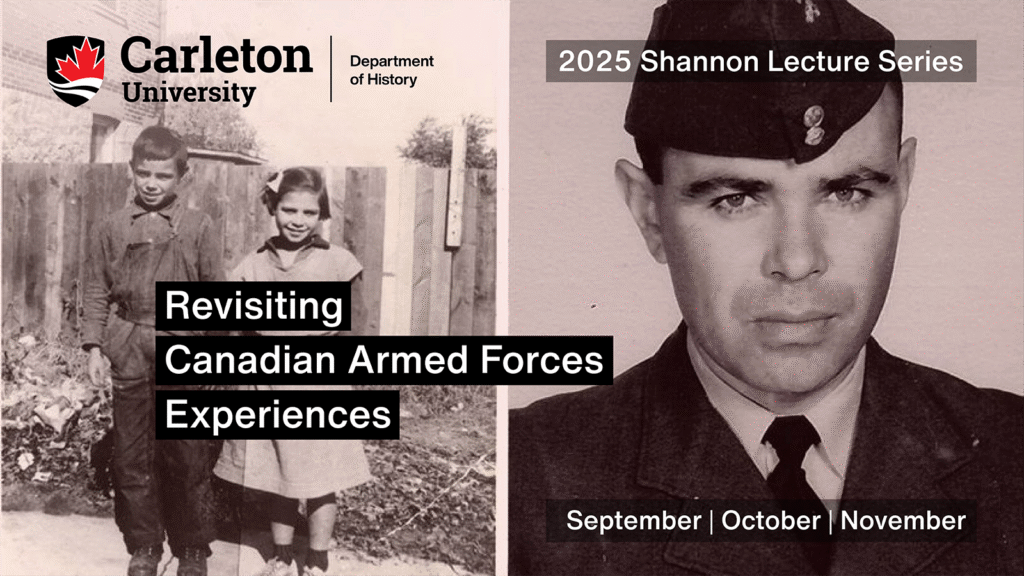
Revisiting Canadian Armed Forces Experiences
Convenor: Jean-Michel Turcotte, historian at the Department of National Defense and Adjunct Professor in the Department of History
Description: Post-1945 Canadian military history is rich and complex as it is shaped by thousands of members of the Canadian Armed Forces (CAF), but also by their families, civilian workers, researchers and communities, who remain largely “unknown” in scholarship. In partnership with the Directorate of History and Heritage, the 2025 edition of the Shannon series, “Revisiting CAF Experiences,” examines those “unknown voices” and proposes to explore various and entangled trajectories related to the CAF after 1945. As such, invited speakers will address aspects of the militarization of Canadian lives beyond the traditional narratives of soldiers “serving” in the Cold War and deployed in various peacekeeping missions. While Canadian military social history has mainly focused on the 1914–1945 period, the lecture series aims to deepen our understanding of how the Cold War transformed the Canadian military and the Canadian people’s lives in profound ways.
The 2025 Shannon series extends the discussion raised in the recent book, Cold War Worker: Labour, Family, and Community in a Nuclear State, edited by Isabel Campbell (McGill-Queens University Press, 2025). As the volume shows, the Cold War created global and Canadian demands for new technological, scientific, construction, and other labour. The experiences of those workers raise questions about the influence of settler-colonial masculine institutional values developed in the Cold War state and society. In line with those questions, our objective is to examine how the development of CAF in the context of the Cold War affected diverse Canadians, their families, and their communities in ways that were both predictable and surprising, and both beneficial and harmful. By doing so, speakers will reveal contrasting experiences of marginalized peoples (Indigenous peoples, women, LGBTQUIA+ and northerners) and elite white men (scientists and psychiatrists). By comparing the experiences of different types of workers, families, and communities having contact with the military, this series will highlight how race, gender, and privilege affected people in varied and sometimes unexpected ways.
Unless otherwise indicated, lectures will take place at Woodside Hall in the Carleton Dominion-Chalmers Centre. The lectures are expected to run from 7:00-8:30pm and will be streamed as well. More details to be posted as they become available.
Lecture 1: September 22, 7:00-8:30pm, Dominion-Chalmers Centre
Title: Fighting for Their Place and Recognition: Canadian Servicewomen and Women Veterans in Post-Second World War Canada
Description: The post-1945 period is an understudied period of Canadian women’s military history. Yet this period saw women negotiate their place in and connection to the Canadian armed forces in a variety of ways. Some women joined the Canadian military. The 1950s and 1960s saw the expansion, contraction, and a constant debate over women’s roles in the Canadian military. In addition, women veterans created spaces for themselves in pre-existing veterans’ groups and formed their own. Through veterans’ organizations, women veterans sought community among other veterans, ran fundraisers to help support troops, advocated that women should be allowed to serve, and strengthened ties with the Canadian armed forces.
This event will also include a book launch for Cold War Workers | McGill-Queen’s University Press. Sarah Hogenbirck and Matthew Wiseman’s lectures are connected with their respective chapters in this book.
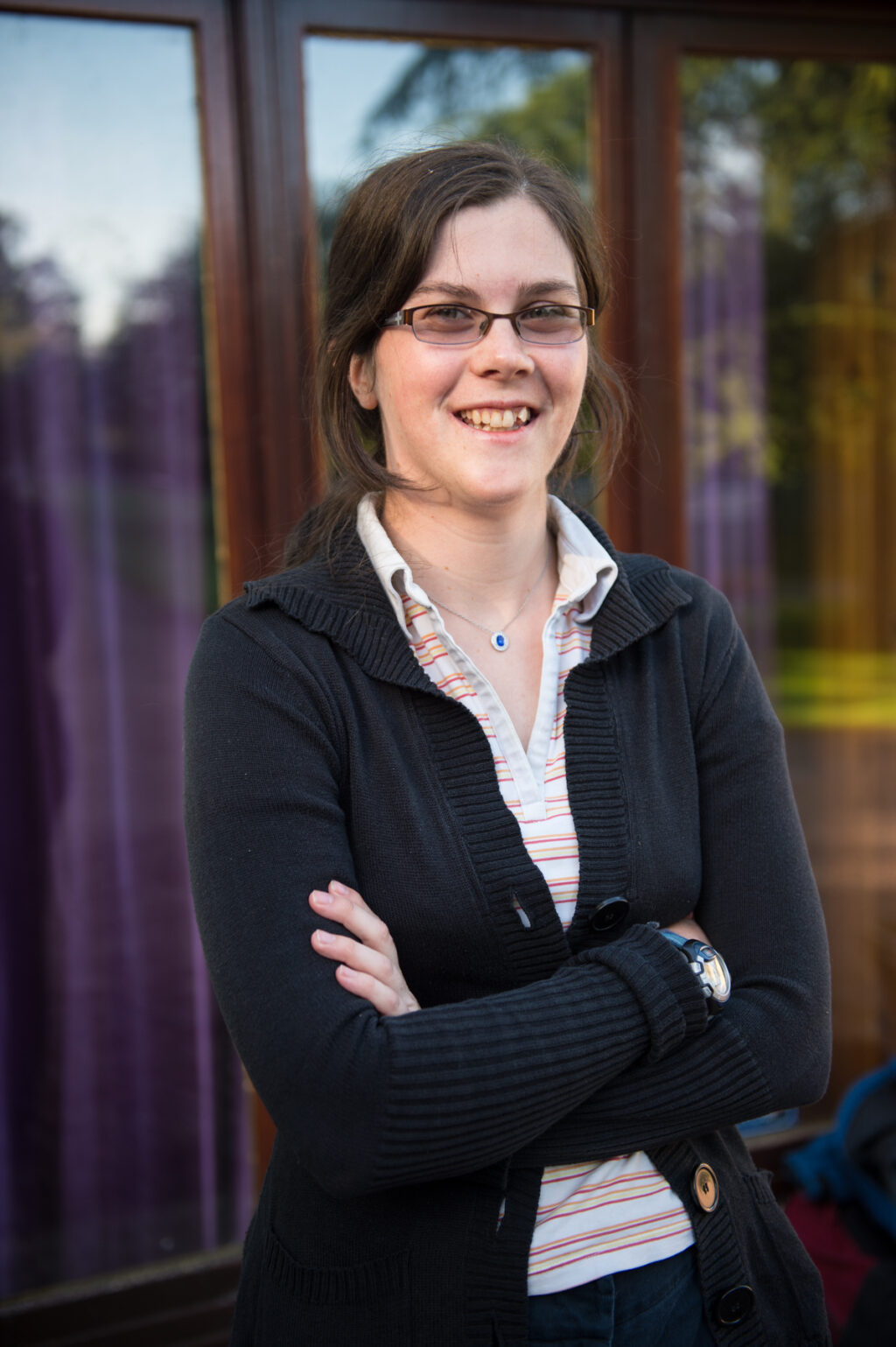
Biography: Dr. Sarah Hogenbirk is an independent settler scholar who specializes in the fields of Canadian history, gender history, and war and society. She has contributed chapters on Canadian servicewomen and women veterans to edited collections published in Canada and internationally. Her most recent publication appears in Cold War Workers: Labour, Family, and Community in a Nuclear State (2025). An alumna of Carleton University’s graduate history program, she has worked on several projects for various museums and federal government departments.
Interview with Sarah Hogenbirk: Women in the Canadian Forces – What’s Old is News – Active History.
View the recording of the lecture here: Fighting for Their Place and Recognition: Canadian Servicewomen and Women Veterans in Post-Second World War Canada
Lecture 2: October 6, 7:00-8:30pm, Dominion-Chalmers Centre
Title: Cold War Consent? Military Experimentation and Research Ethics in Mid-Century Canada
Description: When did informed consent in human research become law in Canada? This is a difficult question to answer because the adoption of laws requiring and governing informed consent in Canadian medical research developed over several decades rather than during one moment in time. In this talk, Matthew S. Wiseman will explore the complicated history of medical research ethics in Canada during the early Cold War. Although the Nuremberg Code set a base international standard of ethical principles for human experimentation in 1947, medical scientists in postwar Canada performed wide-ranging experiments on soldiers in an extensive effort to advance military medicine and bolster the operational capabilities of Canada’s fighting forces. Raising questions about the history of human experimentation in the context of the Cold War, this research reveals the deep-seated (and troubling) military roots of informed consent in Canadian medical research.
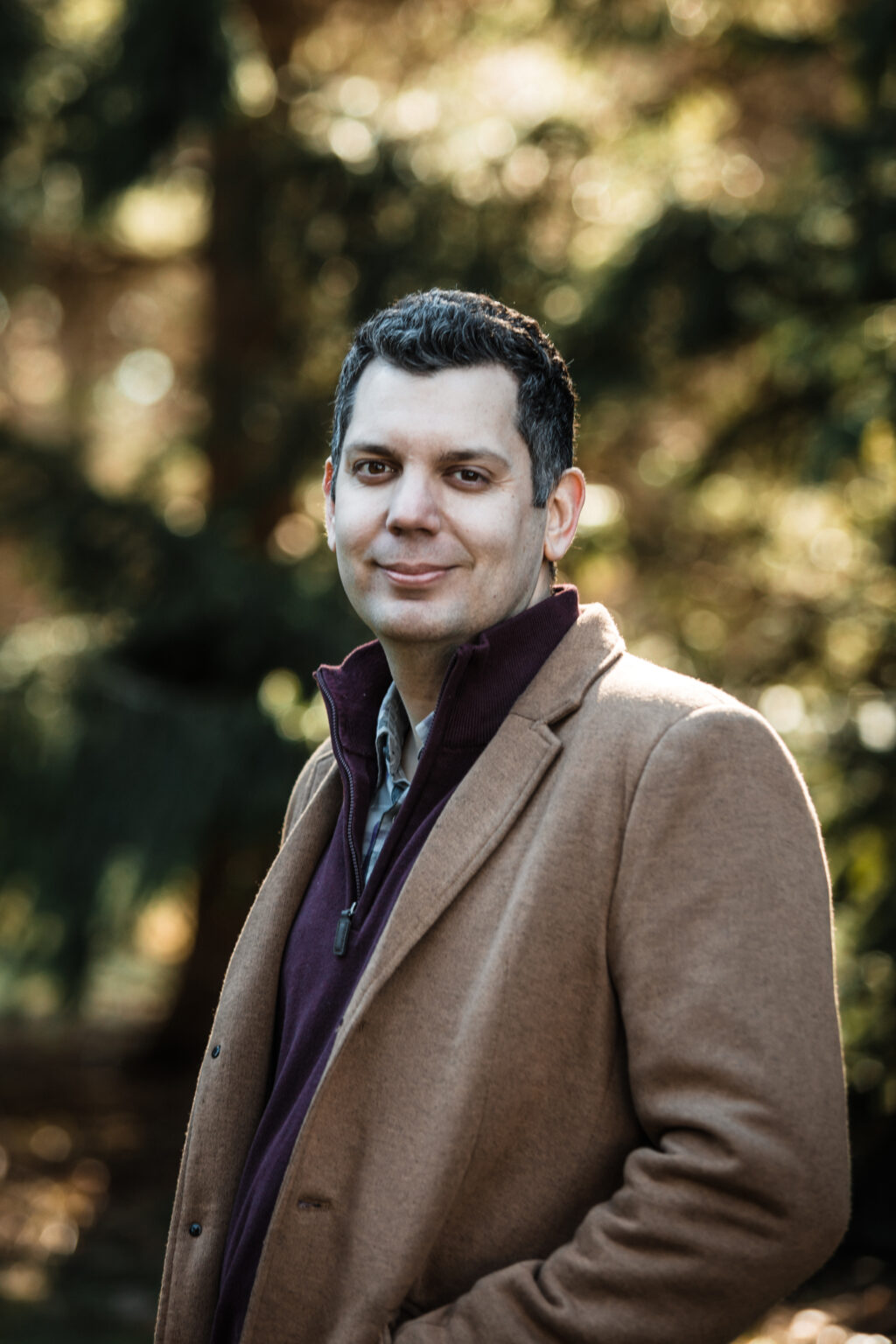
Biography: Matthew S. Wiseman is an assistant professor (teaching stream) in the Department of History at the University of Waterloo. His research and teaching concentrate on the history of twentieth-century Canada, with special emphasis on the development of science and medical research ethics. He is the author of Frontier Science: Northern Canada, Military Research, and the Cold War, 1945–1970 (UTP, 2024) and co-editor of Silent Partners: The Origins and Influence of Canada’s Military-Industrial Complex (UBC Press, 2023). With an eye to understanding the social and political dynamics of science, Wiseman’s publications examine the complex dimensions of military- and state-sponsored research conducted at government, private, and academic institutions. He also studies gender equity in the professional scientific community and is currently writing two books, one on the history of military medicine in Canada and a second on the history of women scientists at the National Research Council.
Interview with Matthew S. Wiseman: Military Experimentation – What’s Old is News – Active History.
View the recording of the lecture here: Cold War Consent? Military Experimentation and Research Ethics in Mid-Century Canada
Lecture 3: POSTPONED
Title: The Transnational Making of United Nations Peacekeeping
Description: Canada has played a prominent role in the military history of United Nations peacekeeping. This lecture explores how Canada has shaped the course and conduct of peacekeeping beyond its commitments to individual peacekeeping missions. By discussing how Canadian soldiers, diplomats, and scholars contributed to a transnational network of similarly minded thinkers and practitioners from around the world, this presentation ultimately shows not only that Canada’s role in peacekeeping has been broader than typically understood, but also widens our perspective on what constitutes “military history.”
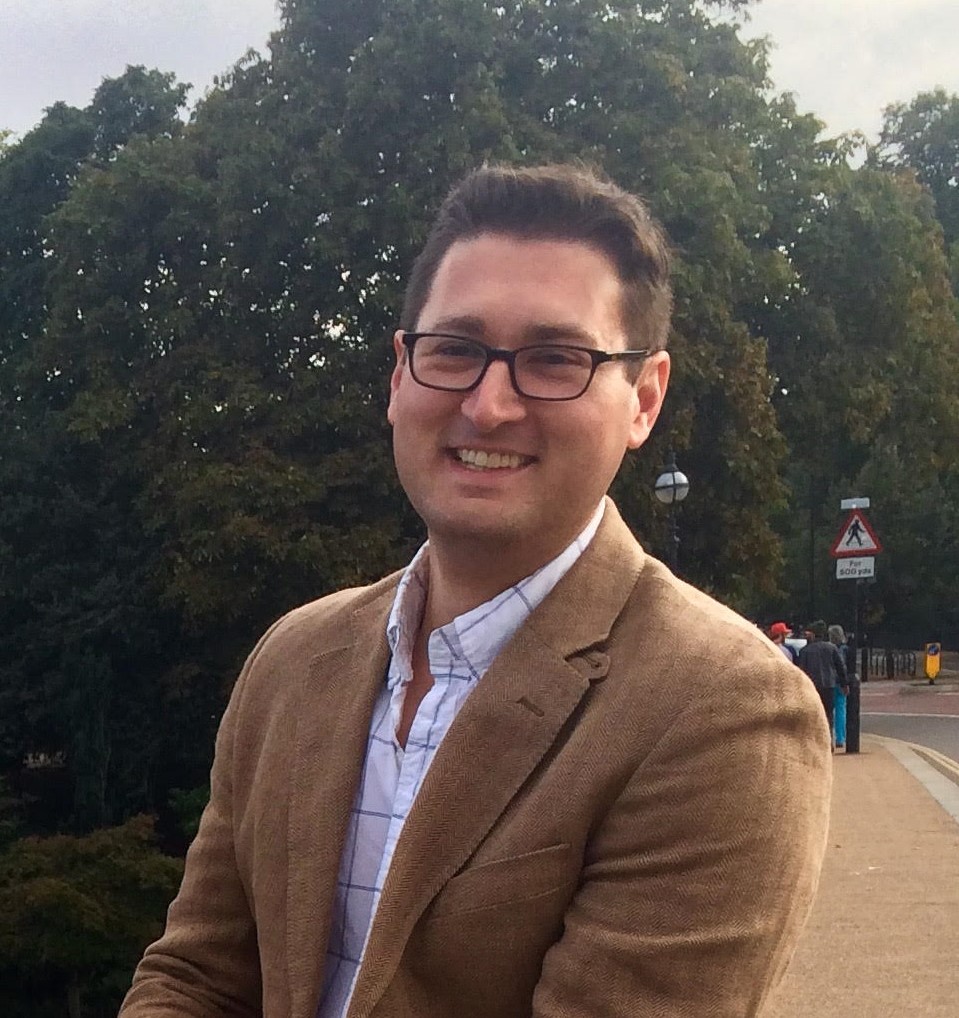
Biography: Brian Drohan is Associate Professor of History at the U.S. Military Academy – West Point and a lieutenant colonel in the U.S. Army. He led an armored platoon in Iraq with the 1st Infantry Division, worked at the U.S. Embassy to Sri Lanka and the Maldives, and served as a strategist at Eighth Army headquarters in South Korea. He is the author of Brutality in an Age of Human Rights: Activism and Counterinsurgency at the End of the British Empire (Cornell University Press 2018) and earned his PhD from the University of North Carolina at Chapel Hill.
Registration link to be posted once the lecture has been rescheduled.
Lecture 4: November 3, 7:00-8:30pm, Dominion-Chalmers Centre
Title: This is not my story, but yours: The Russ Moses residential school memoir
Description: Written in 1965, the Russ Moses residential school memoir describes the circumstances and conditions which the author encountered while attending the Mohawk Institute Indian Residential School in Brantford, Ontario, under exceptionally severe wartime and immediate post-war conditions from 1942 to 1947.
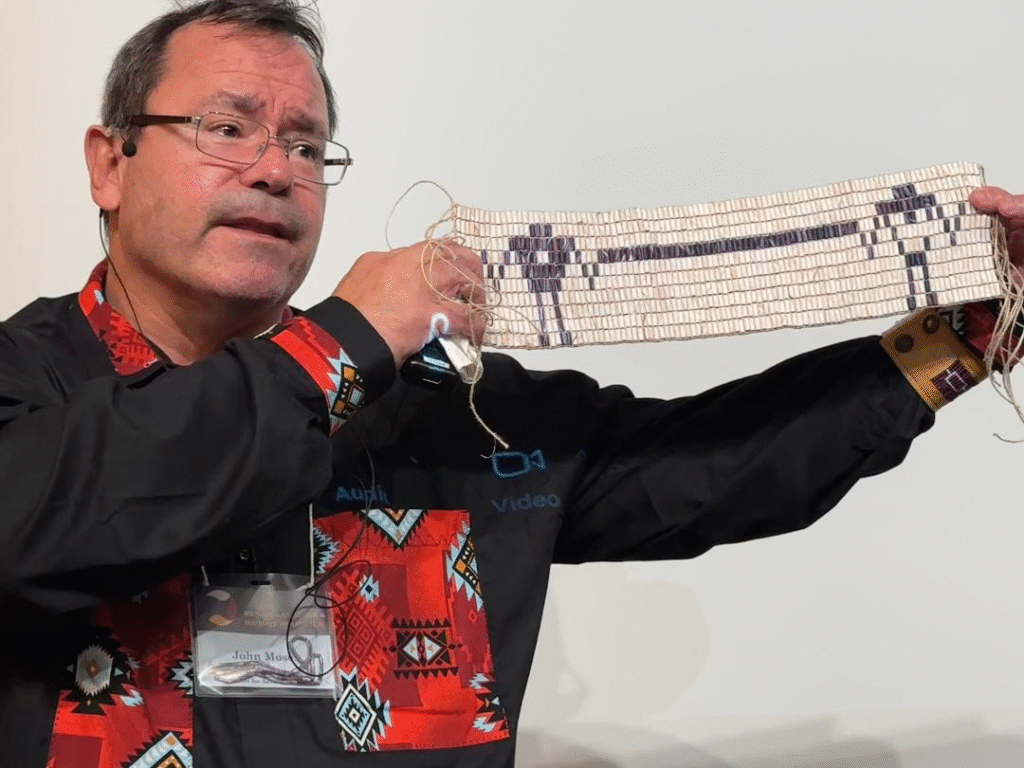
Biography: John Moses is a former director (retired) of Repatriation and Indigenous Relations at the Canadian Museum of History in Gatineau, Quebec. He is a member of the Delaware and Upper Mohawk bands of the Six Nations of the Grand River Territory near Brantford, Ontario, and he is the son of the late Russ Moses (1932-2013), whose residential school memoir he recounts.
Interview with John Moses: Russ Moses’ Residential School Memoir – What’s Old is News – Active History.
View the recording of the lecture here: This is not my story, but yours: The Russ Moses residential school memoir
Lecture 5: November 24, 7:00-8:30pm, Dominion-Chalmers Centre
Title: Purging the Canadian military of “sexual deviants”: The war on 2SLGBTQIA+ members and their partners from the 1960s to present.
Description: The Canadian Forces Administrative Order 19–20 (CFAO 19-20) rendered “homosexuality” as deviant and incompatible with military service. Despite the decriminalisation of homosexuality in 1969 in Canadian civil society, under CFAO 19–20, the military continued for over 22 years to conduct widespread witch hunts to identify “suspected” and “self-admitted” “homosexuals,” and subsequently purged them by terminating their careers. The military utilised various counter-intelligence tactics such as spying, interrogating, tracking, stalking, and wiretapping to rid itself of the enemy within (Gouliquer, 2000; Poulin, 2001; Poulin, Gouliquer, & Moore, 2009). Our research study (time 1) illustrates the devastating impact on service members and their families, ranging from living with constant fear, being traumatised for life, losing their livelihood, suffering from mental health difficulties, and even committing suicide. Our succeeding study (time 2) reveals the contemporary effects of serving the Canadian nation as a 2SLGBTQIA+ military member or being their partner. The presentation will conclude with comments regarding the following: the importance of studying social experiences (lived realities); the potential knowledge mobilisation of historical studies; and the value of the Psycho-Social Ethnography of the Commonplace methodology (P-SEC) for research with marginalised groups. We will close with a few words regarding our personal experience and the role of historical research.
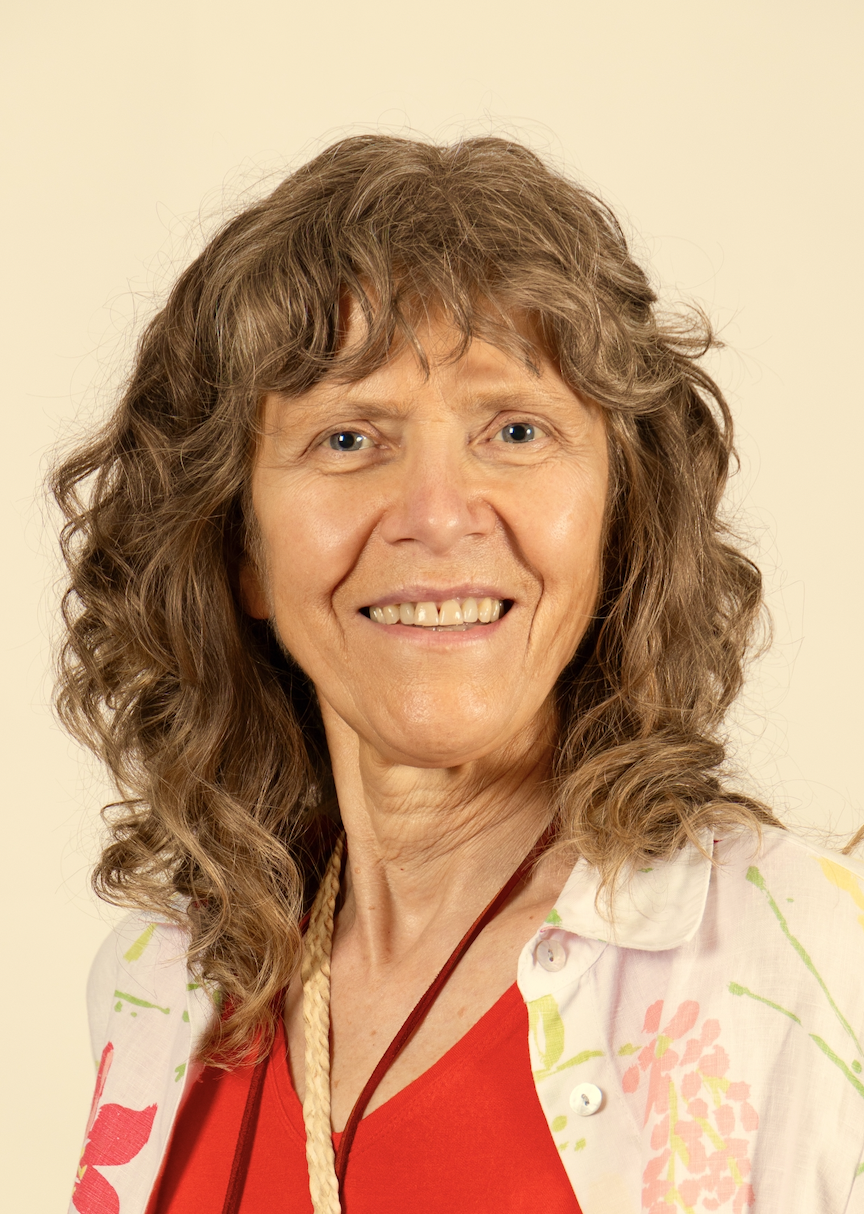
Biographies: Lynne Gouliquer is a Professor in the School of Social Sciences at Laurentian University and a Métis with ancestral ties across Métis lands. However, she calls the Northwest Angle (aka Treaty Three) home: The only historical treaty, Métis were asked to sign onto. Lynne is also a 16-year veteran of the Canadian Armed Forces (CAF) and survived the military’s war on queers (aka the Purge campaign). She is a co-founding director of the Psycho-Social Ethnography of the Common Place (P-SEC) multidisciplinary research group and the feminist qualitative interdisciplinary P-SEC methodology. She has conducted research for over thirty years co-investigating the Canadian military and such marginalised groups as: servicewomen, LGBTQIA2S+ service members, and partners of 2SLGBTQIA+. Other research focuses have been women firefighters across Canada, New Brunswick older adults requiring home care, and the reality of 90+ older adults of Eastern Canada. While deeply involved in helping her Métis community and working with them along the path towards self-governance and constitution building, she is also co-investigating the lived realities of eastern Métis people. https://p-sec.org/en/
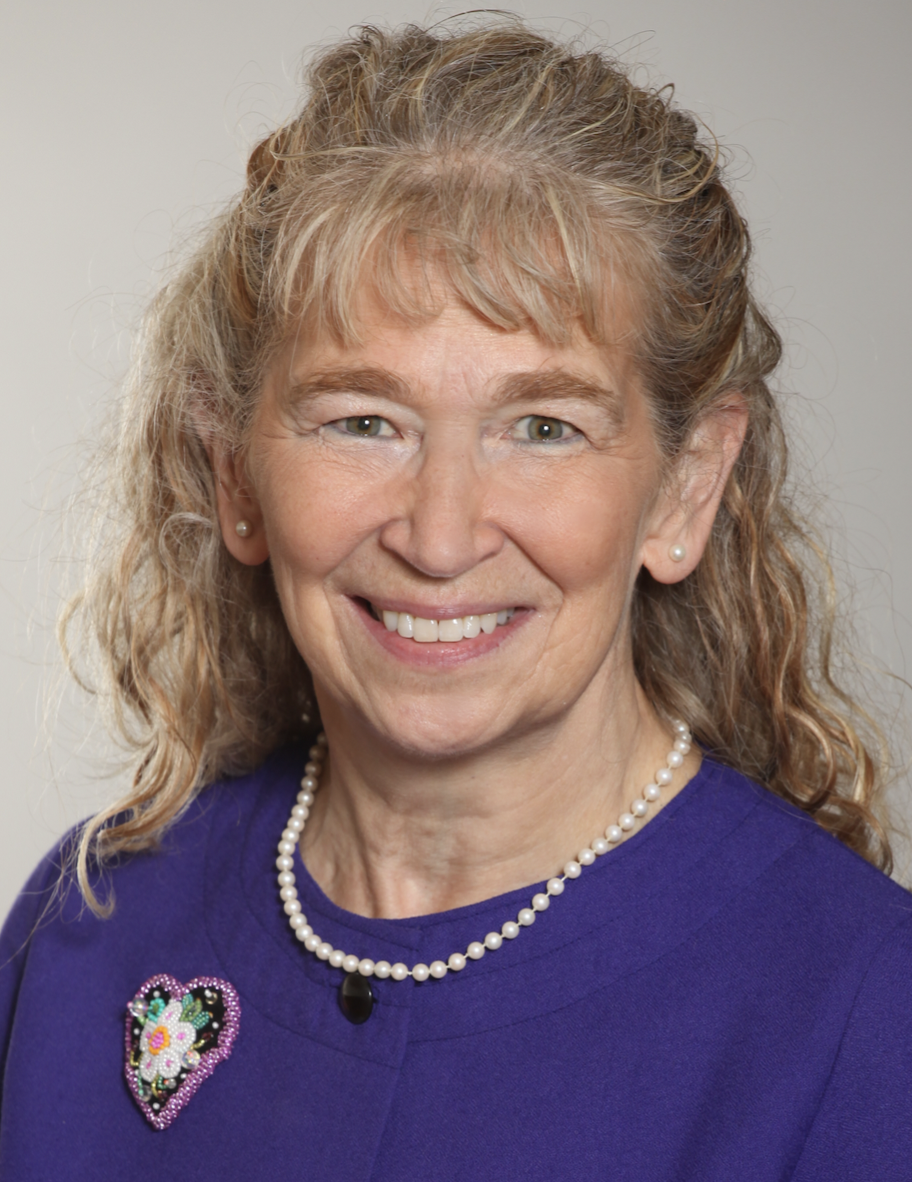
Carmen Poulin is Professor Emerita in Psychology at the University of New Brunswick. Her research focuses on the impact of formal and informal institutional practices on women and marginalised groups’ daily lives. She is a co-founding director of the Psycho-Social Ethnography of the Common Place (P-SEC) multidisciplinary research group and methodology. The purpose of P-SEC research is to identify and develop strategies to eliminate complications faced by marginalised people within organisations. For example, she has examined the daily experience of 2SLGBTQIA+ soldiers in the Canadian Military and their partners, Women firefighters, 90+ Years old elders living in place in rural milieux, and eastern Métis people (https://p-sec.org/en/). She is also interested in the development of methodologies throughout the history of Psychology, and in particular, the role of women in this sphere.
View the recording of the lecture here: Purging the Canadian military of “sexual deviants”: The war on 2SLGBTQIA+ members and their partners from the 1960s to present.