Meet Julian: From Ottawa to Osaka, and beyond!
By Leilah Biesler
Have you ever wondered what it’s like to go on exchange? I recently had the privilege of chatting with Julian Quansah about his time attending Kansai Gaidai University in Osaka, Japan. From learning Japanese to making friends, to trying local food and learning more about cultural differences, here’s what he had to say.
Tell us a bit about yourself
“My name is Julian Quansah, I’m in the Bachelor of International Business with a concentration in Finance.”
Julian speaks English, Japanese, and some French (although he says he’d like to work on his skills), and has great interest in learning other languages, including Vietnamese, Chinese, and Korean!
Why did you choose to go to Japan?
It all started when Julian’s interest in anime sparked a desire to learn Japanese. After taking the opportunity to attend a week-long Japanese course through Carleton’s Mini-Courses Program when he was in high school, and befriending a few Japanese international students, he became more and more interested in Japanese culture and the possibility of going to Japan on exchange.
“My high school teacher, who was teaching math at the time, was actually a Carleton alumni who took the Bachelor of International Business program, and he told me about the exchange opportunity.”
Tell us more about the exchange program
The Bachelor of International Business exchange opportunity requires that you study a language of your choosing for your first two years in the program, and then choose a country that speaks that language as the destination of your exchange year (which typically takes place during your third year of studies). So, if you had learned Spanish, you could go to Spain, Mexico, Chile, or a host of other places.
Since Japan is the only country that uses Japanese, that was where Julian went –– not that this was a problem for him, as he’d been wanting to go to Japan from the get go.
So, Julian spent the first two years of his degree taking intensive Japanese classes here at Carleton, which he says makes it easier to stay on top of studying, and “gives you that drive to learn the language.”
Julian’s host university, Kansai Gaidai, required him to continue taking intensive Japanese courses during his exchange year, though not all universities have this same requirement. Julian said the extra classroom instruction –combined with the immersion of actually being in Japan– really helped him improve his skills!
Did you experience any difficulties?
Culture shock is a well-known phenomenon, but Julian wasn’t quite prepared for just how much he’d have to adjust to life in Japan. He described that, “being a person of color,” it really stood out to him that people would stare at him as he walked by them. “I had already thought of this before I went there, but I didn’t realize how real it was going to be for me.”
“When people stare at me, I tend to think like ‘oh, they’re thinking something bad.’ But, obviously, they’re not thinking any of that. It’s just that you’re there, and you’re different.”
So even though feeling out of place was scary at first, he was eventually able to embrace it and utilize it as something to help break the ice with strangers, and make friends. It even ended up getting him out of his comfort zone and strengthening his communication skills.
Did you get a chance to travel during your exchange year? Did you prefer the city life or exploring nature?
“I got a mix of everything.”
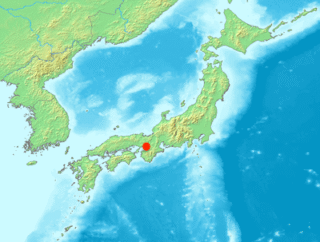
Julian’s university was based in Hirakata, which lies between Osaka city and Kyoto city in the Osaka prefecture, and he was fortunate enough to be able to travel quite widely.
In the Kansai region he visited Kobe, Nara, Kyoto, and of course Osaka. He visited Kanto region’s Chiba, and went to Tokyo twice. He also went to Nagoya, and all the way to Okinawa (two times!). He even had the chance to visit Vietnam, thanks to the ease of traveling within Asia.
Of course, cities like Osaka and Tokyo could be considered “hubs of modernism”, while Kyoto is known for its historical Japanese architecture and long history.
Okinawa, however, is (in Julian’s words) “its own beast” entirely. Likening it more to Hawai’i than Japan, Okinawa was Julian’s favorite destination; the people were incredibly friendly, the architecture reminded him of his home country –Ghana–, and with its strikingly blue water, he said it’s “one of the most beautiful places [he’s] ever been to”.
One thing of note about Okinawa, is that the dialect of Japanese spoken on the island is very different from other Japanese varieties. Luckily, it’s easier to build interpersonal connection in smaller places like Okinawa, and Julian says learning the local dialects –like he did in Kansai– only helps deepen these connections further. If you ever needed motivation to learn an obscure dialect, here you have it!
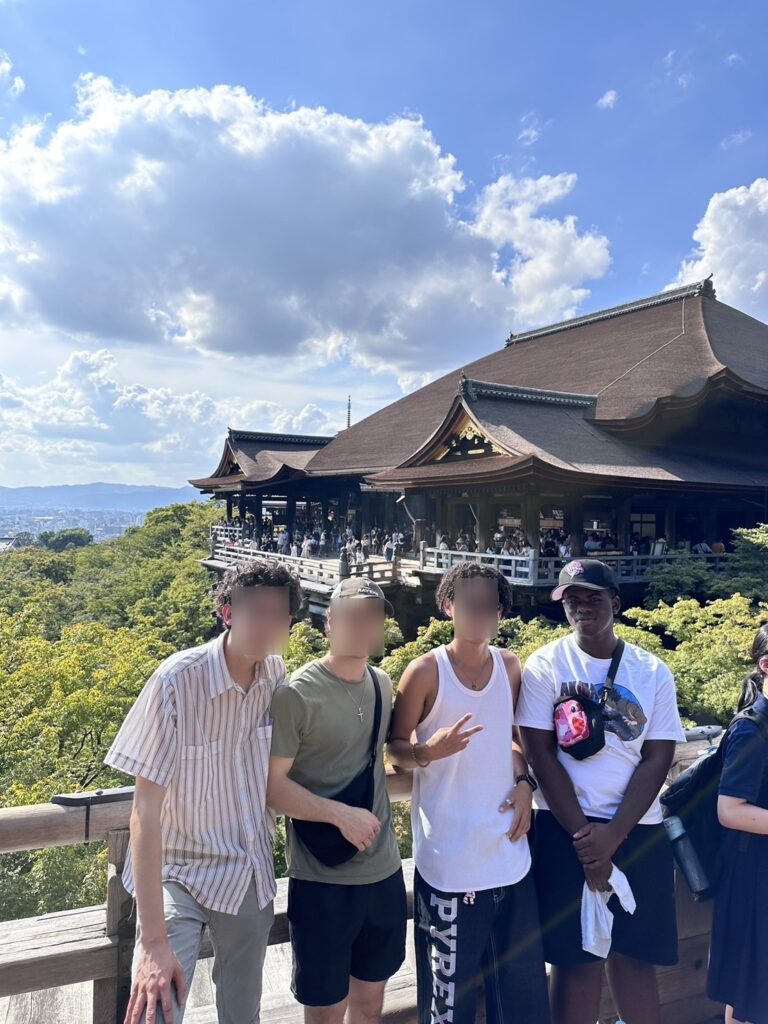
Of course, cities like Osaka and Tokyo could be considered “hubs of modernism”, while Kyoto is known for its historical Japanese architecture and long history.
Okinawa, however, is (in Julian’s words) “its own beast” entirely. Likening it more to Hawai’i than Japan, Okinawa was Julian’s favorite destination; the people were incredibly friendly, the architecture reminded him of his home country –Ghana–, and with its strikingly blue water, he said it’s “one of the most beautiful places [he’s] ever been to”.
One thing of note about Okinawa, is that the dialect of Japanese spoken on the island is very different from other Japanese varieties. Luckily, it’s easier to build interpersonal connection in smaller places like Okinawa, and Julian says learning the local dialects –like he did in Kansai– only helps deepen these connections further. If you ever needed motivation to learn an obscure dialect, here you have it!
What about the food?
“The food was amazing!”
Julian may have gotten some flak from his friends for not particularly liking ramen, but he really enjoyed Japanese cuisine as a whole: the Sushi was great, as was the Takoyaki (albeit served burning hot at street food stalls in Osaka), but what really won him over was the Yakitori. Yakitori are grilled chicken skewers typically eaten in Izakayas (Japanese bars), and even though Japan isn’t really known for its spice, Julian says they do it well.
I hear that Japanese has a lot of loan words, how does that work?
“There’s actually an entire writing system for that”
Japanese uses three different scripts: Kanji, which are derived from Chinese characters, Hiragana, the written form of native Japanese words, and Katakana, which is used exclusively for loan words.
So, if you come across a word written in Katakana, you’ll automatically know it was borrowed from another language. ドイツ (doitsu) ‘Germany’, is a great example, being derived from the German word ‘Deutsch’ (which, to no one’s surprise, means ‘German’).
You’d imagine this to be helpful in figuring out the meanings of some words, like マスコミュニケーション(masukomyunikēshon) (hint: it means ‘mass communication’), but for Julian, coming across loan words while reading would always be a stumbling block.
Tell me more about your journey learning Japanese
“In the beginning, the best way is imitation. It sounds kind of embarrassing, but you’ve got to start somewhere.”
Once you’ve got your pronunciation down after imitating your favorite anime, podcast, or news anchor for a while, you can move on to learning the structure and grammar of the language.
Japanese class was greatly beneficial, Julian says, because you can talk to others and get feedback on which skills you need to improve.
Of course, immersion had the biggest impact on Julian’s language skills. Going on exchange led to a huge improvement in his Japanese, because he needed to use whatever skills he had to get around the country. He also says immersing himself in Japanese media helped a lot: he watches Japanese dramas and the news, and has gotten very interested in Japanese music. Japanese city pop and Japanese hip hop continue to motivate him to learn Japanese and provide language input that helps him keep improving.
What kinds of difficulties do you have learning Japanese?
Reading and writing are both difficult, but writing more so, says Julian. “You know, if I’m reading and I don’t know a word I can just look it up, and get the contextual understanding afterwards,” but it’s more difficult to write if you don’t know how to structure your sentences or which words to use, which is why writing is a skill Julian says he’s trying to focus on more.
There’s also the added issue of Japanese register. Register refers to the level of formality that the grammar you’re using conveys. Japanese is famous for its multiple registers, which include Informal, Formal, and Super-Formal. Depending on how you change the conjugation of certain words, your speech will sound more or less formal. Writing, of course, tends to be a lot more formal than spoken Japanese, which Julian says adds another layer of difficulty.
“The way I speak Japanese is a mix of formal and informality…. sometimes when I’m speaking to a friend they tell me I’m speaking in formal Japanese. He’s like, ‘why did you do that?’ I’m like ‘I don’t know’, he’s like ‘You did it again.’”
Advice for people learning Japanese?
Push yourself to speak it! Japanese is very contextual, so even if you have the structure down, when it comes to understanding things like inside jokes, you can only get that through practice.
Instead of worrying about making mistakes, Julian thinks it’s best to just use what you can to communicate; improvement will follow naturally.
Any tips for those planning to go on exchange?
An exchange year will force you to grow, but only if you take the opportunities it offers you, says Julian. It’s best to stay on top of your studies, but to try to get out there and go talk to people. If you push yourself, things will get better and you’re going to have an amazing time.
“I would say for sure my exchange changed me for the better.”
Julian also says you should “try to get out of the city!” There’s much more to Japan than just Kyoto and Nara, and the crowds can be overwhelming, so go find those hidden gems in the countryside!
What do your plans for the future look like? Do you imagine returning to Japan?
Of course, living and traveling in Japan are very different things, Julian tells me. There are different expectations for you as a visitor and for you as a resident –– the longer you plan to stay, the more you’ll be expected to fit in, and you’ll probably face difficulties in terms of finding a job, finding apartments, making connections, and feeling like an outsider.
These issues aren’t unique to Japan, of course, and the society is constantly changing, so Julian says he would love to work there after graduation and see what it’s like to experience Japan from a different perspective.
Since coming back, Julian has been working hard to study Japanese in his free time, and having just recently taken the JLPT, he’s hoping to improve his skills even further in order to visit Japan again and work there.
If you’re also looking to work on your Japanese skills –exchange year or not– be sure to stop by the LLRC for language learning resources and weekly conversation groups!
Many thanks to Julian for taking part in this interview!