Carleton’s Ojigìjowewin Symposium Explores How Indigenous Laws of the Land Can Address Indigenous Identity Fraud Concerns
The Ojigìjowewin Legal Symposium held on October 21 to 23 at Carleton University, brought together both Indigenous and non-Indigenous lawyers, scholars, Elders and community members to examine Indigenous laws of the land and strategies for their use in addressing false claims to Indigeneity. Hosted by the Office of the Associate Vice President, Indigenous Teaching, Learning and Research and the Ānako Indigenous Research Institute and funded through the Ontario Law Foundation, the three-day gathering created a space rooted in tradition and dialogue to explore how Indigenous legal orders can provide solutions to Indigenous identity fraud.
“Resolving false claims to Indigenous identity are often examined through the lens of the Canadian judicial system which views these claims differently than how our people see identity and belonging,” said Kahente Horn-Miller, Associate Vice-President Indigenous Teaching, Learning and Research. “Our goal was to start a dialogue on using Indigenous legal orders to try and grapple with this serious and sensitive issue. I think that we accomplished what we set out to do, have courageous conversations.”
The symposium’s name, Ojigìjowewin, means “to resolve” and its theme, Addressing False Claims of Indigeneity through Indigenous Legal Orders and Laws of the Land, emphasized the importance of reclaiming Indigenous authority over identity. Traditional protocols, predating Canadian law, were highlighted as frameworks for addressing fraudulent claims and strengthening community sovereignty.
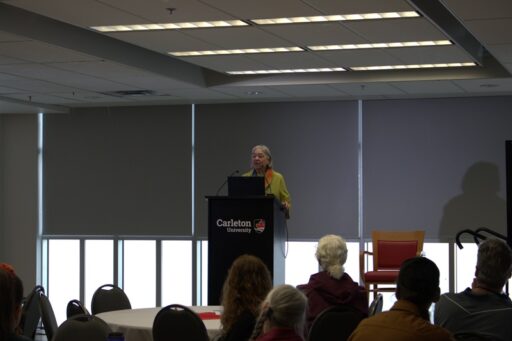
Day One: Citizenship Through L’nu Law
The opening keynote, delivered by Tuma Young of Eskasoni First Nation, focused on using L’nu law to establish citizenship. Young argued that the path forward lies not in further reliance on Canada’s Indian Act, but in turning inward to Indigenous legal sources. Young outlined three approaches: linguistic analysis of kinship terms, jurisprudential study of narratives and community-led deliberation. Together, these methods offer a way to distinguish between citizenship and ethnic descent, ensuring that Indigenous and Treaty rights are defined by Indigenous nations themselves.
Later that day, participants visited the National Gallery of Canada for a panel titled Exhibiting Sovereignty. Representatives from the Gallery’s Department of Indigenous Ways and Decolonization emphasized the role of museums in advancing Indigenous sovereignty. They described efforts to shift from paternalistic language to collaborative stewardship, asserting sovereign spaces for Indigenous staff and transforming institutional structures to reflect Indigenous principles of care, respect and responsibility. The panelists emphasized that decolonizing museums requires challenging the very foundations of colonial institutions, with the ultimate goal of returning authority to Indigenous Peoples.
Day Two: Adoption and Anishinaabe Citizenship
Damien Lee of Fort William First Nation delivered the second keynote, Wiitkaamaaganak: Adoption and the Resurgence of Anishinaabe Citizenship Order. Grounding his presentation in personal experience, Lee highlighted adoption as a legitimate legal order within Anishinaabe tradition. While acknowledging that adoption has been weaponized by fraudulent claimants, he emphasized its role in affirming kinship and belonging.
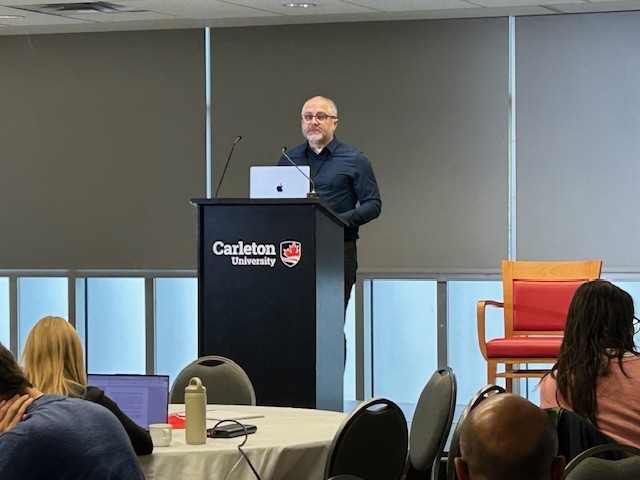
Lee, adopted under Anishinaabe customary law, presented the importance of honouring community membership codes that operate independently of colonial Indian status. He cautioned universities against imposing verification systems that inadvertently take sides in community debates, underscoring that adoption and kinship law must remain central to Indigenous legal frameworks. Ignoring these traditions, he warned, risks reproducing colonial mandates and undermining Indigenous sovereignty.
Day Three: Coast Salish Customary Law
The final keynote was delivered by Robert Jago of Kwantlen First Nation and Nooksack Indian Tribe, who spoke on the return of Coast Salish customary law. Jago situated his nation within the Stó:lō region and emphasized that Coast Salish laws are enacted and enforced through ceremonial life, which continues despite colonial disruption.
He critiqued current policy approaches to identity verification as misguided, proposing instead that universities adopt procedural tools similar to the way apps or websites share information through simple, standardized rules. Such tools would connect institutions to the distinct legal codes of Indigenous nations without imposing uniform frameworks. Jago suggested that Indigenous hiring and admissions must prioritize authentic community connections over superficial racial markers, arguing that nationhood, not race, should guide policy. His remarks challenged policymakers to embrace discomfort and allow space for Indigenous “illiberality” in order to respect sovereignty.
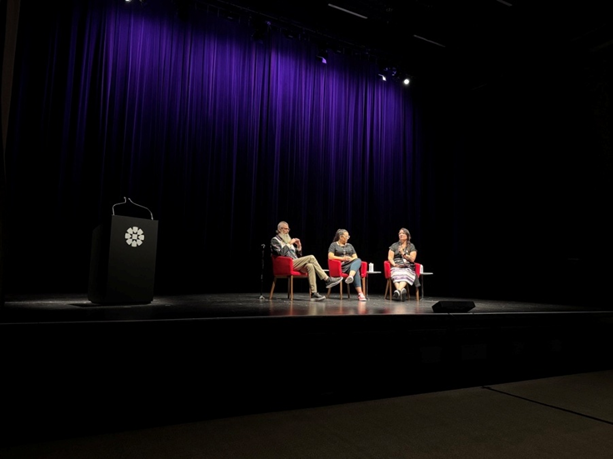
Beyond the keynote addresses, the symposium featured a series of breakout sessions throughout the three days. These sessions created space for delegates to exchange perspectives on practical applications of Indigenous legal orders, share lived experiences of confronting identity fraud and brainstorm policy implications for institutions.
A Step Toward Resolution
The Ojigìjowewin Legal Symposium provided a space for participants to challenge, strategize and inspire one another. Key questions guided the dialogue: What do Indigenous legal orders look like in practice? How can they address identity fraud today? And what are the long-term implications for communities?
The symposium concluded with a call to develop paths forward that support strong, sovereign, culturally grounded and economically sustainable Indigenous nations. Rooted in good relations, the gathering affirmed that Indigenous legal traditions hold the wisdom and authority to resolve identity fraud and reclaim sovereignty.
As the final sessions closed, the spirit of Ojigìjowewin resonated throughout. The symposium marked a significant step in addressing false claims of Indigeneity, offering a vision of resolution that is rooted in tradition while embracing forward-looking perspectives.