Inside Government: Capstone Students Take on the National Interest
What does it mean for the federal government to decide whether a major energy project is in the “national interest”? For graduate students in the School of Public Policy and Administration’s capstone course, answering that question meant working within compressed timelines, institutional trade‑offs, and policy-politics interfaces that define federal policymaking.
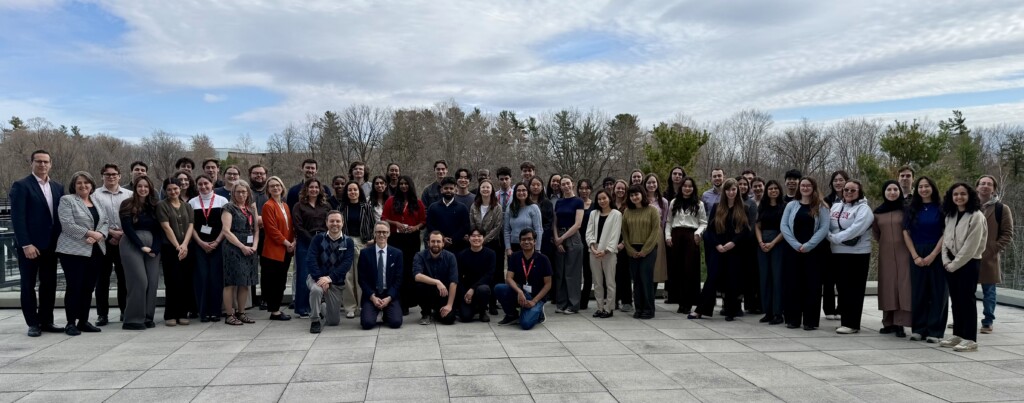
This year’s capstone – a final core requirement for students in our MPPA program – centred on a fictional yet highly realistic case exploring whether the federal government should designate a major liquefied natural gas project as a national interest project under the Building Canada Act. Framed as advice to Cabinet, the case asked students to grapple with how designation would actually work in practice. Over four intensive days, students assumed the roles of senior analysts across ten key federal departments, from Natural Resources Canada and Environment and Climate Change Canada to Crown‑Indigenous Relations and Northern Affairs Canada and Global Affairs Canada.
As part of the exercise, students internalized their departmental mandates and engaged with live policy tensions such as federal‑provincial-territorial relations, Indigenous consultation and treaty obligations, marine impacts, grid readiness and electrification, export markets, and domestic and international commitments to address climate change. They prepared briefing notes, delivered oral briefings to an adjudication panel of former senior officials, and then negotiated a whole‑of‑government communiqué reflecting a shared recommendation to Cabinet. The process mirrored real federal decision‑making: limited time, incomplete information, competing mandates and authorities, and the challenge of reconciling economic, climate, Indigenous, and geopolitical considerations into a coherent position.
“This is about developing the best advice possible under real‑world constraints”, said Professor Daniel Rosenbloom, co‑instructor of the course. He added that “success in these environments hinges on exercising sound professional judgment, engaging horizontally across government, and bringing technical expertise to bear”.
Participants engaged directly with senior assistant deputy ministers, directors general, and senior policy advisors, as well as experts from civil society and Indigenous organizations. These interactions exposed students to how advice travels through the machinery of government along with how assumptions are questioned, risks are surfaced, and trade‑offs are navigated.
For Professor Graeme Auld, who co‑designed and co‑taught the course, the capstone captures the professional core of policy education. “Students are not just learning how to analyze policy problems”, he said. “They are learning how to inform decisions and take responsibility for advice that must be credible and actionable”.
The final communiqué, negotiated collectively across departments, showcased students’ ability to build a coherent whole‑of‑government position while preserving core concerns. The experience offered a consequential glimpse into the realities and responsibilities that come with policymaking and exemplified SPPA’s commitment to policy education that emphasizes critical thinking, evidence‑based analysis, professional judgment, and the ability to operate effectively in real‑world decision-making environments.
Congratulations to all the students who participated!
Interested to learn more? Checkout the capstone course here.