National Centre for Critical Infrastructure Protection, Security and Resilience
Critical Infrastructure: Protected? Secure? Resilient?
Our Priority
Safeguarding Canada’s critical infrastructure is not just a priority—it’s our mission.
Our Mission
The National Centre for Critical Infrastructure Protection, Security, and Resilience (NC-CIPSeR) is Canada’s leading hub for critical infrastructure research, collaboration and innovation. As a not-for-profit housed at Carleton University, we serve as the neutral bridge between government, industry, and academia. Through collaboration with Carleton’s unique Infrastructure Protection and International Security Master’s program and the Norman Paterson School of International Affairs, we streamline research activities to address Canada’s most pressing challenges.
By connecting stakeholders, operationalizing research, and amplifying innovative solutions, we push boundaries through projects, create meaningful dialogue, and address critical infrastructure protection needs. Our focus is clear: transforming challenges into opportunities and delivering real-world solutions.
The Critical Problem
Today’s challenges to critical infrastructure are unprecedented. Geopolitical instability, terrorism, sabotage, and espionage threaten our national security. Cyberattacks grow with relentless complexity, testing our resilience. Climate change fuels natural disasters, while aging infrastructure struggles to keep pace with technological advancements and policy gaps. In the Arctic and undersea, sovereignty and infrastructure vulnerabilities add new layers of urgency. Cascading impacts can cripple essential services, leaving communities vulnerable and economic stability at risk.
Canada’s current approach, built on voluntary partnerships and sector collaboration, has provided a strong foundation for resilience. But in today’s environment, this approach alone is no longer sufficient. Without stronger mechanisms to identify and designate critical infrastructure operators, policies remain guidance, regulations are unevenly applied, and standards cannot always be enforced across sectors. Agencies responsible have been doing some great work. Let’s measure this and amplify it – and use it to strategically reduce the gaps in other areas.
Our allies are adapting quickly by introducing designation and enforceable resilience obligations. Canada now has an opportunity to build on its existing framework, modernize sector definitions, and close this vulnerability gap ensuring resilience at home and alignment with partners abroad. Review the below numbers to help understand the complexity and depth of the challenges:
4 Domains
National Security, Critical Infrastructure, Emergency Management and Defence.
10 Sectors
Covering energy, Health, ICT, transportation, water, finance, and more.
13 Provinces and Territories
The domains & sectors span across every region of Canada.
50+ Agencies
Shared responsibility across federal and provincial governments.
75 Threats and Hazards
From cyber and insider threats to floods, wildfires and earthquakes.
3500 Municipalities
Where resilience is built and impacts are most directly felt.
Our Role
We act as the connective tissue between government, industry, and academia – accelerating collaboration, lobbying where needed, translating research, shaping policy, and convening neutral ground for resilience.
Take Action
Join us in shaping the future of Canada’s critical infrastructure resilience. Learn more about our work, collaborate with intention with us, or explore our research initiatives. Our recipe is engagement and together, we can build a stronger, safer future.
Insight into Projects

Energy Sector Task Force
Government, Industry and Academia collaborating to unravel energy priorities

CANVAS Project
Maintaining a threat and hazard library useful for CIP

Centre of Excellence
Developing standards and sharing best practices.

Intelligence Hub
National Strategies, Threat Assessments,Sector Specific & Historical Reports

Artificial Intelligence
Understanding the impact of AI on cyber attacks on critical infrastructure.
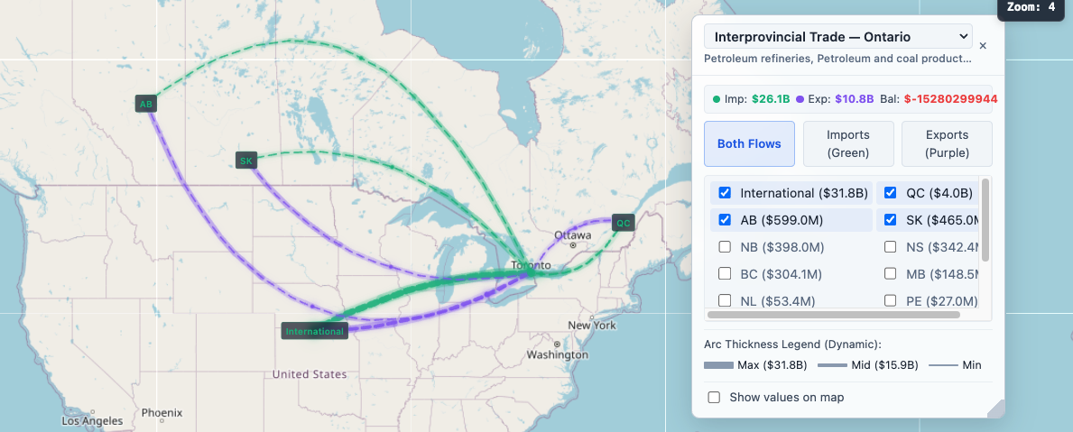
CIMAS
Critical Infrastructure Mapping and Analysis Substrate brings infrastructure, economic and hazard-related information into an integrated visual environment. Official launch October 2026.
Frequently Asked Questions
-
What is a Threat and Hazard Library?
A Threat and Hazard Library is a comprehensive, organized collection of information and resources related to various threats and hazards that could impact critical infrastructure. This library serves as a centralized repository where users can access detailed profiles, risk assessments, research papers, and other relevant data on specific threats (e.g., terrorism, cyber-attacks, pandemics) and hazards (e.g., natural disasters like floods, wildfires, earthquakes).
At NC-CIPSeR, our Threat and Hazard Library is an integral part of Project CANVAS—an innovative initiative designed to bring together experts from industry, academia, and government to create comprehensive profiles of all hazards and threats impacting critical infrastructure. Through Project CANVAS, we ensure that our library is continually updated with the latest research and data, providing a valuable resource for professionals, researchers, and policymakers.
The library is designed to support professionals, researchers, and policymakers in understanding the risks associated with these threats and hazards, helping them to develop effective mitigation strategies, preparedness plans, and response protocols. It also facilitates knowledge sharing across sectors, with other research centres, ensuring that all stakeholders have access to up-to-date and reliable information.
Our Threat and Hazard Library will be continually updated with the latest research and data, providing a valuable resource for anyone involved in critical infrastructure protection and resilience.
We are in the initial stages of developing Project CANVAS, which is an enormous task. As we progress, we aim to build a world-class resource that will serve as a cornerstone for critical infrastructure protection across Canada and beyond. -
Research publications and findings are available through our peer reviewed journal, Pulse & Praxis: The Journal of Critical Infrastructure Protection, Security and Resilience – which is an open access journal. We also feature articles and highlights of our research in our newsletter Pillar & Prose and on our website.
-
NC-CIPSeR operates as a not-for-profit to maintain a focus on public interest and societal safety without the influence of institutions or profit motives. This structure facilitates collaboration with various stakeholders, including government entities, academic institutions, and industry leaders, to advance the protection and resilience of critical infrastructure collectively. This approach ensures that research and solutions are driven by need and efficacy rather than financial incentives. The Centre can make decisions quickly and pivot when needed.
-
The centre is closely aligned with Carleton’s Infrastructure Protection and International Security Master’s program and the Norman Paterson School of International Affairs. The centre’s multi-disciplinary approach creates a simple recipe to collaborate across programs and faculties.
-
NC-CIPSeR undertakes various projects such as the Energy Sector Task Force which identifies vulnerabilities and priorities and Project CANVAS, which involves maintaining a threat and hazard library for critical infrastructure protection. We take a strategic approach in how we identify projects to invest in. Do you have an idea for a project?
Updates






Events
-
Dec 31
Volunteer Hours & Project Reporting | Quarterly Updates
-
12:00 AM to 12:00 AM
-
TBD
-
-
Dec 31
Volunteer – Annual Engagement Survey
-
12:00 AM to 12:00 AM
-
TBD
-