“Ban this Book” course equips students to fight back against censorship
While we live in an age of information with fast facts and explainer videos just a tap away, certain histories and stories are becoming harder and harder to find.
This seemingly contradictory phenomenon is explored in “Ban this Book: Censorship, Sexuality, and Questions of Harm,” a unique graduate course offered at Carleton University that encourages students to take direct, local action against censorship.
Throughout the course, students learn about the different laws, policies, trials, and practices used to target books, bookstores, libraries, and schools for representations of marginalized sexual and gender identities – and, more recently, racialized identities and information about racist and imperial histories.
Taught by English professor Jodie Medd, the goal of the course is to educate about this history of censorship and connect that history to the challenges we face today, such as Alberta recently ordering its school boards to remove certain books from their libraries.
“I want them to see that our current moment is part of an ongoing history,” explains Prof. Medd, “but a history that also includes resisters, fighters, and defenders of basic values – from the right to read, to the freedom to love and live.”
To that end, the course gives students the opportunity to work together on a community engagement group project relevant to what they’ve been discussing in class.
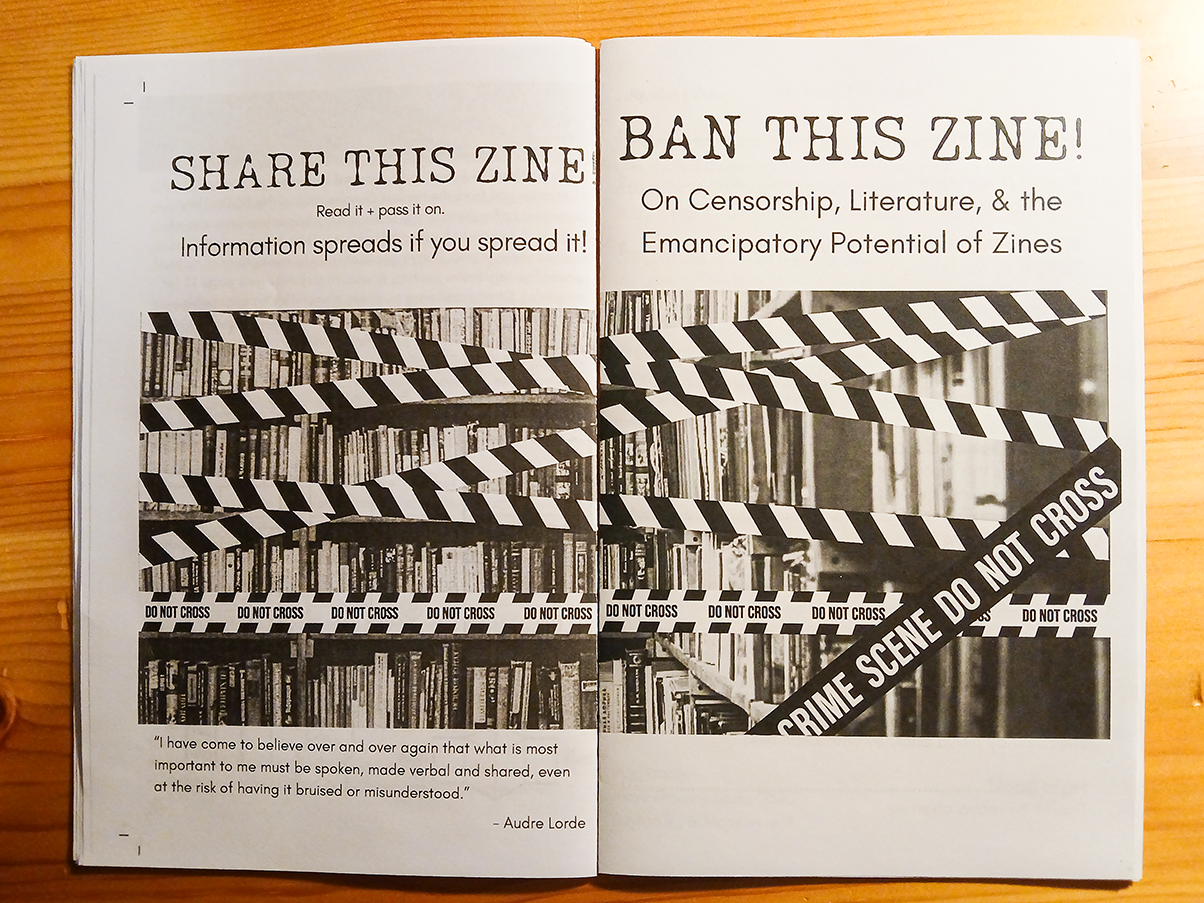
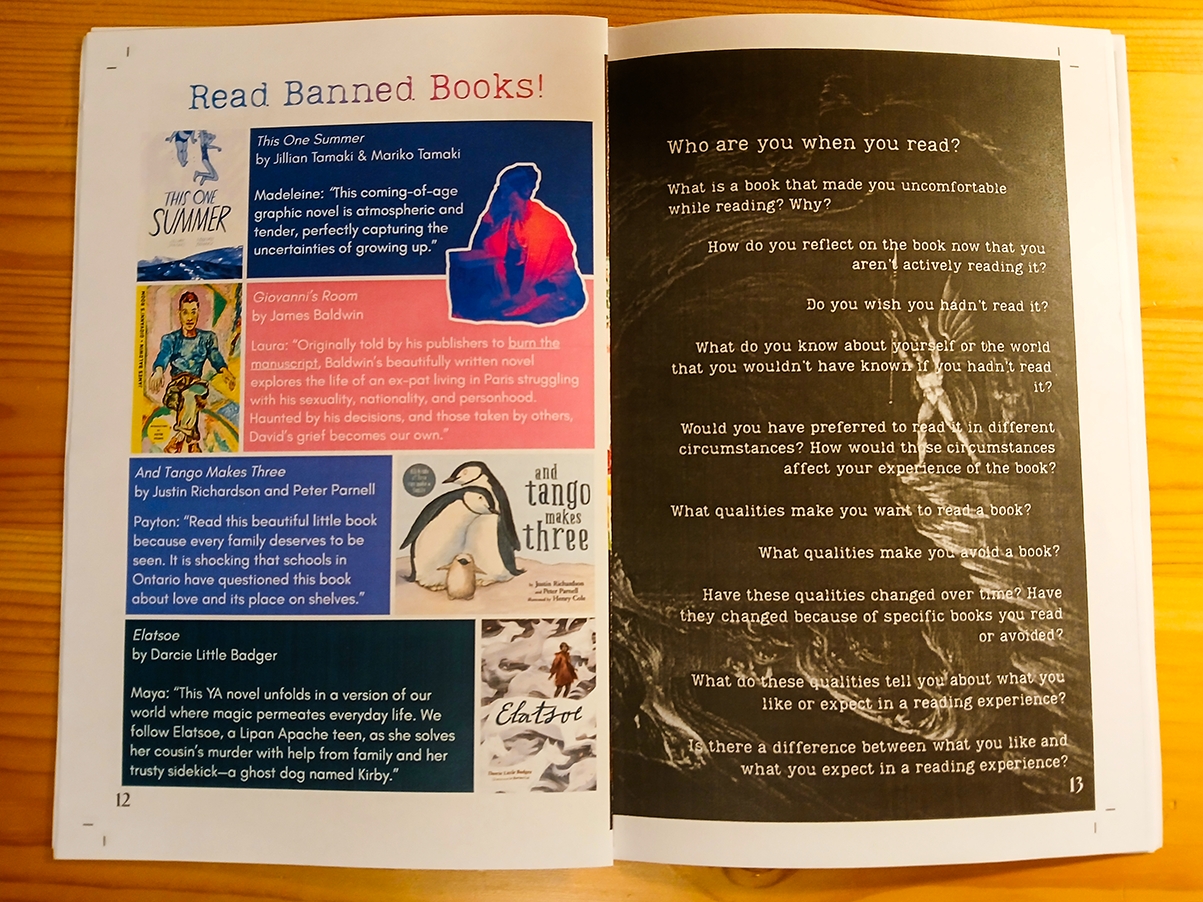
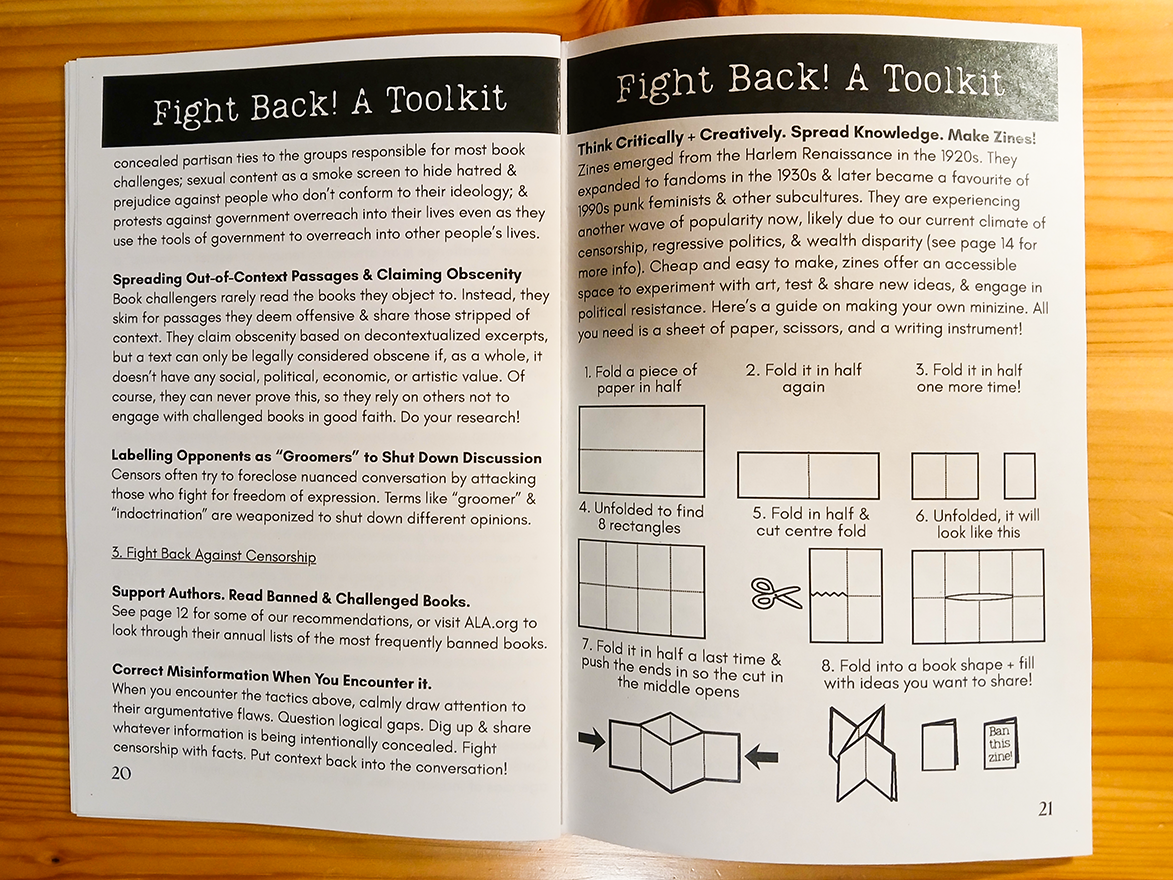
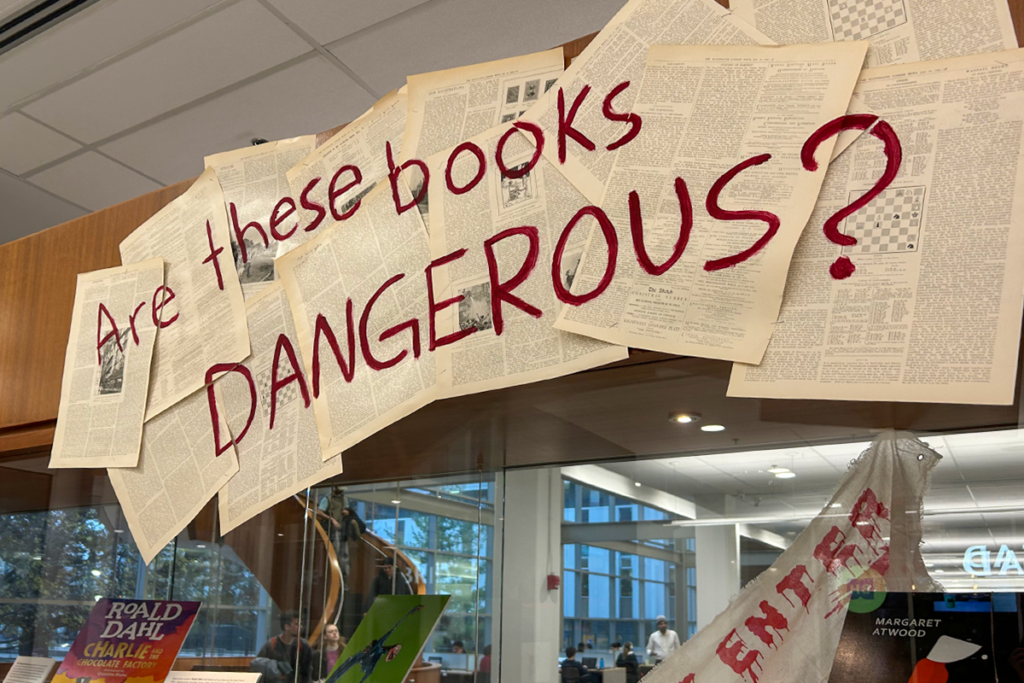
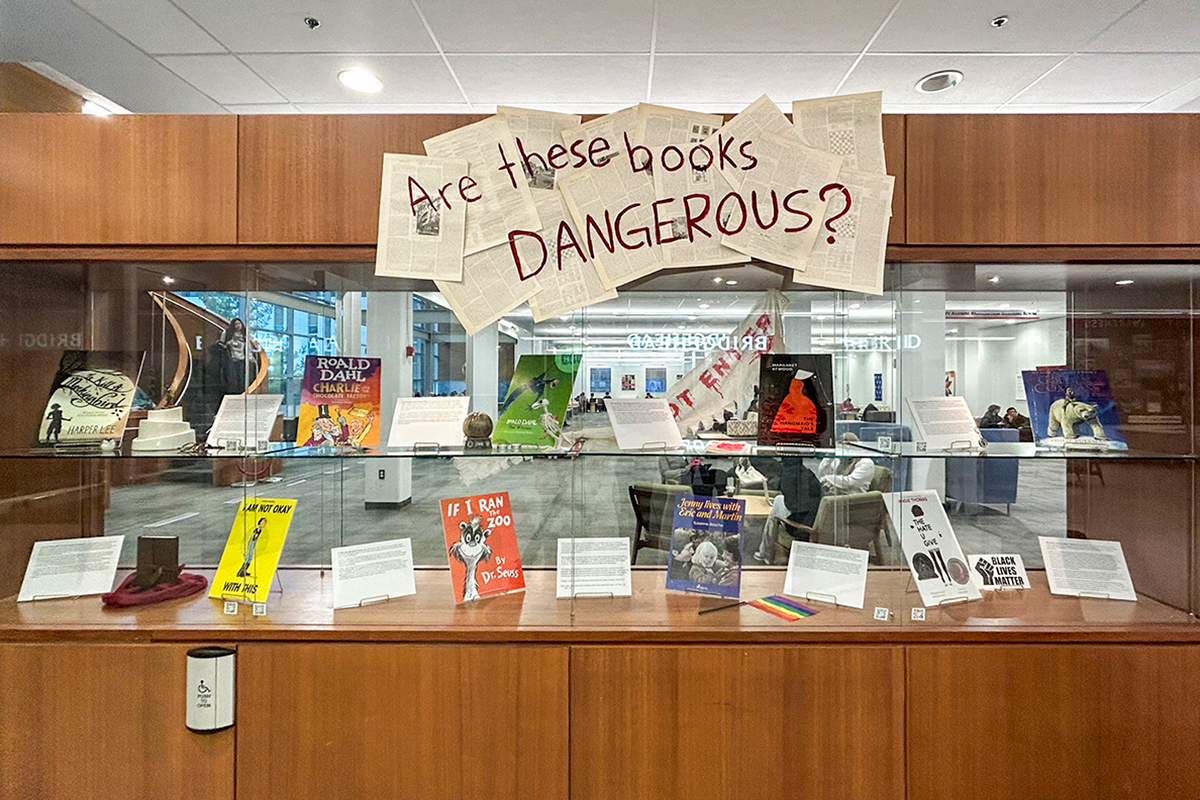
For example, the course’s Fall 2025 cohort helped organize a public talk by celebrated storyteller Ivan Coyote, created and distributed their own zine, volunteered at a new Ottawa-based queer film and art festival, designed a “dangerous books” display in the MacOdrum Library on campus, and raised money for the Ottawa Trans Library, just to name a few projects.
“In a course that tackled pressing – and depressing! – issues that could lead to a sense of despair or overwhelm, the class members generated joy, excitement, and possibility through their process of working together to make some lovely and powerful things happen,” says Prof. Medd.
Two graduate students reflect on their community engagement projects, in their own words:
What, if any, books are truly dangerous?
By Ashley Menard (MA student in English)
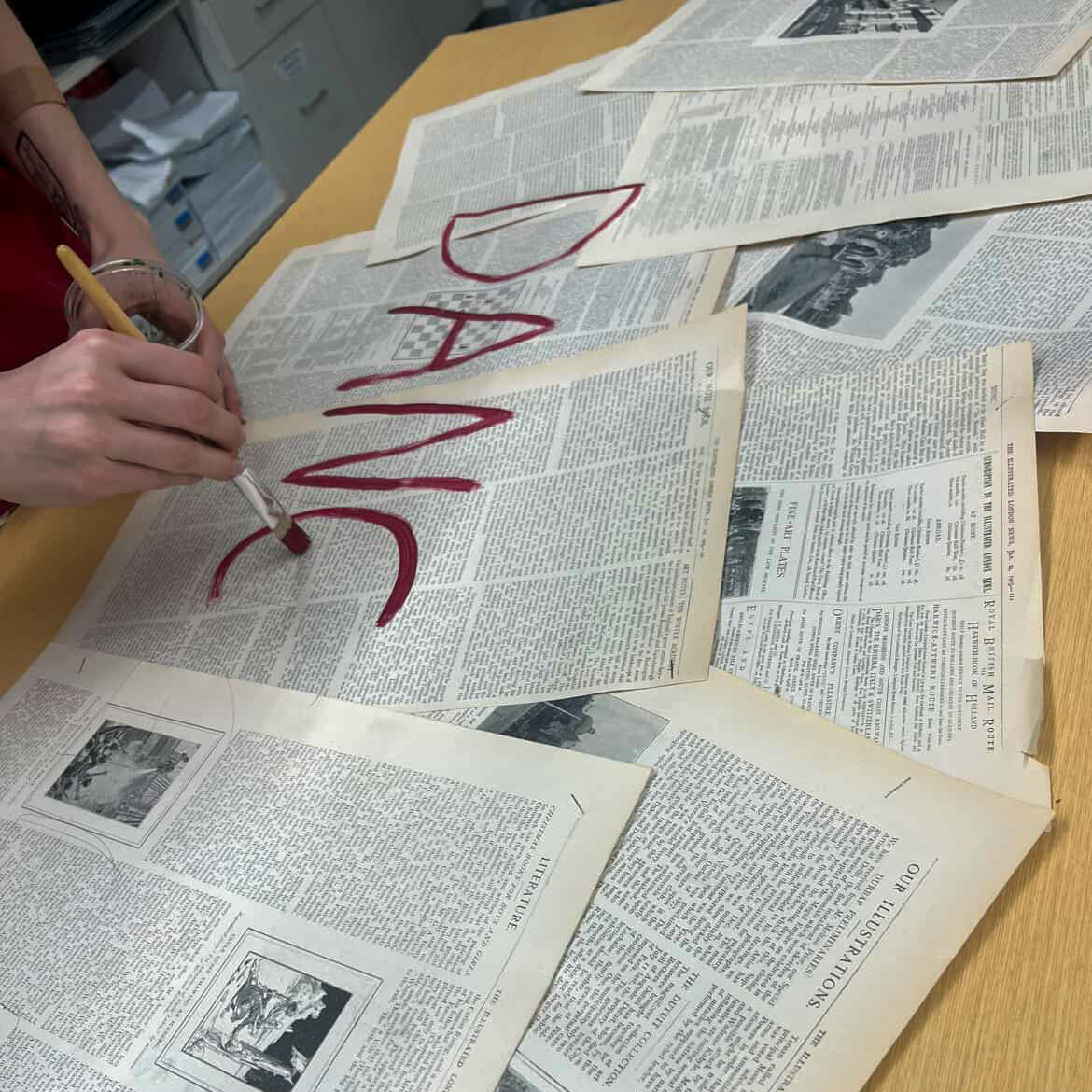
In Prof. Medd’s “Ban this Book” course, I worked with three classmates – Malak Zaid, Joyce Friesen, and Ally Robidoux – to create a library display called “Are These Books Dangerous?”
The display paired vivid visuals that hinted at each book’s themes with short text summarizing the book and explaining the challenges those titles have faced (and still face) in Canadian contexts. Although many of the books have not been formally banned, we wanted to spark discussion about what makes a book “dangerous,” and what motivates attempts to restrict it.
Our research suggested that outright bans are relatively rare in Canada, but challenges are not, and they come from a wide range of concerns across the political spectrum. I was surprised by the diversity of reasons, since I expected conservative and reactionary values to drive most objections, but found progressive concerns also drove challenges.
Finally, I noticed that many challenges claim to protect youth, from young children to teens, yet young people themselves had little voice in the proceedings I reviewed. Listening to those most directly affected could be an important step in deciding what, if any, books are truly dangerous.
Circumventing obstacles to knowledge through DIY publishing
By Maya Chorney (PhD student in English)
Payton Leigh, Laura O’Gallagher, Madeleine Vigneron, and I formed our group based on a shared interest in doing something with zines. After discussing a few possibilities, such as hosting a zine workshop, we ultimately decided that making one of our own would be the best way for us to share ideas and research inspired from this class with the general Ottawa community.
Zines have a long political history as a form of DIY publishing that can circumvent such obstacles to knowledge circulation as literary gatekeeping, censorship, systemic racism, financial inequity, and more. The medium’s intertwining of artistic and activist labour allowed us to centre the importance of knowledge access not only through our content, but through the zine’s form itself.
To develop the zine, we each took up topics related to the course and broader issues of censorship that we were most interested in. The result is a multi-media research-creation project that features mini essays, poetry, an interview with a community member, interactive prompts, and other resources that we hope will equip readers with knowledge to better understand censorship and tools to fight back against the kinds of regressive politics we have been discussing throughout the semester.