Documenting Canada’s Design Heritage
By
Emily Putnam
Photo Credit:
Ainslie Coghill
In the curve of an old electric kettle, the hum of a mid-century hairdryer, or the shape of a plastic teacup, Canada’s design heritage is quietly hiding in plain sight.
Today, researchers at Carleton University together with national partners are working to preserve this heritage and bring its stories to light.
Led by Dr. Jan Hadlaw at York University, and co-directed by Michael Windover, Head of Art and Architectural History at Carleton, the xDX Project aims to foster the study of Canada’s design history and heritage.
Windover explains that designed objects connect us to the past in tangible ways, and, by turning our attention to them, we gain insight into Canadian life.
“I hope this project highlights for Canadians that design is all around them, that it affects their everyday lives, and that there are many stories of Canadians in the designed things in the collection, as well as others around us.”
“We also hope that this will lay a foundation for adding more people, institutions, and collections in the future, building a more robust research network and digital tools to support this work.”
By exploring objects and archives once held by the Design Exchange (DX), the Toronto-based centre focuses on promoting design innovation as well as design history in Canada.
In 2019, the DX deaccessioned its entire collection to the Royal Ontario Museum (ROM), the Canadian Museum of History (CMH), the Archives of Ontario, York University, and Carleton. At Carleton, the xDX collection is used as a teaching and research resource and is managed by the Audio-Visual Resource Centre in the School for Studies in Art and Culture.
With the dispersal of the DX’s objects came an opportunity: researchers, curators, and archivists from these institutions, as well as digital humanities experts from Linked Infrastructure for Networked Cultural Scholarship (LINCS) and the Canadian Heritage Information Network (CHIN), are working together to digitally reconstruct and reinterpret the DX Collection.
Many of the objects in the collection are mass-produced. But once they’re collected, accessioned, and become artefacts, they take on a different role.
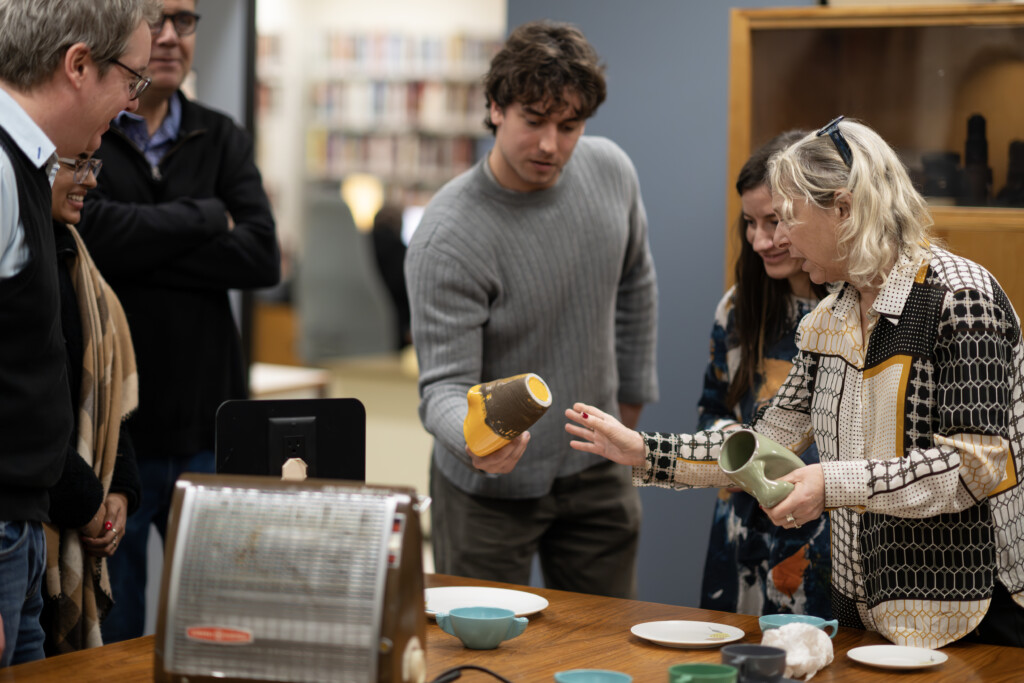
“I like to think that they ask us questions about people, places, and institutions from the past. When we look at a mid-century hairdryer, for instance, we are confronted with questions about technology, aesthetic, materials, production, and design process. We’re also taken imaginatively to spaces once inhabited by this designed device and are left wondering about how it was used and who used it.”
Windover says the project was inspired by the idea that dispersing a key collection of Canadian design objects could draw the attention of individuals and institutions interested in supporting design history in Canada.
“These objects were collected to celebrate achievements of Canadian design on the one hand, and, on the other, to learn more about how designers, manufacturers, and producers of designed objects responded to their circumstances.”
One of the challenges faced by historians is finding evidence to answer questions artefacts raise, and filling in the gaps left by the archive.
“We don’t have design history programs in Canada. In their absence, we have scholars working in a variety of academic fields and in some museums doing the work of design history.”
“In sharing different perspectives, we learn so much more about the things in front of us. Having designers on the team provides a kind of insider knowledge about how things are made, which can enrich the data about materials and production techniques. Having former curators of the Design Exchange on the team helps to answer questions about why objects were chosen in the first place and how they have been used to tell design histories in the past.”
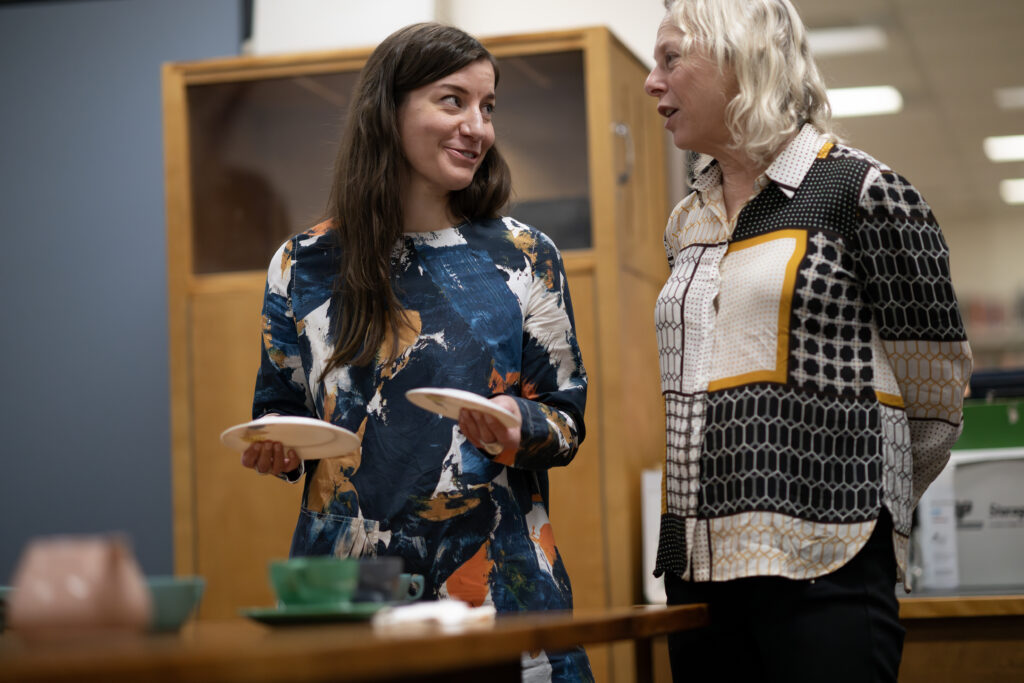
Each steward of the xDX collection is sharing its data on the artefacts to help build the linked open data model, now being developed with partners LINCS and CHIN. Beyond sharing data, the partner institutions are also providing support, training, and resources to students.
The project is also making records and representations of designed objects digitally accessible through partner websites and through shared resources, like the xDX project website and a linked open data resource in ResearchSpace.
Windover notes that one of his RAs, Master of Design student, Dhatri Gunupudi, completed an internship at the Canadian Museum of History under Curator Joanne Stober in the summer of 2024. This year a York University student is interning with the Archives of Ontario.
“All the partners are interested in making their collections more visible to the public and this project highlights ways that GLAM (galleries, libraries, archives and museums) and postsecondary education sectors can come together to enhance each other’s missions of supporting research and helping to tell important stories about our past,” says Windover.
Romy Poletti, a lead PhD research assistant for the project, says the xDX study collection will help us, in part, to work through distinctions between a ‘Design Object’ and an everyday object that is designed.
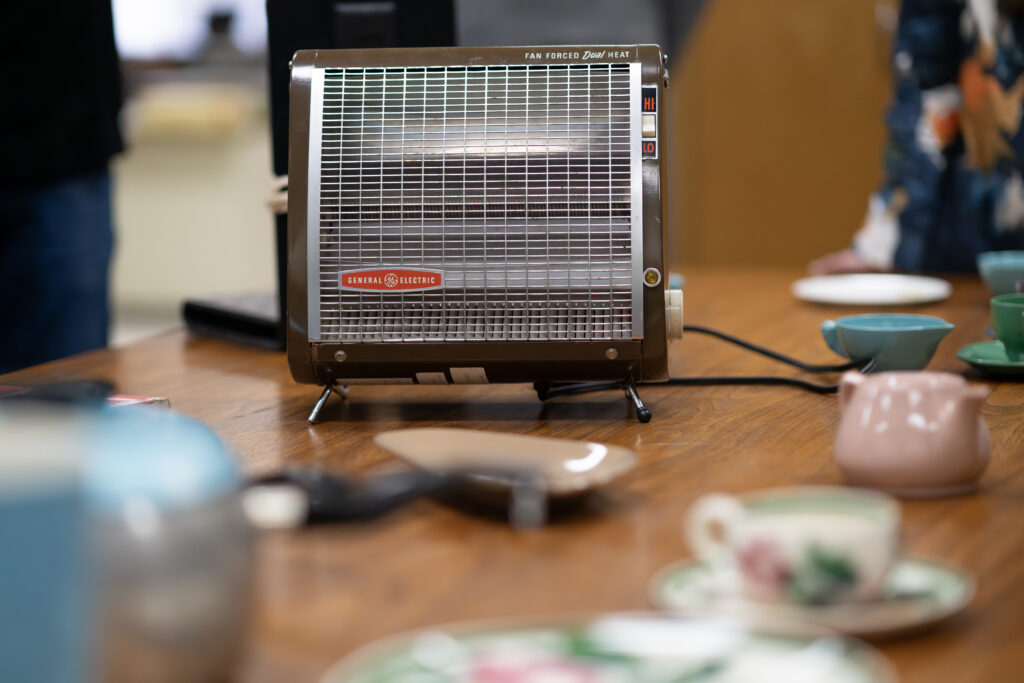
“This is a wonderful opportunity to start identifying and redefining relationships between objects that go beyond merely connecting them because they were once part of the Design Exchange collection that was housed under the same roof, the former Toronto Stock Exchange building.”
The project links these objects using museology, cultural objects cataloging standards, and Digital Humanities protocols (CIDOC-CRM) using URIs (or Uniform Resource Identifiers) to connect and articulate relationships between objects.
For the xDX Project, this means objects can be connected by a multitude of shared relationships, including the designer(s), materials, type, manufacturer or location of production.
Because many of these objects were mass-produced by large corporate entities, details about individuals involved in their design and production are often omitted from collection records.
Bjarki Hallgrimsson, Associate Professor of Industrial Design, is a project co-applicant.
“The deaccession of the DX was a huge loss to the design community at large and society in general. We felt obliged to take some of the items that the ROM and CMH could not absorb.”
He hopes the project demonstrates Canada’s rich design history that includes unique and innovative products that were designed here.
“Everyday objects allow us to live the lives that we live. Upon closer inspection, nicely designed products bring joy and ease of use and serve as a snapshot into society and culture at different time periods.”
“We are blessed by having such important and significant partners, both within Carleton and externally. Their involvement results in a more scalable and impactful output,” says Hallgrimsson.
Nancy Duff, Head of the Audio-Visual Resource Centre at Carleton, took stewardship of the xDX objects transferred to Carleton.
She develops online tools for access, shares information about the objects, and works with student assistants on collection management tasks.
Duff explains that preserving material culture allows for tangible interactions with our past.
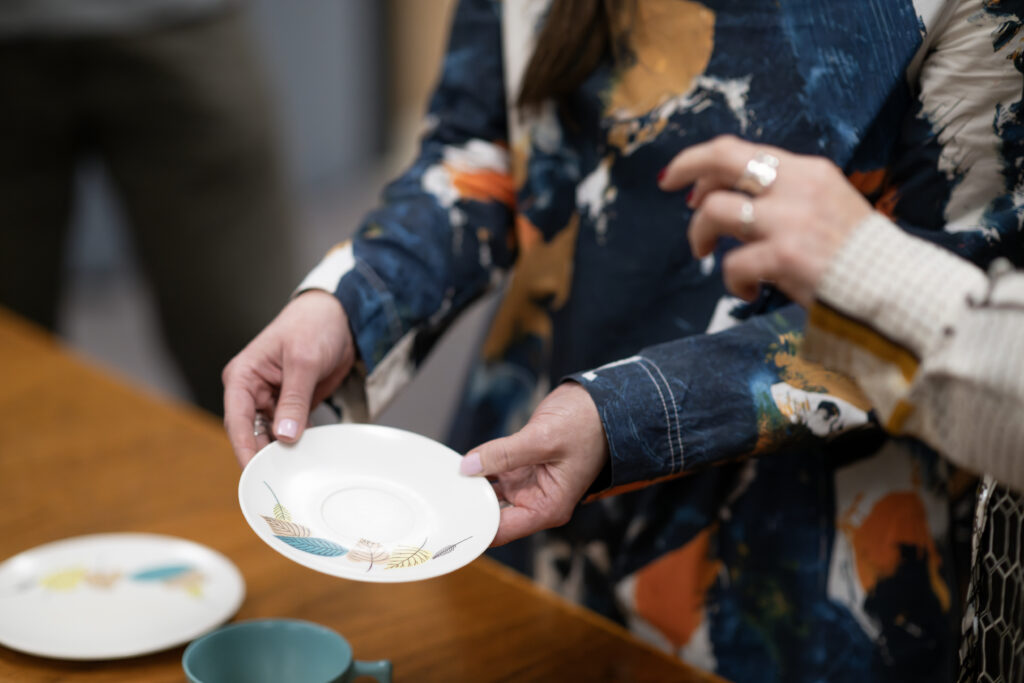
“It opens up different conversations about the creative process and the potential meaning of “everyday” objects at the personal and community level.”
This semester, there are three new displays installed on the 4th floor of the St. Patrick’s Building that showcase many objects from Carleton’s xDX study collection with a QR linking them to the new Special Collections database.
One of Romy Poletti’s favourite parts of this multi-year project is working with other RAs and learning what other aspects of the project most interest them in their fields.
“My research interests and frameworks in cultural studies and design history may follow completely different research paths, different analyses, than perhaps someone working within a field such as industrial design, data management, or library and information science. I love how this project means so many different things to each of us.”
Poletti says she’s honoured to work directly with the original DX Collection.
“I have been afforded incredible opportunities to connect with researchers and leaders in various fields pertaining to my future career and academic goals including digital humanities, curatorial and museum studies, and government cultural agencies, gaining insight into potential careers and paths leading into these fields and sectors.”