From Essays to Exhibitions
New Course Turns Students Into Curators of Contemporary Canadian Art
On a chilly spring day, just before lunchtime, a group of Carleton students descended on a plain beige building near the St. Laurent Shopping Centre to mount an art exhibition.
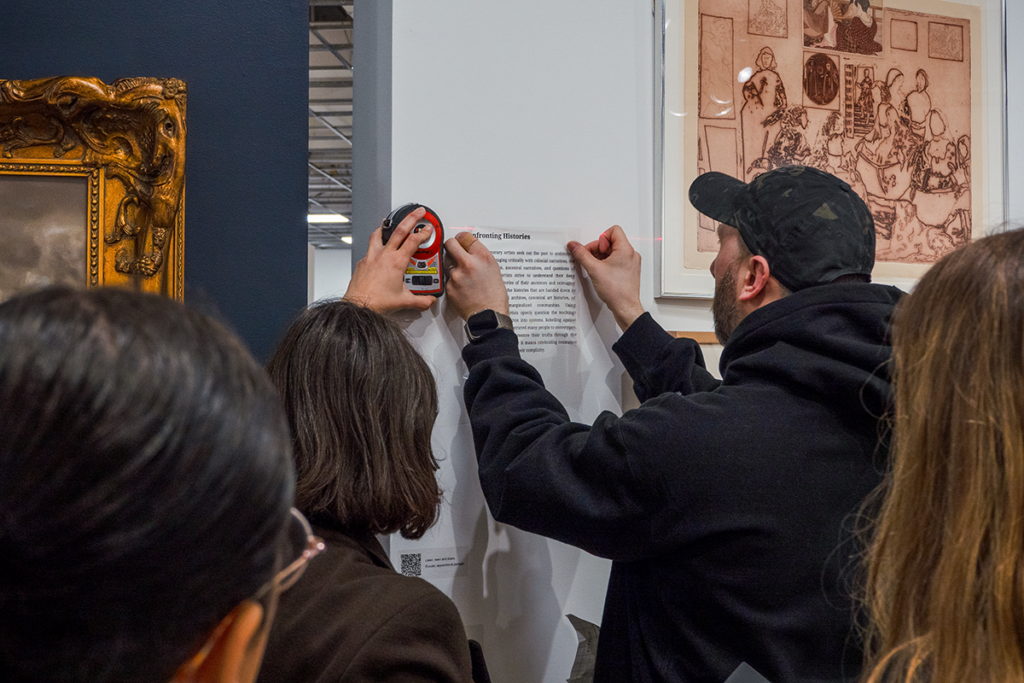
In a flutter of activity, labels were installed onto walls, opening remarks were rehearsed, and a cheese board assembled for patrons to enjoy during the vernissage for Rebellion: The Power of Narrative on April 1, 2026.
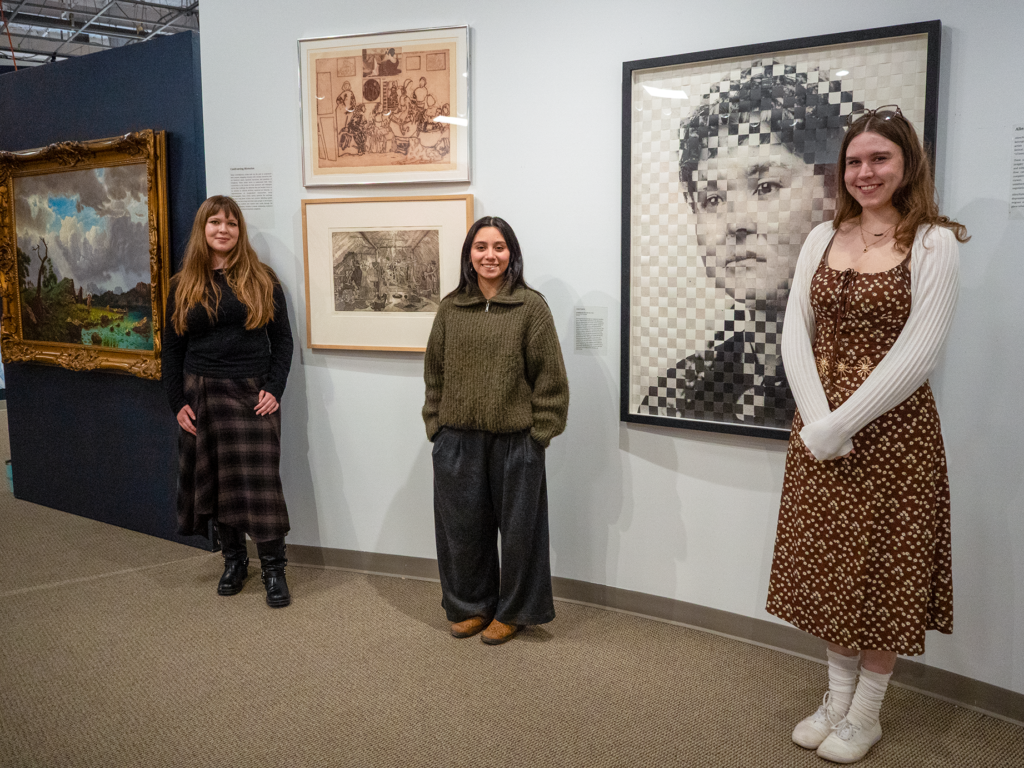
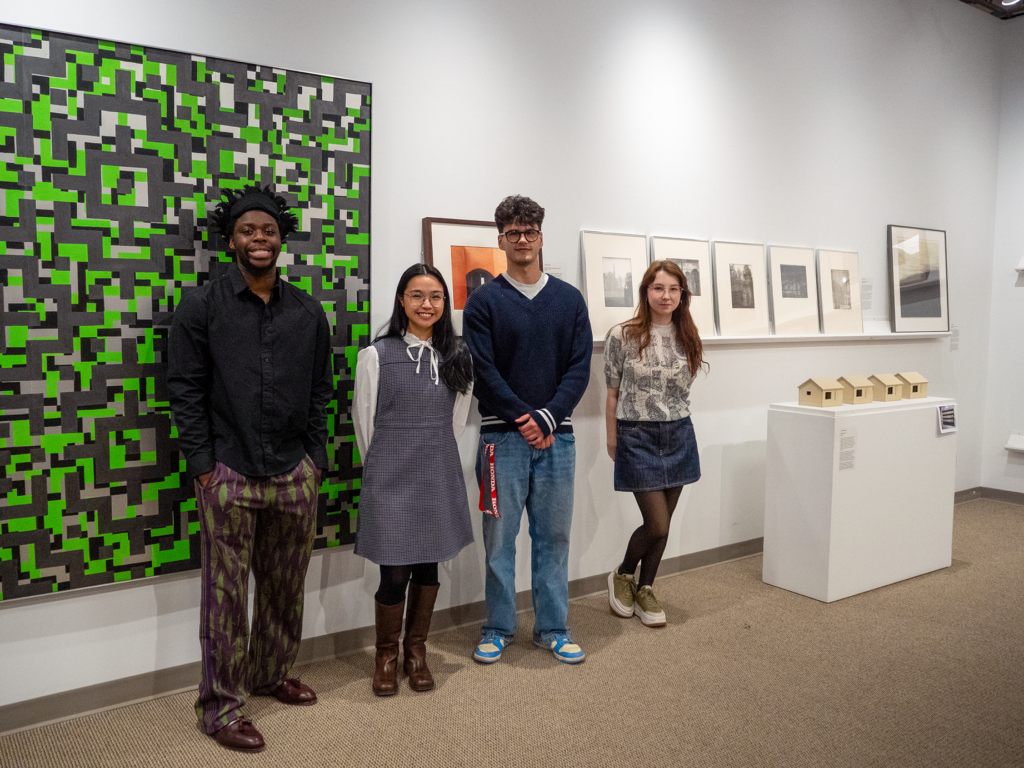
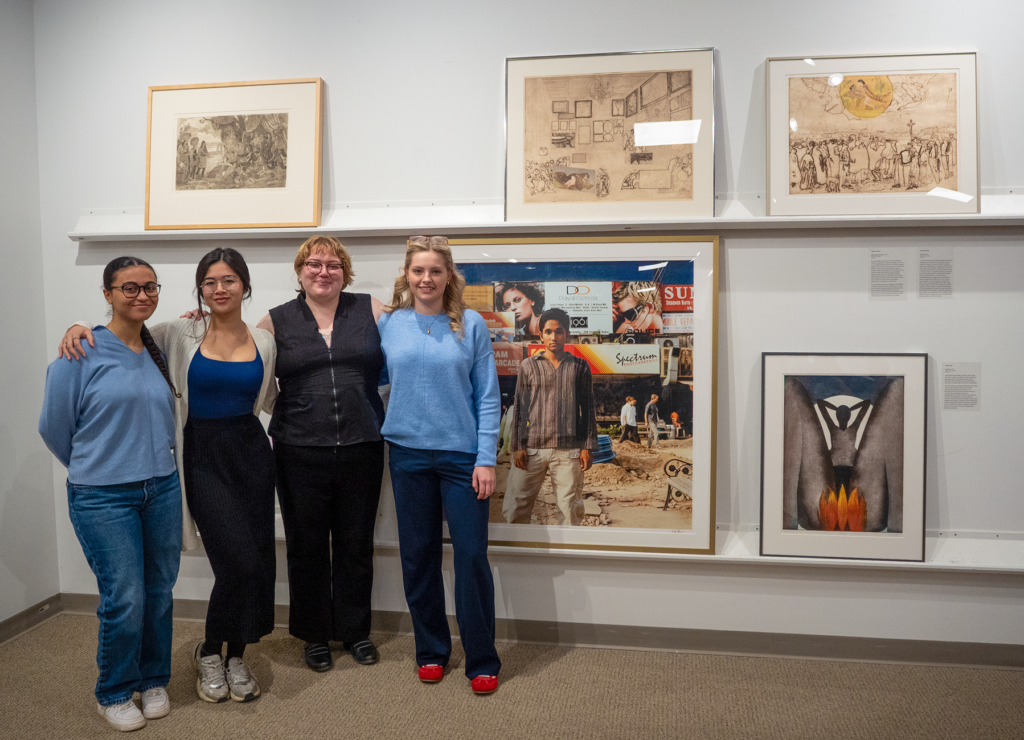
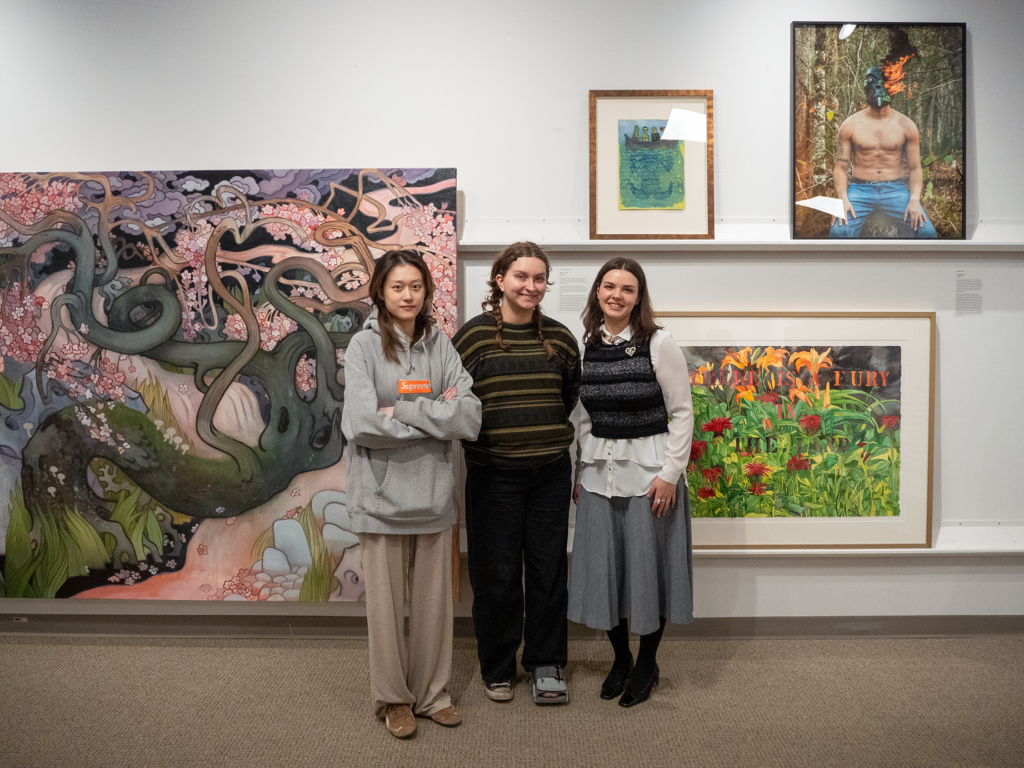
The exhibition itself, a visually striking assembly of 22 artworks by 18 different artists, was curated entirely by students enrolled in “Mobile Subjects: Migration and Diaspora in Contemporary Canadian Art,” a uniquely hands-on art history course offered through Carleton’s School for Studies in Art and Culture.
The building in question, tucked between two sprawling car dealerships, is the Canada Council Art Bank, the unassuming home of the world’s largest collection of Canadian contemporary art.
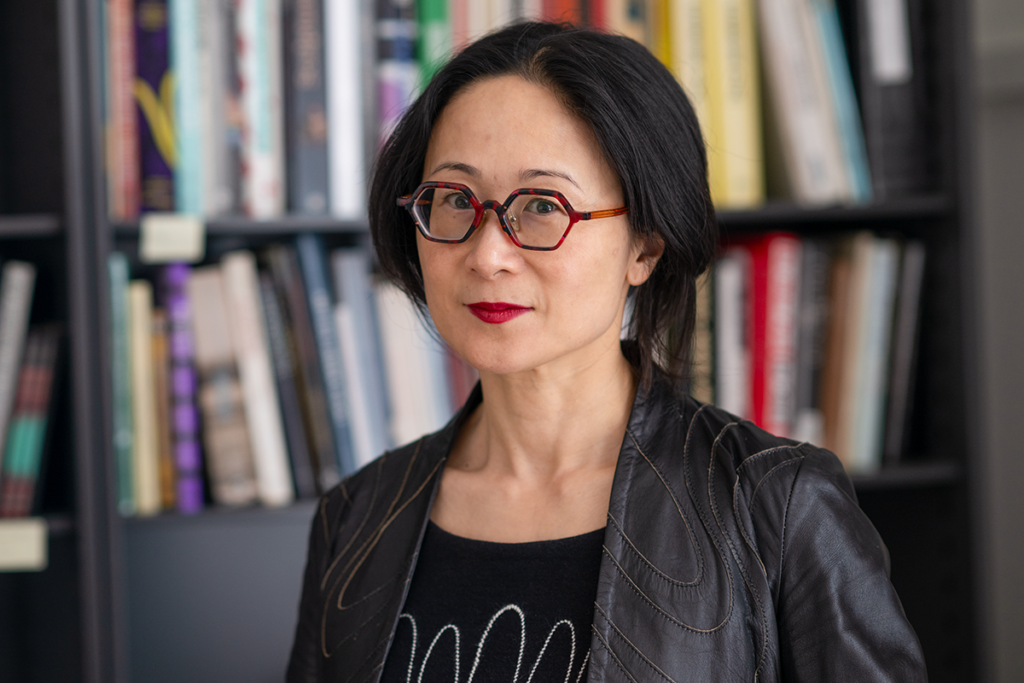
“Art history is usually taught in classrooms, with students writing essays and attending lectures,” explains art history professor Ming Tiampo, who designed the course and is a celebrated curator herself. “This class had the great privilege to make history, drawing from the extensive and extraordinary collection of the Art Bank.”
Reframing How We Think About Canadian Art and Identity
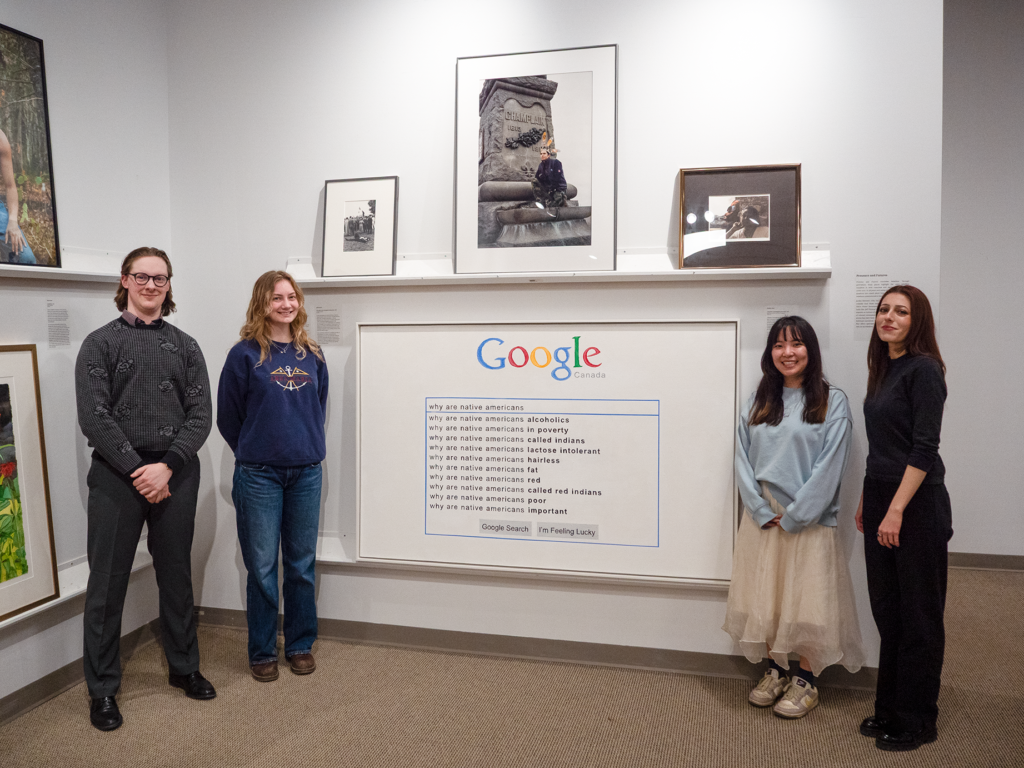
Rebellion: The Power of Narrative brings together the work of BIPOC (Black, Indigenous, and People of Colour) Canadian visual artists to explore how Indigenous, diasporic, racialized, and marginalized communities challenge dominant histories and reclaim their stories.
The exhibition is divided into five thematic sections: historiography, alienation, joy, land, and futurity. While each section was curated by a different group of students, the class collaborated closely to design an art-going experience that encourages visitors to think carefully about the exhibition’s central question: How does our understanding of Canadian art – and Canadian identity more broadly – change when we view art made by people whose experiences have often been purposefully excluded from the conversation?
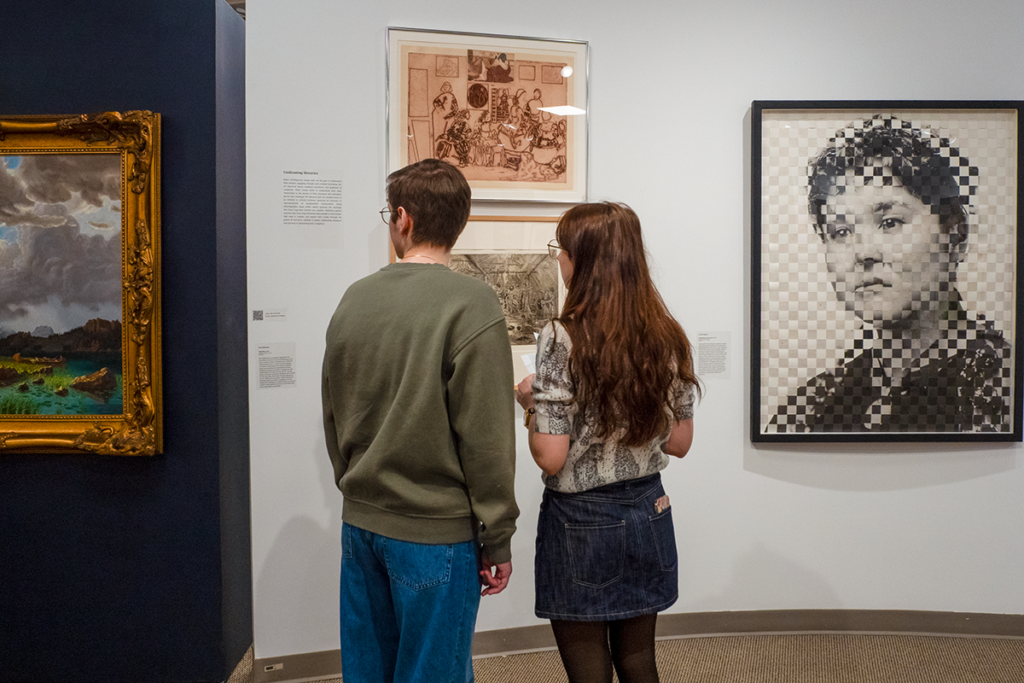
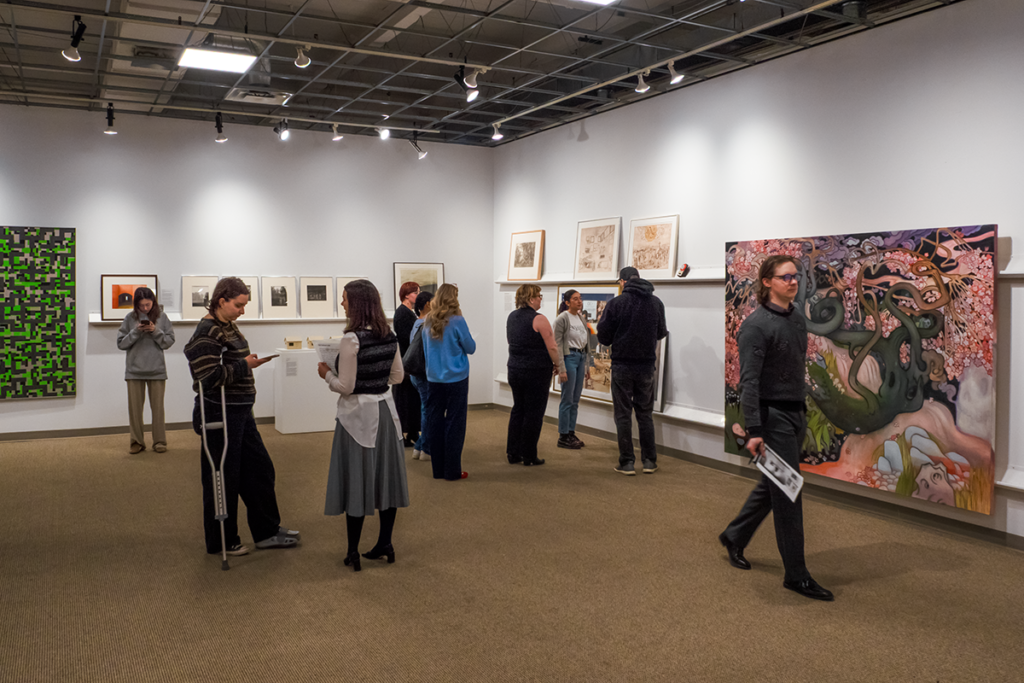
Walking through the white-walled exhibition space, visitors start with Cree artist Kent Monkman’s vivid painting Rebellion (2003), from which the exhibition gets its name, and are led through an installation of works including paintings, drawings, photography, prints, and miniatures.
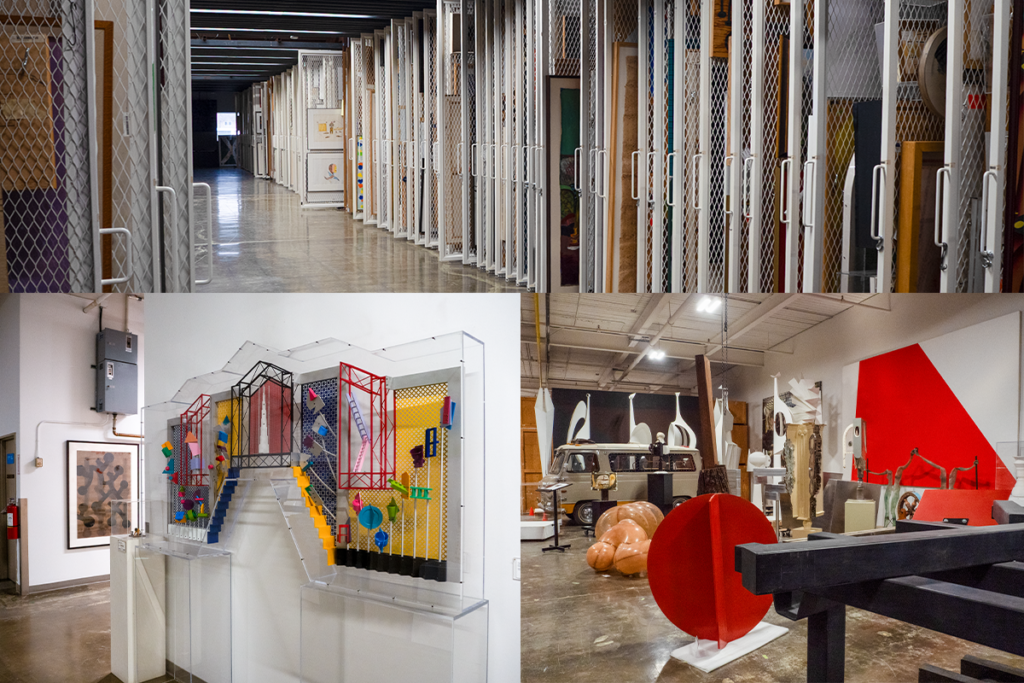
Each one of these pieces was supplied by the Art Bank’s labyrinthine warehouse, headed by Amy Jenkins.
“We have more than 17,000 works of art by more than 3,000 artists,” Jenkins shared, while the students finished setting up the exhibition. “It’s a truly massive collection that we’re always trying to make more accessible, which is why we like to partner with different organizations to promote and circulate the artworks.”
A program of the Canada Council for the Arts, the Art Bank was established in 1972 to help grow the nascent Canadian art market and support local visual artists by buying and promoting their work and displaying them in government offices. Today, the Art Bank rents art to both the public and corporate sectors, in addition to lending out pieces to museums and galleries and organizing exhibitions of their own.
Jenkins said that while the Art Bank has played host to many Carleton practicum students work over the years – “it’s always a win-win when we grant students access to the collection and our space here, because they in return bring a really fresh perspective to our organization” – this is the first time they’ve partnered with Carleton to provide students with access to curate an exhibition.
“The richness of this exhibition is amazing,” praised Jenkins. “I really love the connections that the students made between all these different works of art. Some were acquired in the very early days of the Art Bank and others are more recent purchases, but they’re still linked across time through the shared issues that they raise.”
“I think we have this preconceived notion that visual art is just about beautiful things. But visual art is so much more: it’s about current issues, identity, protest. It’s social commentary.”
A Hands-On Approach to Art History
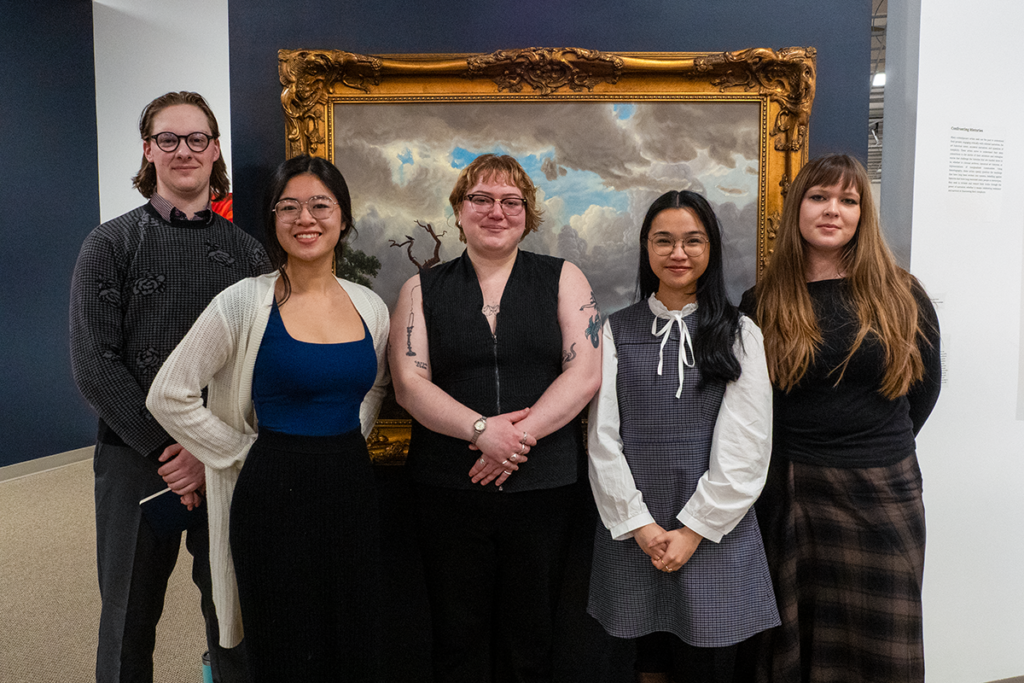
“It was the most hands-on learning experience I’ve ever had,” said Shauna Brierley, one of the 18 student-curators in attendance at the exhibition launch.
Working together, and with Prof. Tiampo’s guidance, the students completed each of the necessary steps involved in mounting a professional exhibition. They researched and selected all the artwork, wrote and installed wall labels, created an exhibition catalogue, designed posters, and prepared detailed presentations which they delivered at the vernissage explaining the creative and curatorial choices behind the show.
“You’re choosing the works and sitting with them for weeks and weeks on end,” said Patricia Mercado, another student-curator in the course. “Ming put us in this extraordinary position to be able to communicate directly with some of the artists and institutions that house these artworks about how we might position them for an exhibition.”
In their presentations, many students brought up how seeing certain artworks in person at the Art Bank, after only having seen images online, reshaped their understanding of the work itself. Up close and in the same space, different elements caught their eye – the texture of brushwork on canvas or the physical size of the work – and changed how they thought and felt about it.
Being able to understand artworks as physical objects in space, as well as within history, institutions, and discourse, is a crucial part of pursuing a career in the arts, explained Tiampo.
“One of the things that Carleton and our department are really good about, is giving students the opportunity to study art from inside art institutions themselves, which are spaces that are often closed off from the general public,” she said.
Seeing the finished exhibition on display was an incredible moment for all involved.
“I’m really impressed with the work that they did,” said Tiampo. “Part of the exercise here is to help them understand that they can be the curators of an exhibition and producers of knowledge when it comes to art history. It’s also quite complicated curating an exhibition with 18 people, so they got an extreme crash course in collaboration and teamwork as well.
“Now they’ll be going into the world with a toolbox of skills to help them become arts professionals in the future.”
The students shared that while the prospect of putting together a full-scale art exhibition felt daunting at the start of the semester, the course was structured in a way that allowed them to tackle the process one task at a time, until everything came together.
“I think there was a point where a lot of us were worried and wondering, ‘Is this actually going to happen?’ Shauna joked. “And then we made it happen!”