Undergraduate Teaching & Microwave Lab
At MARS, we teach the senior undergraduate microwave and antenna courses that sit at the core of our research in antennas, metasurfaces and microwave engineering. ELEC 4502 Microwave Circuits and ELEC 4503 Radio Frequency Lines and Antennas build the analytical and laboratory skills students need for RF design, wireless systems and graduate-level research. Hands-on work for both courses takes place in our Undergraduate Microwave and Antenna Lab (ME4140), described further down this page.
Jump to: ELEC 4502 · ELEC 4503 · How the courses fit together · Undergraduate Lab
ELEC 4502: Microwave Circuits
0.5 credit. Prerequisite: ELEC 3909. Lectures three hours a week; laboratory three hours alternate weeks.
Course summary
ELEC 4502 is our senior course on microwave circuit analysis and design. Students move from transmission-line and network ideas to scattering parameters, matching networks and amplifier design, with computer-aided design and bench measurement running alongside the lectures. The course starts with transmission-line impedance, reflection and the Smith chart, then builds up to active microwave circuits.
Why it matters
Microwave circuits are at the heart of 5G and 6G wireless links, satellite payloads, radar and sensing, automotive radar and defence RF front ends. Being able to match impedances, reason with S-parameters and measure what you built is what turns a schematic into working hardware, and it is exactly what RF employers look for.
Topics we cover
- Transmission-line fundamentals: guided TEM waves, characteristic impedance, propagation constant, reflection, VSWR and input impedance
- The Smith chart for impedance transformation and matching
- Network and scattering-matrix (S-parameter) description of microwave circuits
- Matching networks
- Microwave amplifiers: stability, maximum available gain and specified-gain design
- Microwave semiconductor devices, microwave integrated circuit (MIC) technology, filters and oscillators
- Passive microstrip structures, from simulation to measurement
Skills you will build
- Solving impedance, reflection and matching problems analytically and on the Smith chart
- Describing and designing two-port microwave networks with S-parameters
- Electromagnetic and circuit simulation (Ansys HFSS and circuit-level design linked to layout) for microstrip structures and a student amplifier project
- Vector network analyzer (VNA) measurement of passive circuits and biased amplifiers, including stability from measured S-parameters
- Large-signal amplifier characterization (1 dB compression point and two-tone intermodulation) with spectrum analyzers, signal generators and attenuators
Hands-on work for this course takes place in our Undergraduate Microwave and Antenna Lab, described below.
Where these skills lead
- RF and microwave design engineer
- RF test, validation and characterization engineer
- Wireless systems and RF front-end engineering
- Defence, aerospace and satellite RF roles, which are common in the Ottawa region
- Graduate research in microwave circuits, antennas or computational electromagnetics, including within MARS
ELEC 4503: Radio Frequency Lines and Antennas
0.5 credit. Prerequisite: ELEC 3909. Lectures three hours a week; laboratory three hours alternate weeks.
Course summary
ELEC 4503 develops the fundamentals of distributed circuits and antennas. Students study travelling and standing waves, reflection and standing-wave ratio, impedance transformation with the Smith chart, and guided-wave structures such as coaxial lines and rectangular waveguides. The course then introduces antennas and linear arrays, with horn and patch antenna design in the lab.
Why it matters
Every wireless, radar and satellite system needs a guided path for RF energy and an antenna to launch or receive it. Transmission lines, waveguides and antenna metrics such as gain, directivity and radiation pattern are foundational for 5G and 6G, satellite communications, automotive radar and sensing, and for the antenna and metasurface research we pursue in MARS.
Topics we cover
- Distributed circuits: travelling and standing waves, reflection coefficient, SWR, impedance transformation and the Smith chart
- Guided versus radiated fields, and plane-wave reflection
- Coaxial lines and rectangular waveguides: TE modes, cutoff, guided wavelength, waveguide impedance and dielectric loading
- Resonators and optical fibres
- Antenna fundamentals: gain, directivity and effective area
- Introduction to linear antenna arrays
Skills you will build
- Analysing reflection, standing waves and waveguide cutoff and modal fields
- Impedance transformation on RF lines using the Smith chart
- Interpreting antenna figures of merit and radiation patterns
- Modelling horn and patch antennas in Ansys HFSS and extracting reflection (S11) and gain patterns
- Connecting guided-wave and antenna theory to hardware and to radiation-pattern measurements in the lab’s anechoic chamber
Hands-on work for this course takes place in our Undergraduate Microwave and Antenna Lab, described below.
Where these skills lead
- Antenna design engineer
- RF and microwave engineering involving interconnects, waveguides and radiating structures
- Wireless, satellite and radar systems engineering
- Defence and aerospace antenna and RF roles in the Ottawa area
- Graduate research in antennas, metasurfaces or computational electromagnetics, including within MARS
How the two courses fit together
ELEC 4502 and ELEC 4503 are complementary fourth-year courses. ELEC 4503 focuses on RF lines, waveguides and antennas, while ELEC 4502 focuses on microwave networks, matching and circuit and amplifier design and measurement. Many students take both in the same year. Please check the current Undergraduate Calendar for prerequisites when planning your fourth year.
Students who enjoy these courses and want to continue into research or graduate studies are welcome to visit our Research Group & Team page and the graduate positions announcement on the MARS home page.
Undergraduate Microwave and Antenna Lab
Housed in ME4140 (Mackenzie Building) Undergraduate Microwave and Antenna Lab at Carleton’s Department of Electronics provides students with a dedicated facility for hands-on RF and antenna experimentation. Equipped with professional-grade tools funded by Carleton Undergraduate Engineering Students’ Equipment Fund (CUESEF) and Faculty of Engineering and Design (FED), in addition to generous donations from Rohde & Schwarz (R&S) and mmWave Test Solutions (Denmark), the lab supports undergraduate teaching by enabling accurate measurements and prototyping of microwave circuits and antennas up to 6 GHz.
Acknowledgement
The Undergraduate Microwave and Antenna Lab would like to sincerely thank Rohde & Schwarz (R&S) and mmWave Test Solutions (Denmark) for their generous equipment donations. Their valuable contributions of high-end RF and microwave instruments have significantly enhanced our laboratory capabilities, enabling students to gain hands-on experience with professional-grade tools up to and beyond 6 GHz. This support plays a vital role in strengthening undergraduate education in RF, microwave, and antenna engineering at Carleton University.


Microwave Measurements
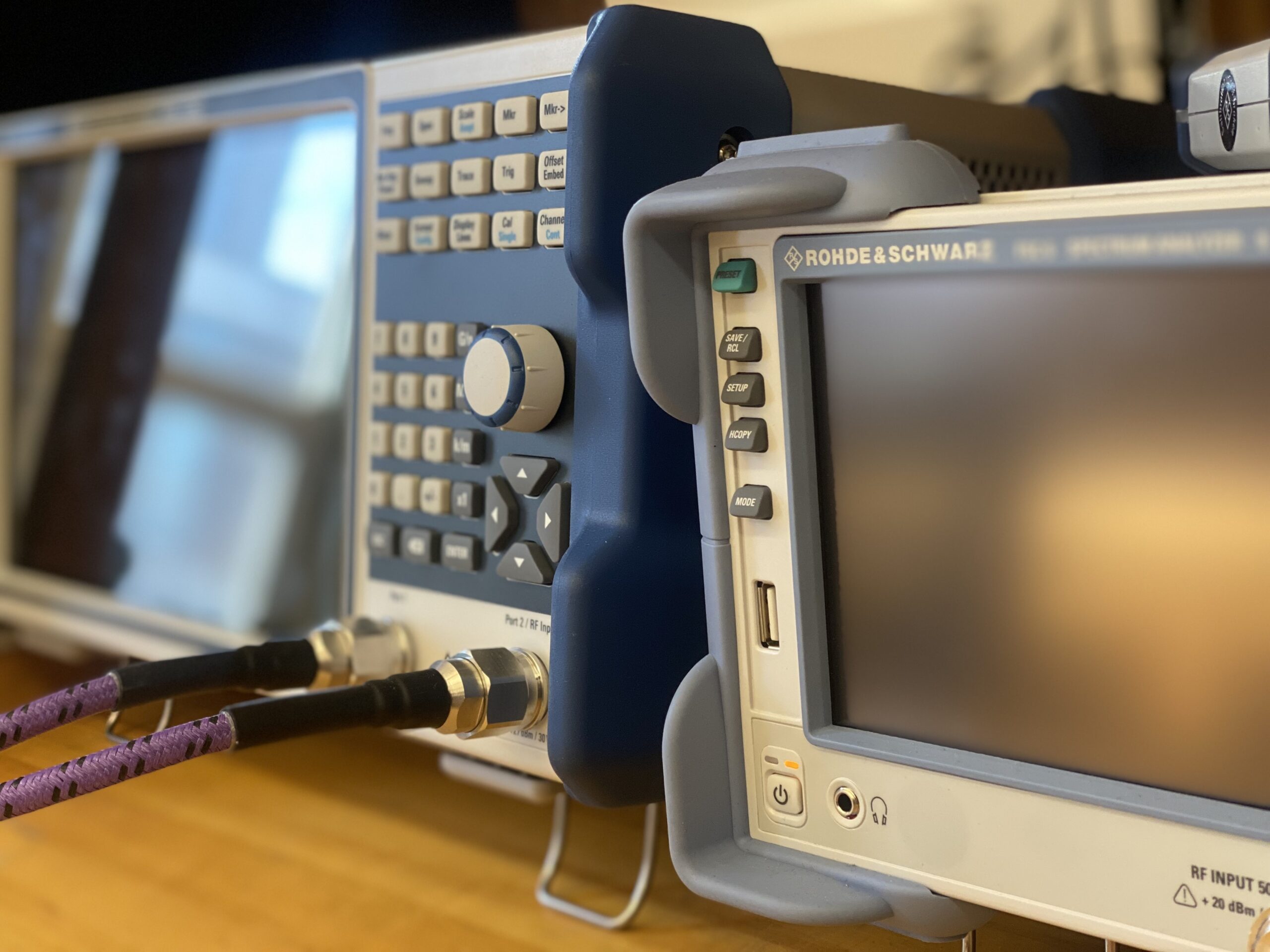
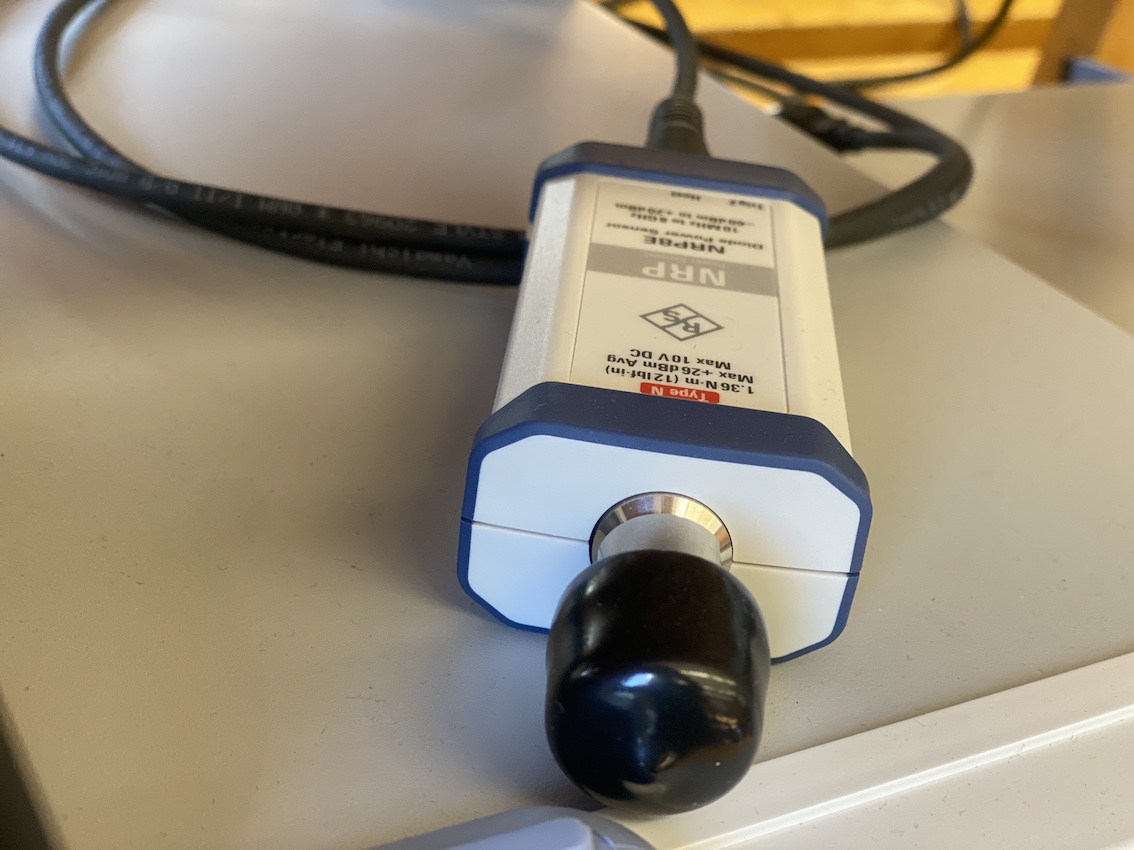
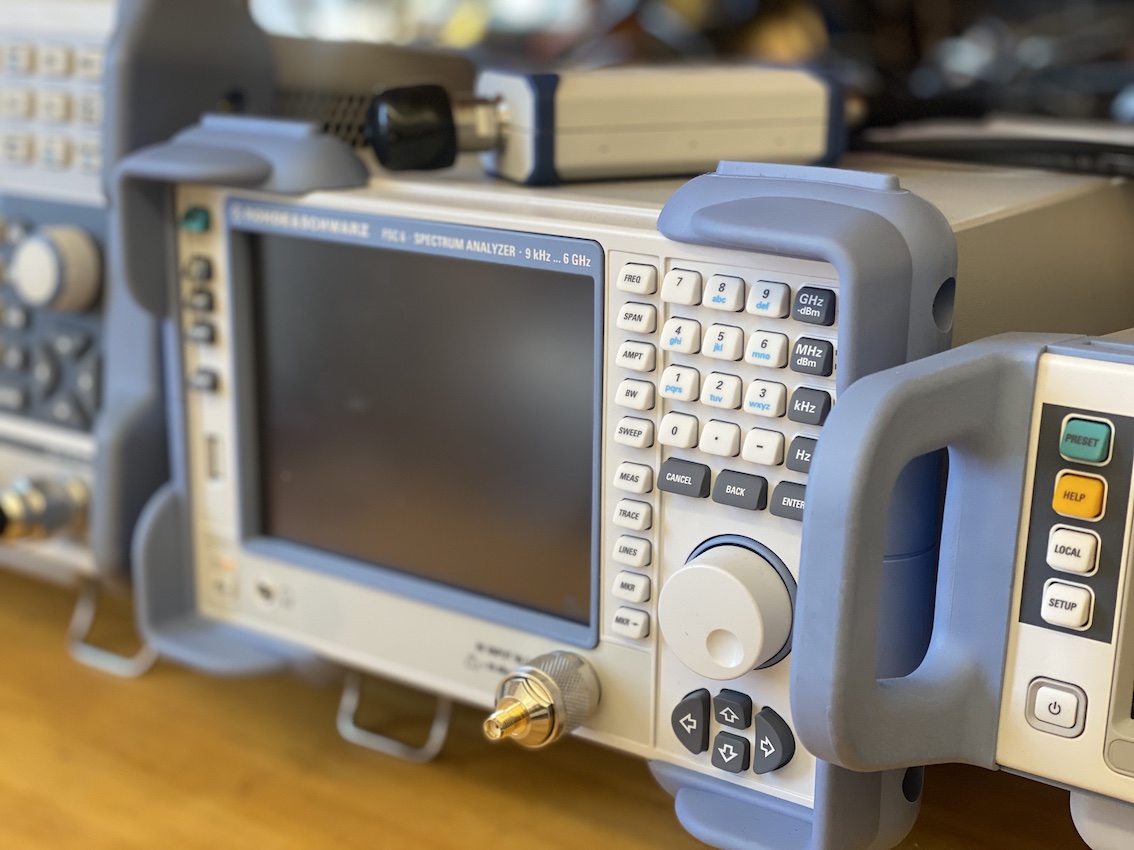
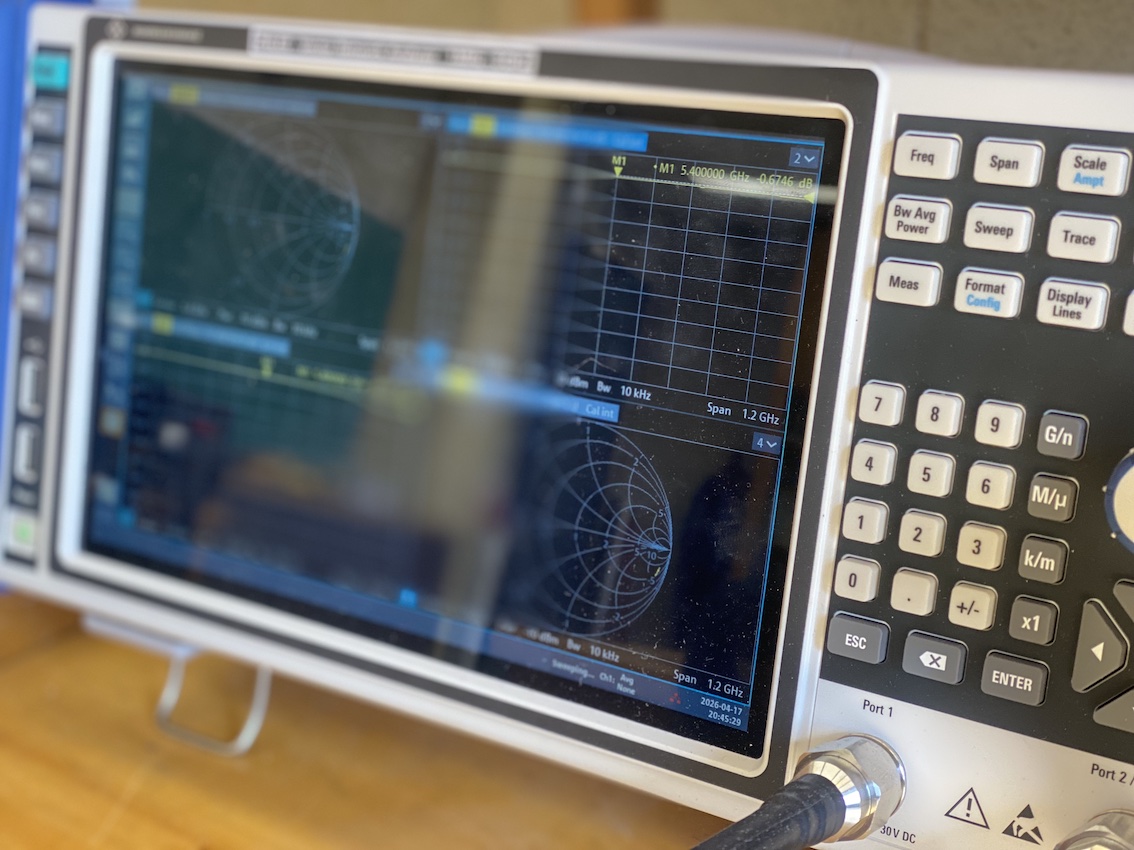
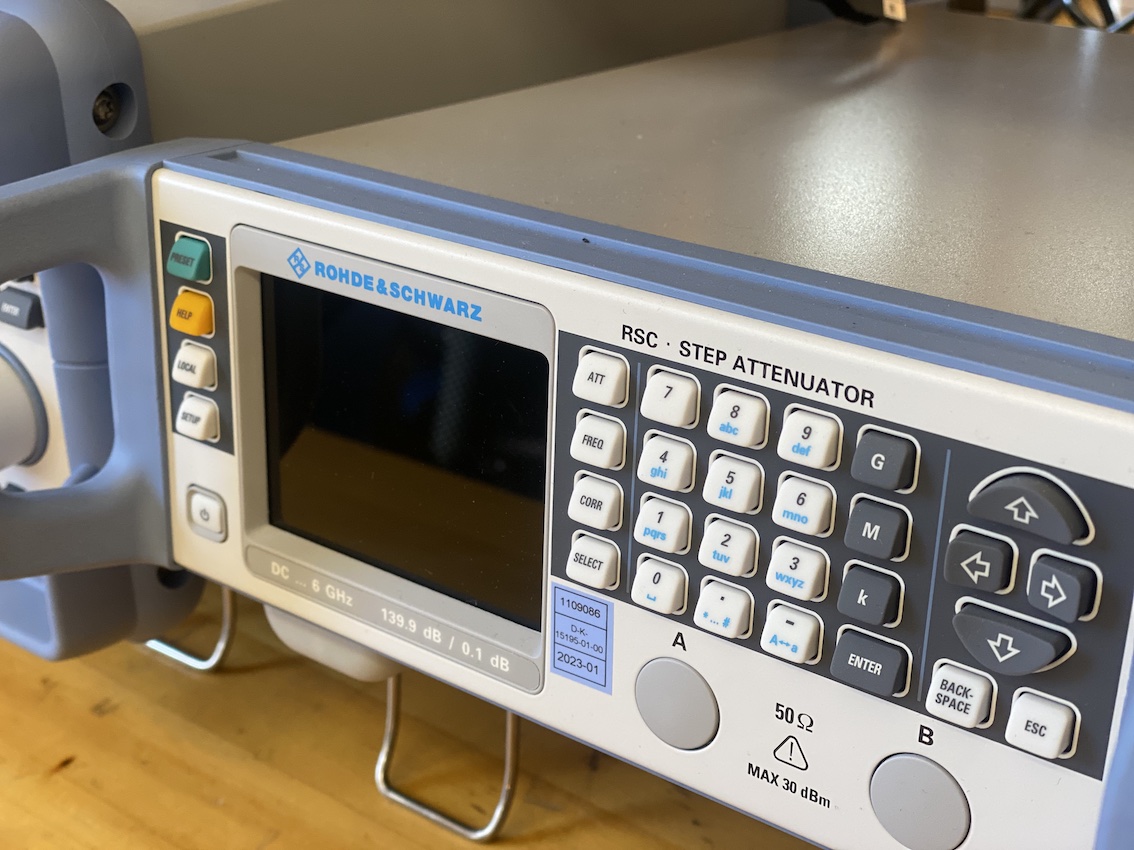
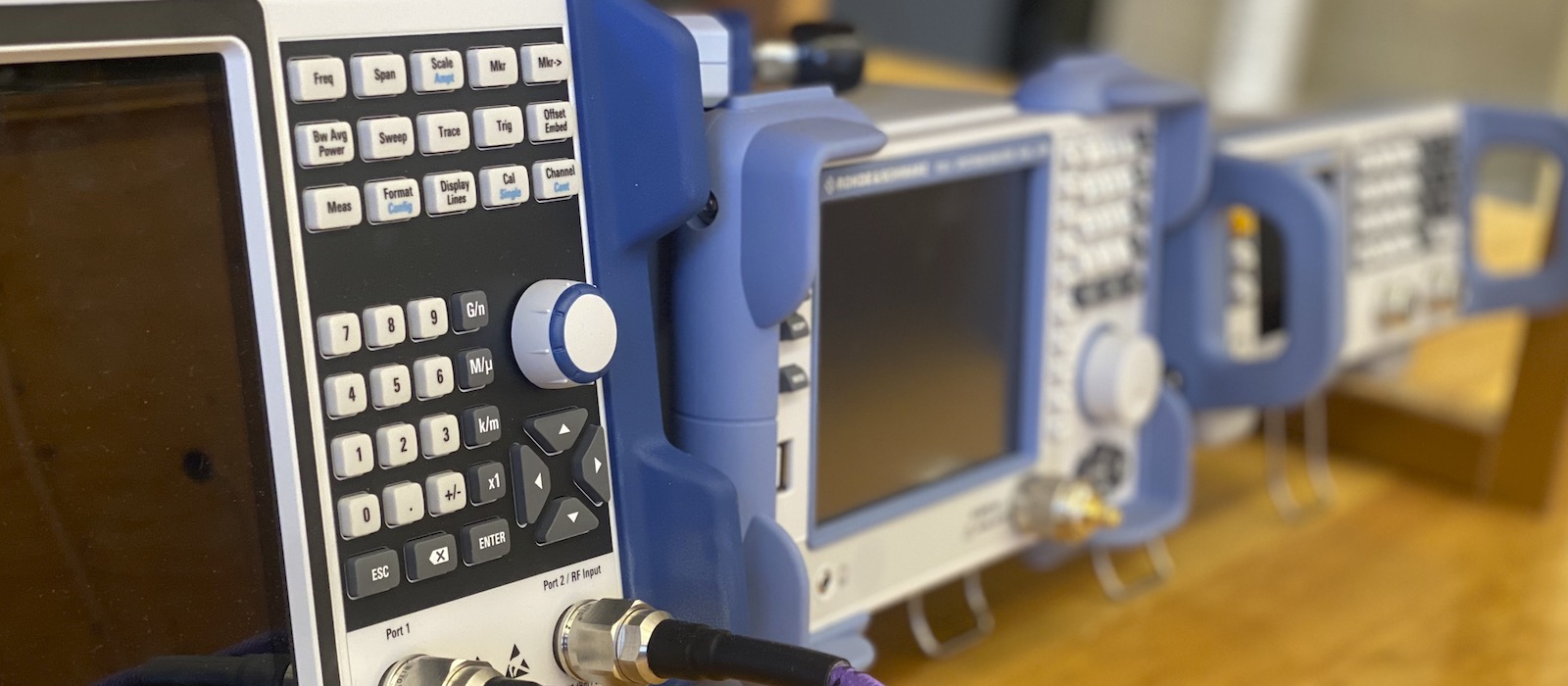
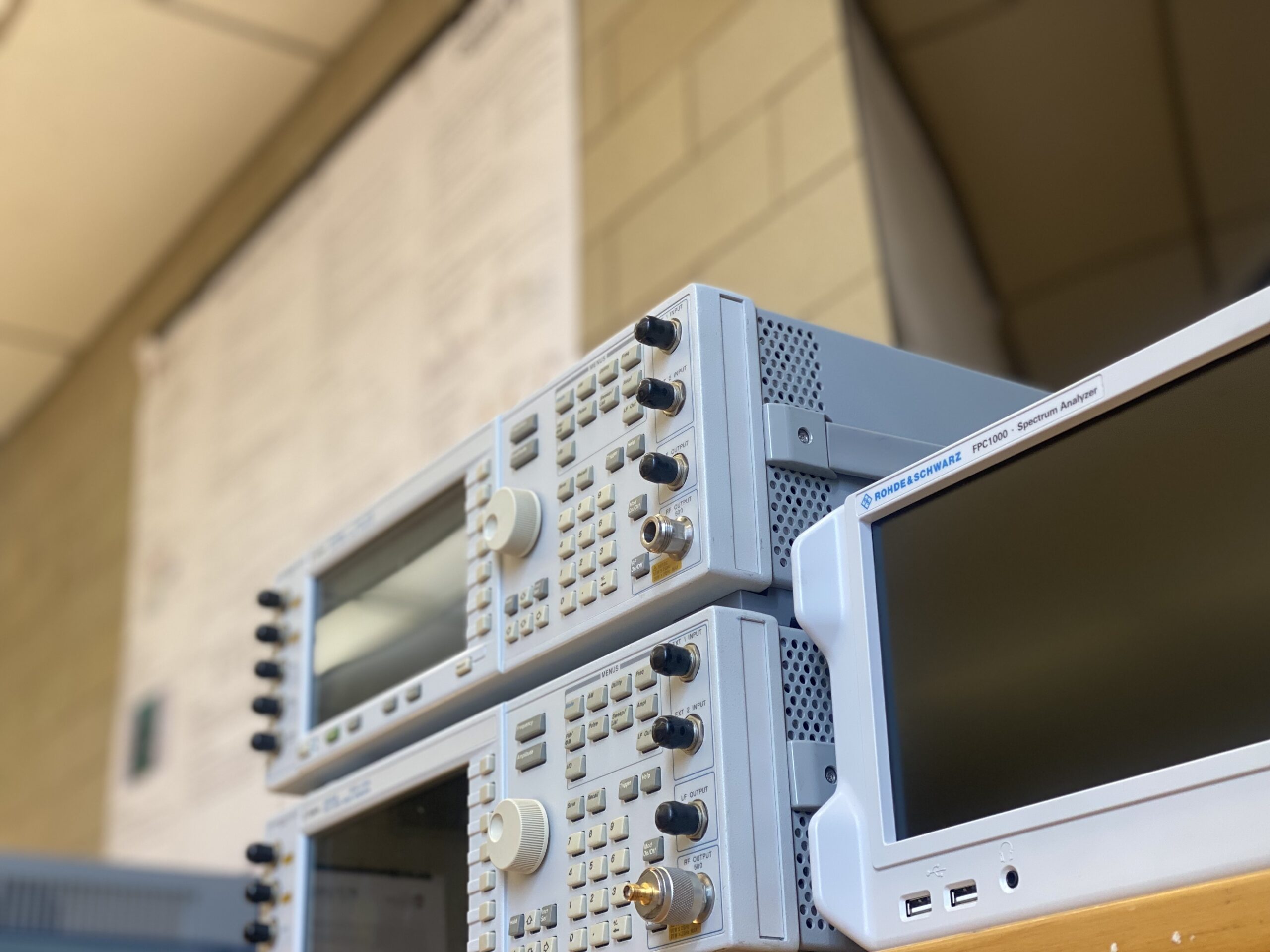
The lab is fully equipped with high-quality microwave test instruments capable of operation up to at least 6 GHz. Available tools include a Vector Network Analyzer (VNA) for S-parameter characterization, a Spectrum Analyzer (SpecA) for frequency-domain analysis, signal/frequency generators, power sensors, and precision attenuators. These instruments, enhanced through generous donations from Rohde & Schwarz (R&S), give students the ability to perform precise measurements of microwave components and antennas in a teaching-focused environment.
Antenna Anechoic Chamber
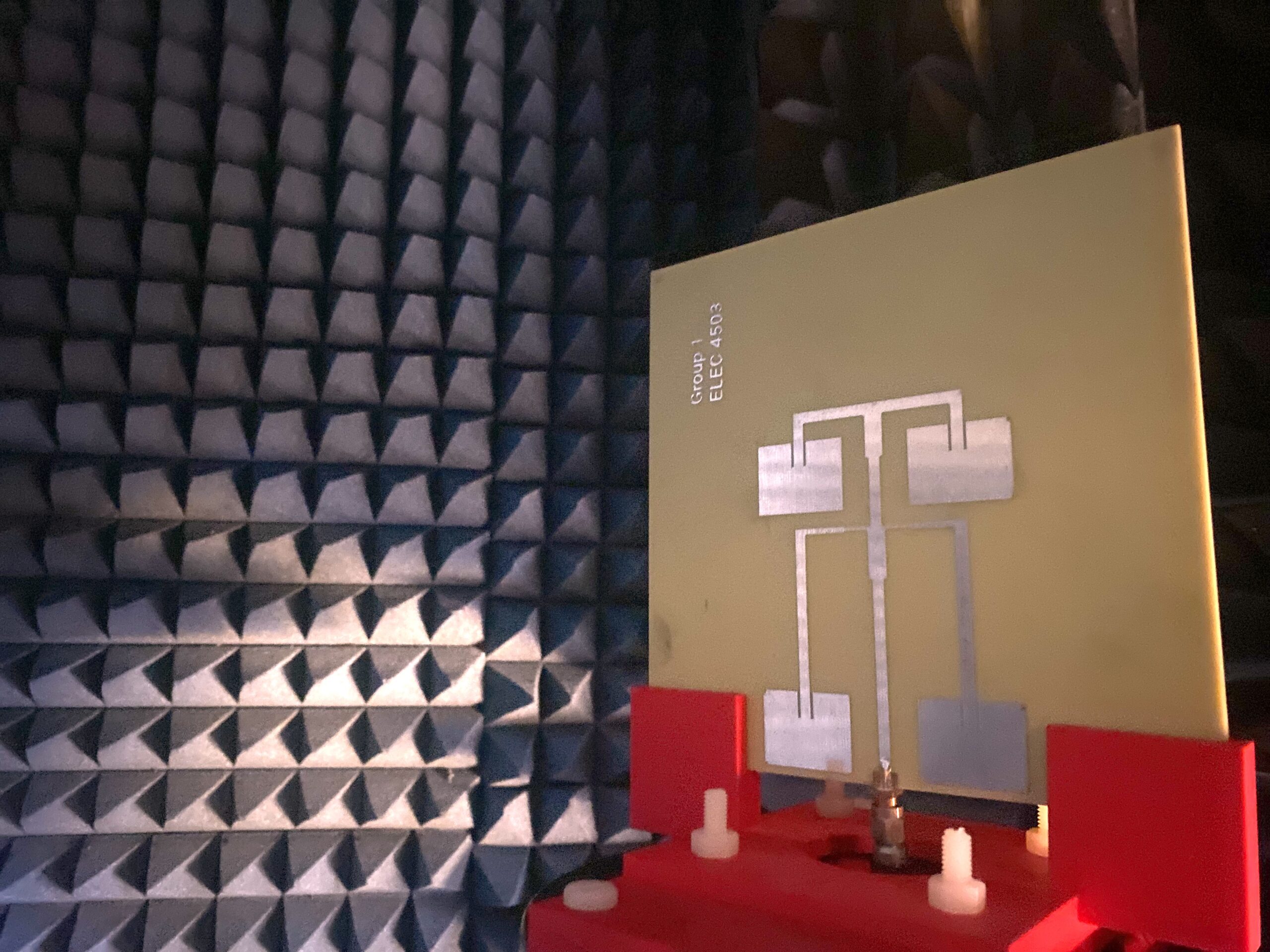
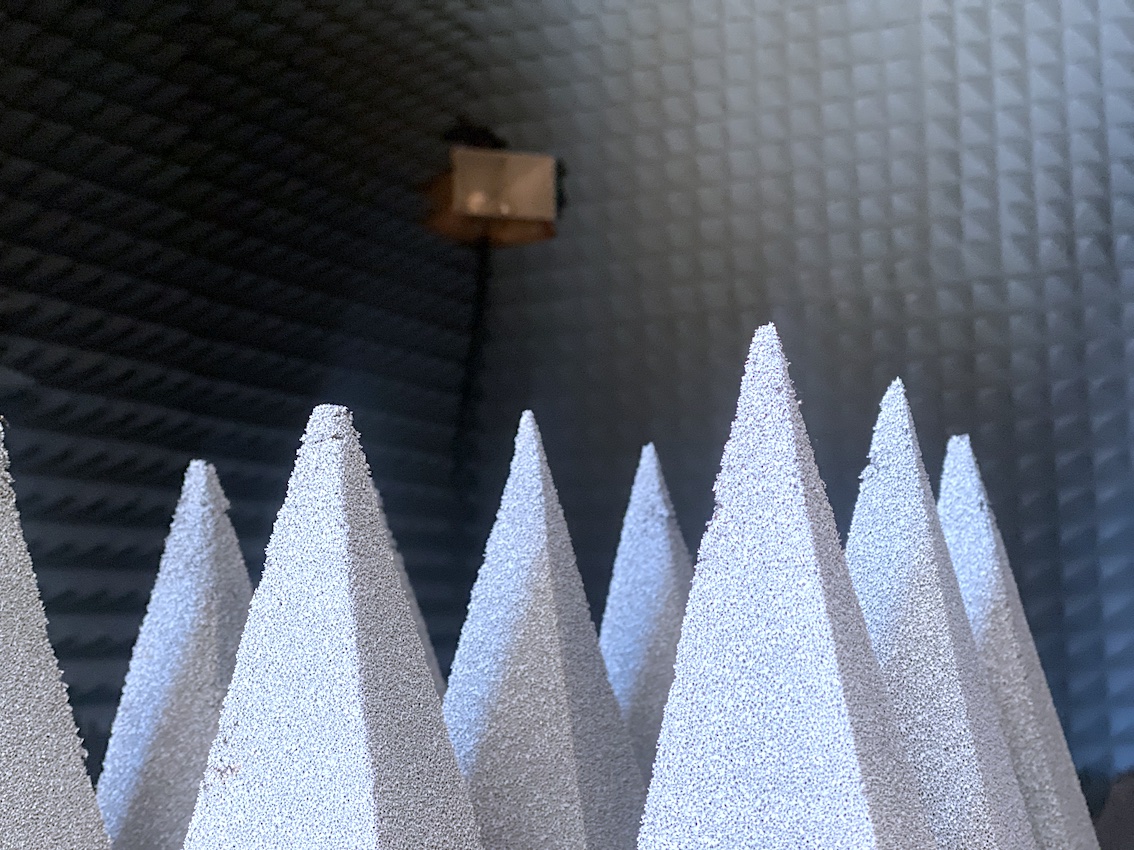
The lab features a home-made anechoic chamber optimized for single-plane far-field measurements. The chamber provides a controlled, low-reflection environment covering frequencies up to about 8 GHz. It is ideal for characterizing antenna radiation patterns and gain in one principal plane and is supported by equipment donations from mmWave Test Solutions (Denmark) to enhance undergraduate antenna design and validation experiments.
Other Resources
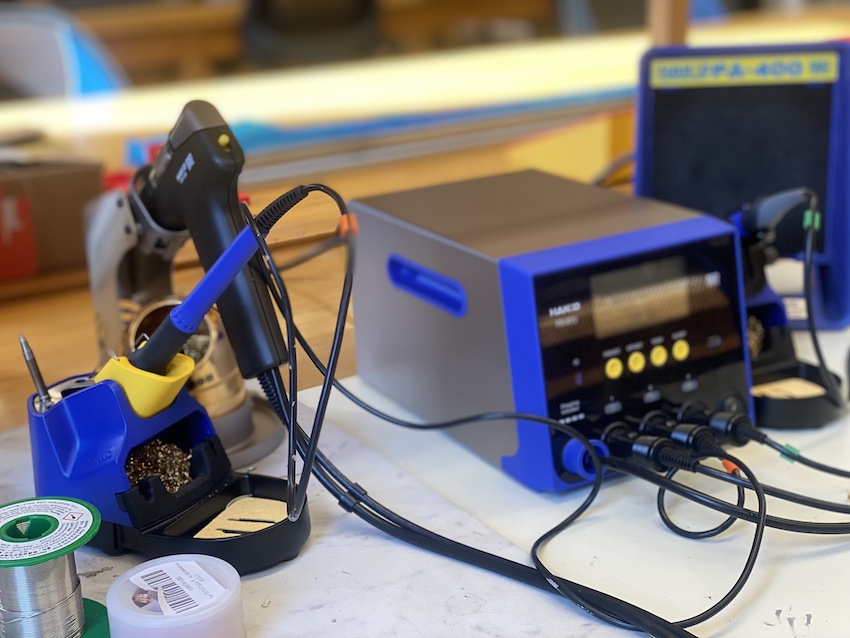
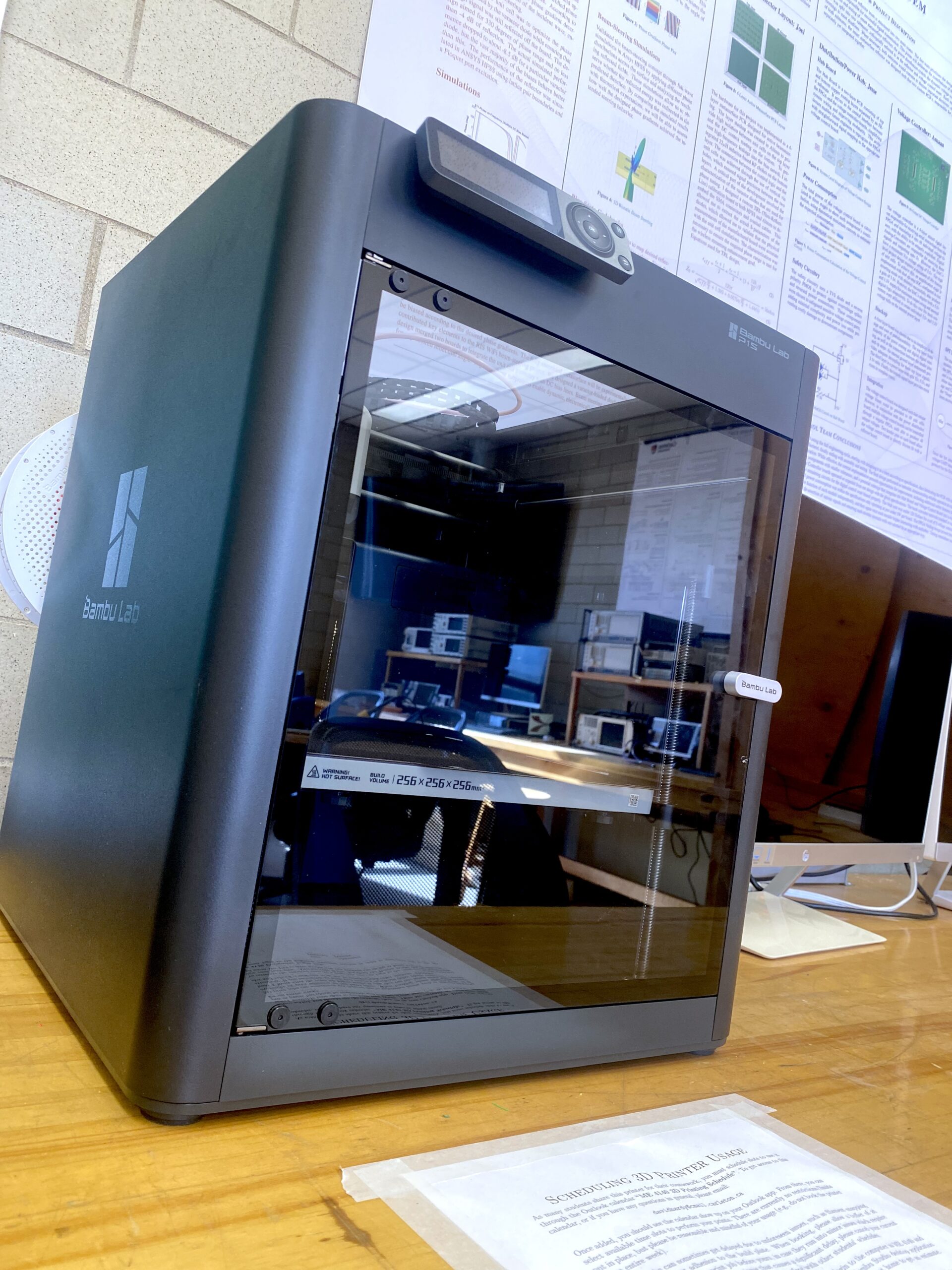
Beyond measurement equipment, the lab includes a high-end soldering station specifically designed for surface-mount technology (SMT) components, a hot plate for reflow soldering, and in-house 3D printing capabilities with Bambu Lab H2D printers. These tools allow students to rapidly fabricate custom antenna mounts, holders, fixtures, and prototype structures, while also enabling efficient assembly, repair, and testing of their own RF and microwave circuits — bridging the gap between simulation and real hardware in undergraduate projects.
Soldering Station
3D Printer
Undergraduate Courses Supported
This facility directly supports key undergraduate courses including ELEC 4503 (RF Lines and Antennas), ELEC 4502 (Microwave Circuits), ELEC 4907/ELEC 4908 (Final Year Capstone Project), and ELEC 3907 (3rd Year Special Projects Lab). The combination of professional donated instrumentation and the custom anechoic chamber ensures students gain practical, industry-relevant experience in microwave engineering and antenna design.
Gallery