Congratulations Josh!
The Migration and Diaspora Studies (MDS) program congratulates Joshua Hollick-Kenyon on the successful defence of his MA thesis! Well done, Josh!
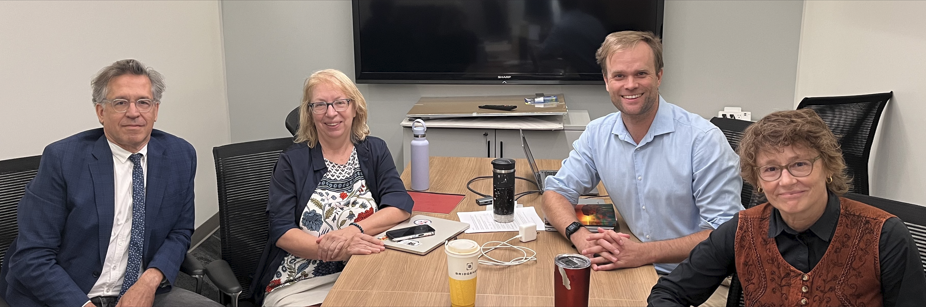
The thesis was supervised by Prof. Laura Macdonald and Prof. Jill Wigle, and was examined by Prof. Jean Daudelin.
Here are the details of the thesis:
Migrants as Residents in São Paulo: “Different” Citizens and the Right to the City
Over the past 10-15 years, international migration to São Paulo and Brazil has steadily increased, with more arrivals from countries within the Global South. This has driven a progressive normative shift in federal law and the creation of a municipal migration policy. However, migrants still face barriers in accessing rights and services, particularly in securing affordable housing amid a broader crisis affecting both citizens and noncitizens. Within this context, and with a central focus on informal housing, this thesis examines (1) how Brazilian ideas about urban citizenship and the Right to the City (RTC) intersect (or not) with the rights of migrants in São Paulo, and (2) how this situation is reflected in the municipal government’s policy for migrants (PMPI) and its ongoing implementation.
The main arguments of this thesis are that migrants face barriers in accessing rights and the city that stem from factors related to both their insertion into the lower rungs of Brazil’s differentiated citizenship regime and their specific position as noncitizens. Although the PMPI presents a strong framework and actions to reduce these barriers, these ambitions have been undercut by challenges to implementation connected to a lack of prioritisation within the municipality. Municipal migration policy is also heavily impacted by weak public policies in other areas, such as housing, and by a lack of federal government action. This confluence of obstacles pushes many migrants to live in informal housing and marginalised neighbourhoods, where they experience precarious living conditions and constrained access to basic services. Despite the potential for greater political participation, migrants’ involvement has so far been limited due to cultural differences, language barriers, their lack of political weight as non-voters, and other factors, such as not seeing São Paulo as their final migration destination.
This study is based on 12 semi-structured interviews with staff from São Paulo-based NGOs, a media organisation, a housing movement, migrant collectives and the municipal government carried out in 2024; analysis of the Municipal Policy Plan for Immigrants 2021-2024 (the core document guiding the PMPI); and a review of Brazil-focused literature on citizenship, the RTC, and migrants’ access to rights.