Alumni Profile—Bradley Laflamme (2015)
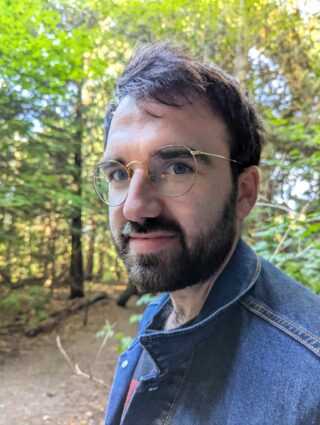
B.Hum Biology Graduate 2015
Choosing the Humanities and Biology program at Carleton was one of the best decisions I’ve ever made.
Humanities professors established a dialogue between students and their own intellectual pursuits that remained active throughout the four years of the program, even as they explored topics ranging from Abrahamic and Eastern religions to modern political theory. Looking back on my time in the college, I realize just how unaware I had been of so many amazing human accomplishments and ideas.
A pure science degree will be filled primarily with courses to teach you objective facts, which provide the important foundation for future research and application. But when science courses and Humanities courses are combined, asking students to engage with ideas, rather than to categorize them as fact or fiction, there is a perfect balance. You get the necessary objective information while simultaneously being humbled before the sheer variety of ways in which human beings experience the world.
Quite honestly, in a world where scientific snobbery is at its heights, this humble disposition strikes me as an invaluable character trait, one which will help bridge a future generation of scientists with the general public. Taking this into account, I can’t recommend this program enough to prospective students interested in the biological sciences.
Bradley Laflamme (HUMS-BIO) completed his PhD in the labs of Darrell Desveaux and David Guttman in 2021. His PhD work (published in Science) delivered insights into a major facet of plant immunity, while also investigating how these insights might be applied to crop protection. He then conducted a postdoctoral fellowship with Prof. Leah Cowen at the University of Toronto from 2022-2026, working on drug discovery in pathogenic fungi.