From Carleton Co-op to Canada’s Space Industry
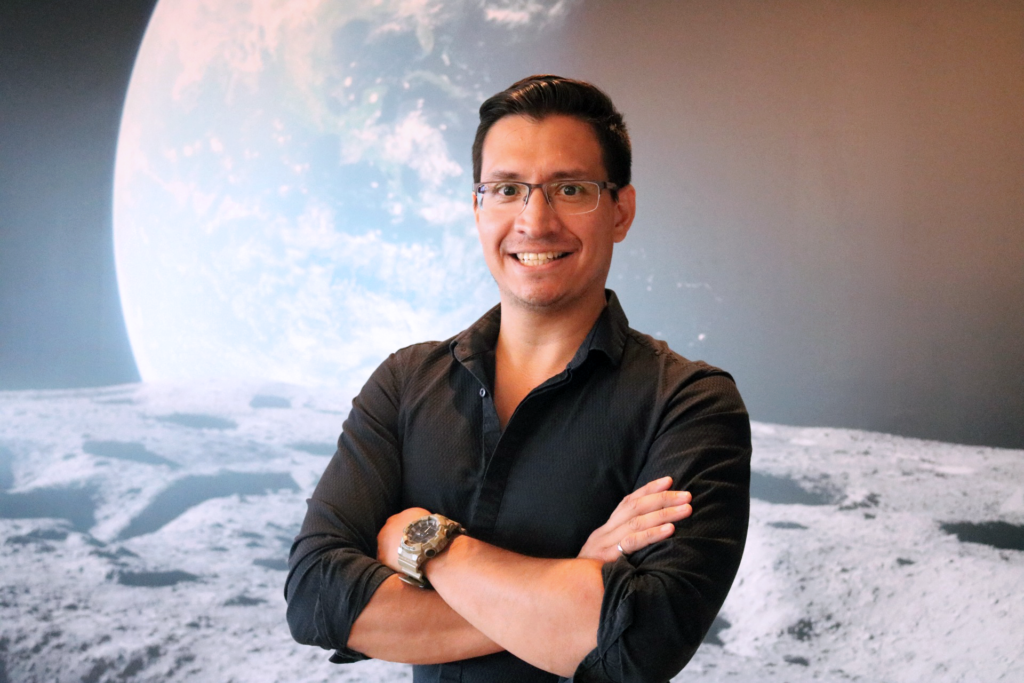
Elias Solorzano graduated from the Bachelor of Engineering, Aerospace (D) Space Systems Design in 2013 and today he is working in a career that is out of this world.
“I enrolled in Carleton University’s Aerospace Engineering Co-op program to gain practical engineering experience and explore where a career in aerospace could take me. The Co-op office was instrumental in preparing me for the job search and interview process, which ultimately led to a 16-month internship at the National Research Council of Canada‘s Flight Research Laboratory in Ottawa.
At NRC, I worked on flight data analysis, supporting civilian, military, and experimental aircraft – including aircraft that perform reduced-gravity flights to simulate weightlessness. Equally rewarding was the opportunity to work alongside established engineers, researchers, and test pilots. Those experiences reinforced my passion for aerospace, reconciled theory with practice, and challenged me to think beyond what I thought was possible. Ultimately, this set me on a path toward a career in Canada’s space industry.
The co-op experience became the foundation for several opportunities that followed. It led me to pursue graduate studies, represent Canada at international engineering conferences, and co-found the Canadian Reduced Gravity Experiment Design Challenge (CAN-RGX), a nationwide program sponsored by the NRC and the Canadian Space Agency (CSA). This program gives university students the opportunity to design and fly experiments in microgravity aboard NRC’s Falcon 20 aircraft, effectively recreating the science conducted by astronauts aboard the International Space Station (ISS). None of this would have been possible without that co-op opportunity years ago.
Today, I work at MDA Space, where I have supported robotic missions on the International Space Station with the Canadarm2, and contributed to the development of next-generation robotic systems for future lunar exploration in support of NASA’s return of humans to the moon. As an aspiring astronaut, I often look back on my time as a co-op student at NRC as a key milestone that helped steer my career toward a future in space exploration.
My advice to students is simple: be curious, embrace challenges, and be bold. Say yes to career opportunities that push you beyond your comfort zone. Co-op is more than a work term. It can introduce you to inspiring mentors, open unexpected doors, and shape the course of your future. And that future may very well be among the stars.”