NSERC Undergraduate Student Research Awards 2026 Recipients
About the Award
The Undergraduate Student Research Awards (USRA) are meant to stimulate a student’s interest in research in the natural sciences and engineering. Students work closely together with eligible FASS faculty that can supervise their research. The awards are also meant to encourage students to undertake graduate studies and pursue a research career in these fields.
2026 Recipients
Ben Schellenberg
Supervisor: Dr. Murray Richardson (Department of Geography and Environmental Studies)
In 2025, I contributed to a project evaluating the accuracy of ground penetrating radar (GPR) for snow depth monitoring in Iqaluit, Nunavut. I am excited to build on this work by refining GPR methods for snow water equivalent mapping in northern watersheds and to further develop my research experience in Canada’s North. Through this award, I hope to strengthen my research skills and deepen my understanding of Arctic hydrological processes.

Rowan Dowd
Supervisor: Dr. Cassandra Morrison (Department of Psychology)
I am an Honours Psychology undergraduate at Carleton University and Lab Coordinator for the Aging, Cognition & EEG Lab. I am grateful for the opportunity to continue research in a field that is both personally meaningful and academically important to me. My interest in aging and cognition is rooted in my family’s experience with Alzheimer’s & dementia, which has given me firsthand insight into the impact of cognitive change.
Through this work, I hope to deepen our understanding of cognitive aging while strengthening my skills in large dataset analysis, statistical methods, critical thinking, and research design. I am excited to learn more about the lives and stories of those affected by neurodegenerative diseases and increase my understanding of the neurobiological mechanisms that underly aging to contribute to improving the lives of individuals experiencing cognitive decline.
From Dr. Cassandra Morrison
This project focuses on exploring how EEG and fMRI relate to one another using resting-state brain activity. The goal is to determine whether combining these two approaches can provide a more complete understanding of brain function than either method independently. Overall, this work will strengthen how researchers study brain organization and improve tools used to investigate cognitive aging and neurological disorders.
Zaine Moodie
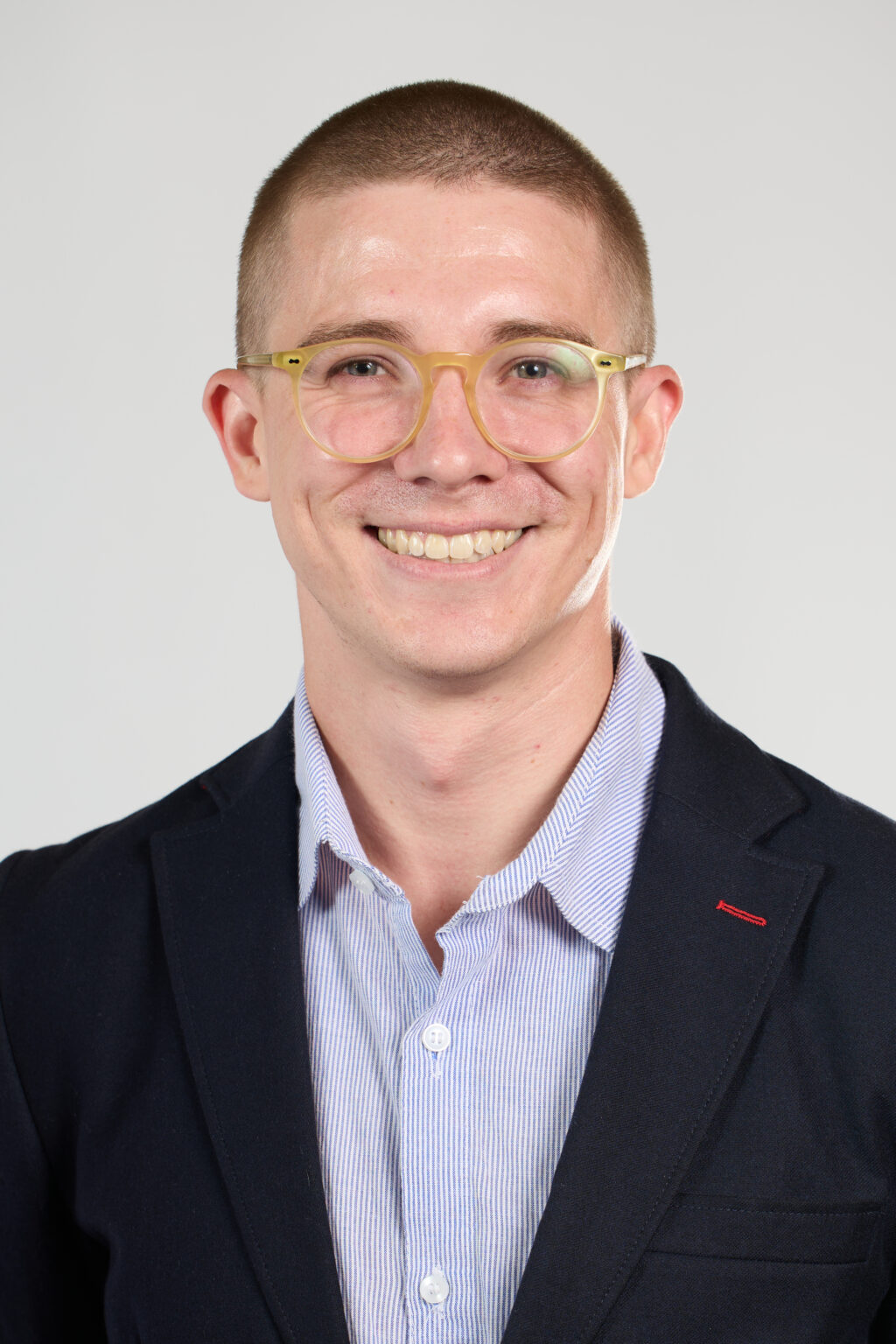
Supervisor: Dr. Mary Kelly (Department of Cognitive Science)
I am interested in exploring how different computational models perform theory of mind in cooperative settings that require reasoning about another agent’s beliefs. As artificial intelligence (AI) is increasingly being used in social roles it is important that we gain an understanding of their strengths and limitations in these contexts. Over this summer, I hope to contribute to our understanding of how to effectively apply AI to theory of mind tasks by comparing the performance of large language models and Bayesian inverse planning models.
From Dr. Mary Kelly
In humans, empathy is built on theory of mind, the ability to reason about the thoughts and feelings of others, an ability that current large language models lack. Zaine will be developing a Bayesian inverse planning model to mimic the reasoning process that humans use to make decisions in the cooperative card game Codenames. If we find a performance advantage in Codenames for the Bayesian planning model over large language models, it will indicate a way to create “caring” AI by augmenting current AI with a theory of mind model specialized in reasoning about human users, which could improve safety and user experience in domains such as customer service chatbots and AI therapists.