Police, Public Trust, and Evidence-Based Reform
This story was originally published in the 2026 Faculty of Arts and Social Sciences Research Review.
Few areas of public life are as emotionally charged or widely scrutinized as policing. In Canada and beyond, public trust in policing has eroded amid high-profile incidents, media portrayals, and growing awareness of systemic inequities. But how much do people actually understand about why police officers act the way they do? And how might greater clarity, not just criticism, play a role in developing stronger relationships between the police and the communities they serve?
These are the kinds of questions that drive Dr. Craig Bennell’s research.
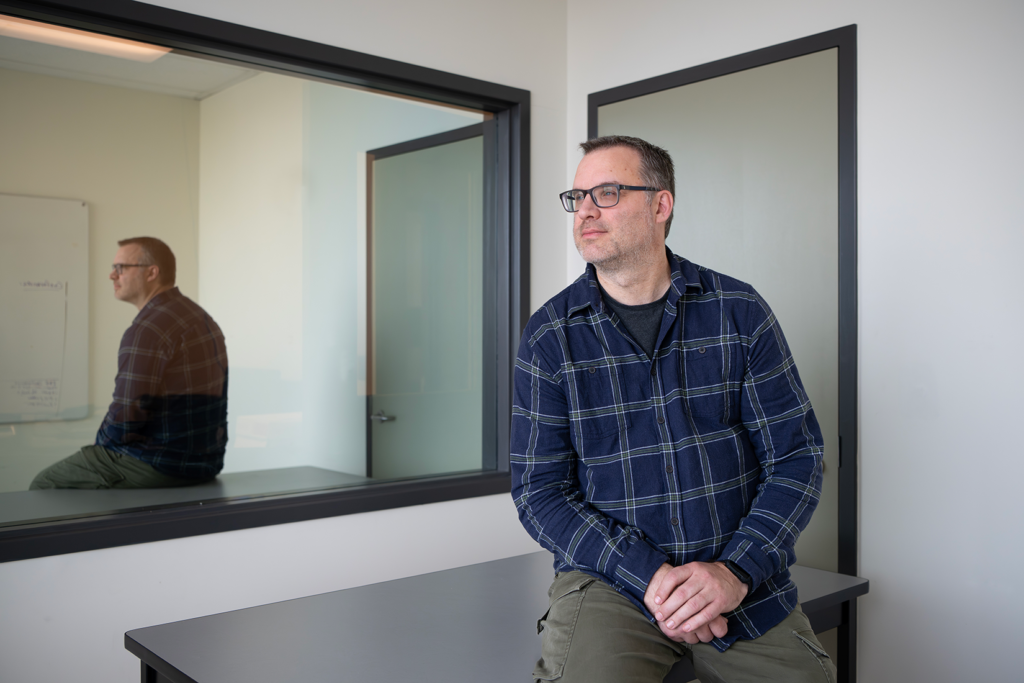
A professor in Carleton’s Department of Psychology, with a cross-appointment to the School of Linguistics and Language Studies, Bennell is Director of the Police Research Lab and a widely respected expert in evidence-based policing. Over a 25-year academic career, he has studied everything from the reliability of various investigative techniques used in serial crime investigations to how trainers can best manage the cognitive load of trainees during police training. But over the past decade or so, a different kind of question has captured his attention: what, exactly, does the public think they know about policing?
“Through interactions with members of the public, it has become clear that they often don’t understand various aspects of policing,” says Bennell. “This has also been confirmed repeatedly in the classes I teach at Carleton.”
Often, he says, the questions students ask, or don’t ask, reveal core misconceptions.
“Why are cops allowed to do things that may distract them while driving, when we would be given a ticket for doing the same thing? Why are cops parked next to road crews all night, lights flashing, seemingly doing nothing throughout their shift? Why are cops killing people instead of shooting to wound, or why are they shooting people holding replica guns?”
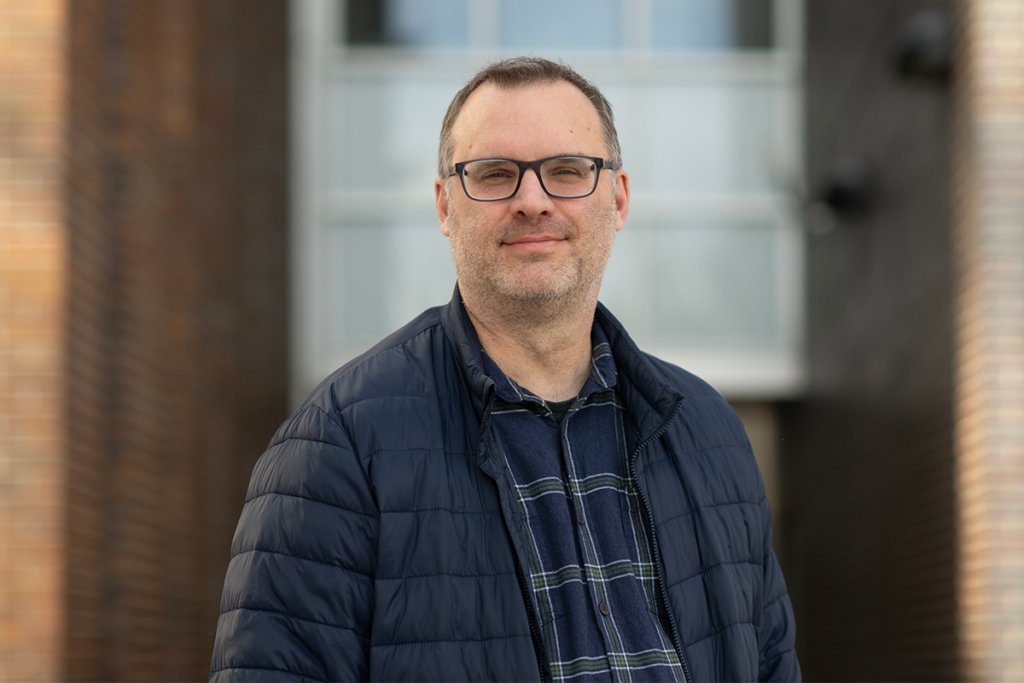
Bennell has come to understand that the problem isn’t just lack of knowledge. It’s what people assume in the absence of factual information.
“People are developing their own, often incorrect, answers to these sorts of questions, which might give them the impression that officers are perhaps law violators, or lazy, or dangerous, or all of the above. However, in each case, the correct answers to these questions reflect much more positively on policing. For example, police officers may be permitted to do things that we don’t understand, or even be required to do them, and there are good public safety reasons for them to be doing these things.”
Working with collaborators, one of his current projects seeks to improve public understanding of policing in Canada, especially when it comes to issues such as police use of force.
The goal isn’t to justify every police action, but to create the conditions for better public dialogue, greater accountability, more effective reform, and stronger police-community relations.
“My research in this area sets out to answer three basic questions: to what degree does the public understand policing? If there are misunderstandings, is it possible to educate the public and how best can we do that? And finally, what are the implications of increased understanding?”
So far, Bennell’s findings are striking. In one recent study, he and his colleagues showed that a quick educational intervention can positively influence the public’s understanding of why the police do what they do, and this improved understanding led the public to see policing as more legitimate, even in the months following the study.
Consider a scenario that we sometimes hear in the news involving a police shooting of an individual later found to be holding a replica handgun, a situation with low baseline public acceptance according to Bennell’s findings. But after being presented with a single clarifying statement about the legal and perceptual realities of such events, people’s perceptions shifted.
“Providing the public with the following statement significantly increases their perceived acceptability of the situation, and their perceived legitimacy of the police: ‘Police officers are legally justified in using lethal force if they perceive that their life is in danger. While it may be clear after the fact that a gun being pointed at an officer was a toy replica, that might not be clear to the officer who had to make a split-second decision. Research has clearly shown that it is very difficult to distinguish real from replica handguns given how accurate many replica handguns are.’”
Bennell stresses that this kind of education is not a one way street. It is part of a broader push toward mutual understanding, with the public developing a better understanding of policing, and the police developing a better understanding of what the public thinks about policing and what they need from their police services. “My main goal is to increase opportunities for meaningful dialogue between the police, the public, and researchers who study policing,” he explains.
“In any society, the public should have a good understanding of why police officers do what they do to protect the public and the police should understand how the public perceives them and what they can do to enhance perceptions of police legitimacy.”
This ethos of partnership is woven through how Bennell’s lab designs studies and delivers research findings, working directly with police agencies to both inform research design and implement findings on the ground.
“We require their expertise in understanding the challenges they face, in formulating research projects and research designs, in providing access to data and participants, in assisting us with data interpretation, in getting our research out to the end users we want to impact, and in ultimately implementing any necessary changes. We can’t do it without them.”
Rich Johnston, Chief of Police in Barrie, Ontario, has partnered with Bennell on various projects. For Johnston, the value of research like this is both practical and philosophical.
“Policing is the public face of the state, and we are usually a person’s first contact with the broader justice system. Our community’s and our society’s interpretation of our presence and actions can have a real impact on public trust in police and perceptions of our legitimacy,” says Johnston.
He sees Bennell’s work and collaboration as fundamental.
“Dr. Bennell and Carleton University have been very open to helping police improve. For police to understand their interactions with and impact on society requires us to take a critical look at how we currently operate, and where we can make changes that will improve public safety, as well as police legitimacy.”
What stands out about working with Bennell, he says, is his clarity of purpose.
“Dr. Bennell has always been transparent about his motivation and his goals. He wants to know what actually works to improve policing.”
As both Bennell and Johnston emphasize, real progress depends on collaborative work between researchers, police, and the public; not just to analyze policing, but to help shape its future in ways that reflect community values, practical realities, and the evolving relationship between state and citizen. That includes helping the public better understand why police make certain decisions, especially in high-stakes moments, and encouraging officers to engage more directly with public concerns.
Both Bennell and Johnston underscore that their work is ultimately rooted in the public interest. While their roles are different, they share common goals: to strengthen trust in police, transparency in policing, and safety across communities.