Seeing Ourselves: Indigenous Stories in Focus
By Emily Putnam
Indigenous stories told, chosen, and celebrated by Indigenous voices will take centre stage September 27, as Carleton University’s Seeing Ourselves: Indigenous Stories in Focus concludes with a free public screening.
In partnership with Wapikoni Mobile, the Summer Institute featured three workshop sessions throughout August culminating in a screening of media-selections from the Wapikoni archive.
This unique media-curation experience, supported through SSHRC funding secured by Dr. Kester Dyer (Associate Professor, Film Studies), as well as financial and in-kind contributions from the School for Studies in Arts and Culture (SSAC), Teaching and Learning Services (TLS), and Carleton University Art Gallery (CUAG), was offered by a passionate creative collective at Carleton and hosted by Film and Indigenous studies graduate student Adam Saulis.
Saulis, who is Wolastoqiyik, has years of experience working at Bytowne – one of Ottawa’s independent cinemas – and organizing screenings for Carleton’s Audio-Visual Resource Centre and the Ojigkwanong Indigenous Students’ Centre.
Throughout the Institute, Saulis met with participants and helped with film selection as well as organization in preparation for the event.
He says the experience has been transformative.
“Being given these opportunities over the years through professors like Kester Dyer has allowed me to grow into these roles and learn about the ways in which I can bring my own thoughts and perspectives into these spaces.”
Saulis says the collaboration was refreshing because participants were interested in having conversations he’d been trying to initiate on campus.
“They had great insights. They picked films that I would never have thought of putting in myself and explained why they would do that in thoughtful, interesting ways. It’s the nice part of the process of doing something like this. People really get to find their own voices through these works.”
This paid workshop series was designed for Indigenous students, scholars, and artists interested in curation and exhibition.
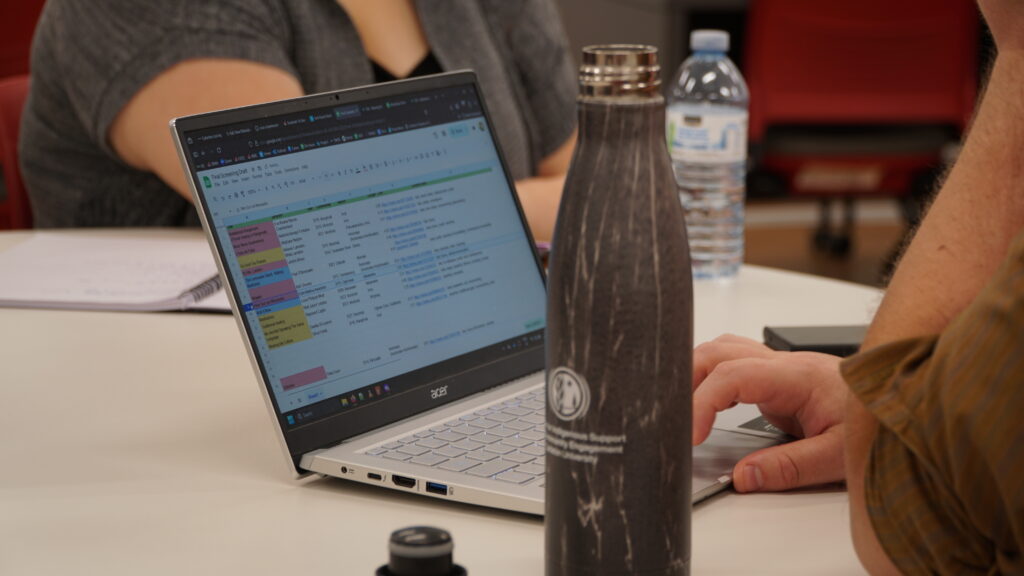
Participants honed skills in media analysis, collaboratively curated a catalogue of 80 Wapikoni short films, met and talked with Indigenous multimedia artist Craig Commanda, and learned about curating alternate media forms.
Hailing from various disciplines, one participant is a working artist, another studying Women’s and Gender Studies, and the third a science student who entered the Institute with no experience with art and curation.
“I hope in the future they’re able to carry these skills forward and do more work like this. I know people tend to think things like the arts are just a rarefied experience, or that only specific people with specific kind of skills can do it. But this helps demonstrate that’s not the case. If you’re willing to just take your shot and put yourself into the work, you can do it,” says Saulis.
Participants were able to organize the screening program entirely of their own choice.
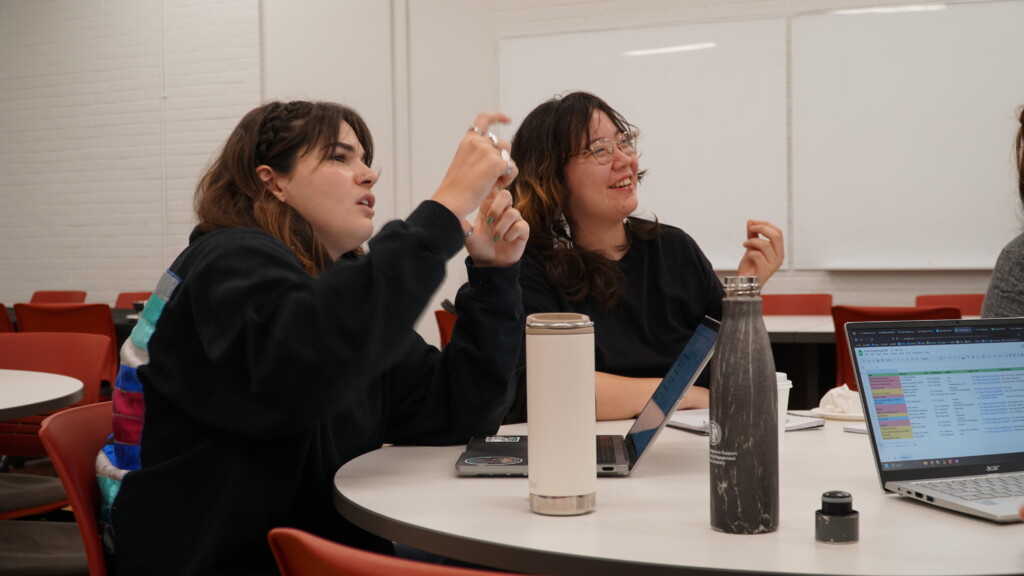
“We do our best to make sure the decision-making and creative power is placed in the participants. Our focus is on giving them the tools we have available at Carleton and letting them make the decisions about what they’re going to do with those tools, and not prescribing what that’s going to look like on the other side,” says Saulis.
“I think that’s really useful because it allows them to make decisions for themselves about what they think is important and not to have to worry about fitting into the mandates of what an Indigenous project is ‘supposed’ to look like.”
Lily Inskip-Shesnicky, a returning graduate student in Film Studies, has been working as a Research Assistant with Professor Dyer during previous Summer Institutes.
This year, they helped during the planning stages of the workshops and acted as on site photographer.
“It was a fun challenge to take photos that conveyed the liveliness of their creative process,” says Inskip-Shesnicky.
“Being a settler-scholar myself, I’m always grateful for the knowledge I gain from helping with the Institute. Each year reminds me that I always have more to learn.”
Inskip-Shesnicky says the learning doesn’t end with the workshop.
“I hope anyone in the audience who wasn’t already aware of Wapikoni’s existence is able to see how important it is to have such organizations and considers the value of creative opportunities within different communities.”
On long-term impacts, Inskip-Shesnicky hopes more Indigenous creatives will be given the resources and platforms to create and share their work.
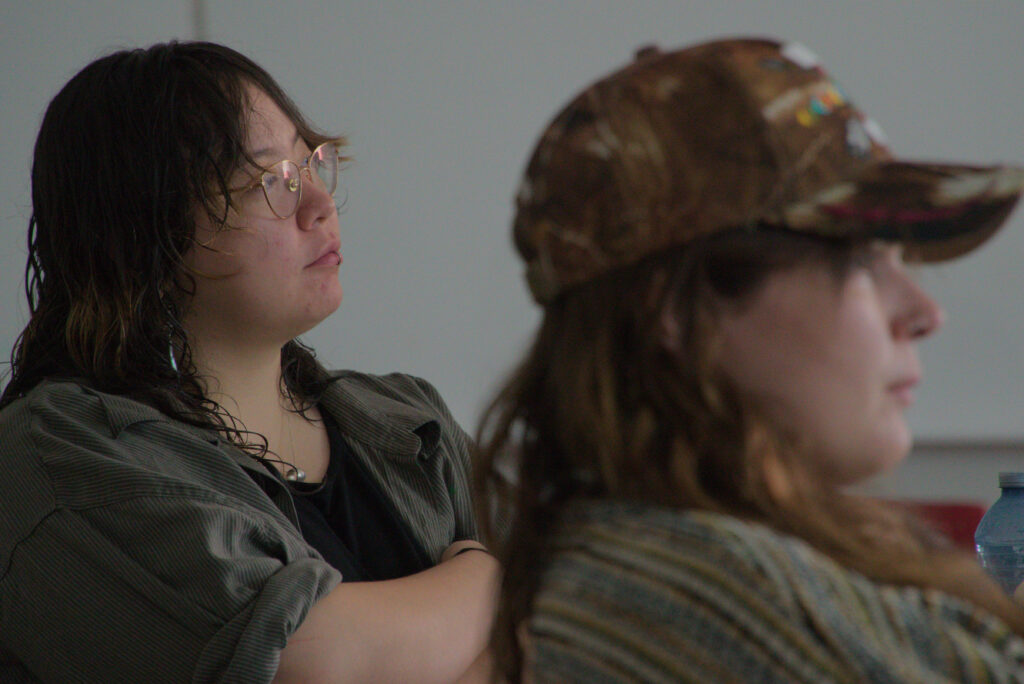
“I also hope that, in so doing, more people will come to understand the importance (and benefit) of implementing decolonial practices into art, education, and life.”
Danielle Printup, a returning MA Art History student and Indigenous Cultural Engagement Coordinator at CUAG, says the shared conversation between participants was a highlight for her.
“The sharing of family stories that happened through connecting to the films, when we talked about relatives or went back to childhood experiences, felt so special and real. It was so cool to see how the films resonated with us differently, but in similar ways.”
She hopes those attending the screening event are inspired to incorporate more Indigenous media into their everyday lives.
“I hope they come away feeling curious to explore more Indigenous short films. I find the short form allows for so much more experimentation and nuance that you don’t always experience in feature-length films.”
Looking ahead, Printup hopes for more support for Indigenous learners.
“Hopefully, this will inspire more long-term commitments to support Indigenous learners throughout academic and creative spaces. Perhaps a future Film Studies course on curation practices for aspiring filmmakers/programmers.”
Gabrielle Brochu, a first year PhD student in Cultural Mediations, helped with grant writing and administration for the Institute.
Brochu opened the workshop with a land acknowledgement, during which they sang “Qanute,” a welcome song from their nation that welcomes the ancestors from all seven generations (East, South, West, North, the sky above us, the land beneath our feet, and the centre where we are now).
“In doing so, I invited the people of this land, the Algonquin people, and my Wolastoqey kin and ancestors to join us in our workshop and partake in our growth and learning,” says Brochu.
They say their background in music gave them a unique perspective in the Institute.
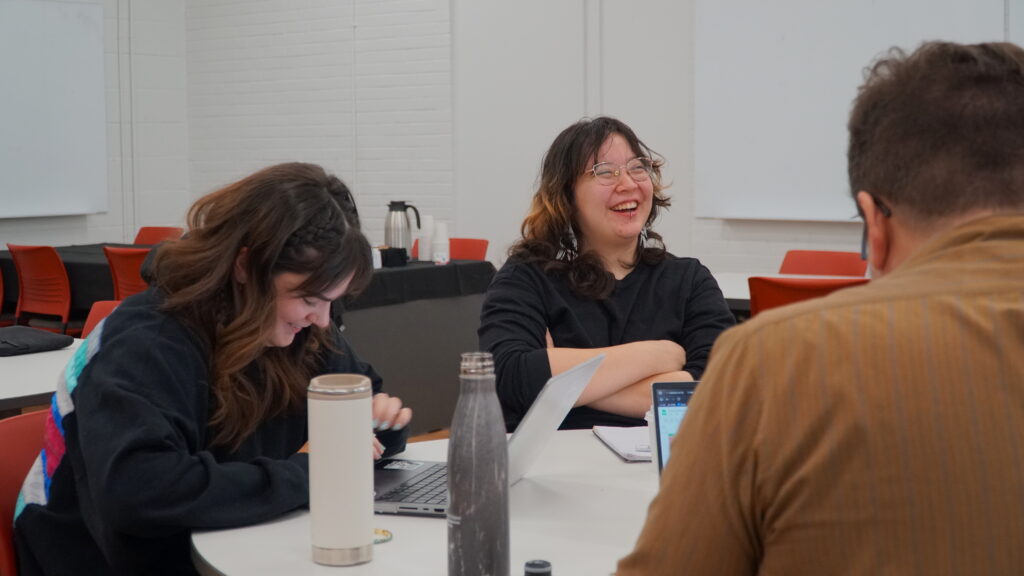
“One of the parts of my research that overlaps with this project is how sound is a storyteller, since at its core film is storytelling as well.”
“I tend to think about how the soundtrack of the film is telling stories, and if there are embedded meanings and teachings that may or may not align with the visual imagery. Film and music are both forms of storytelling, and it has been absolutely wonderful watching the participants in this year’s Institute discover how Indigenous film specifically can tell such a wide variety of stories from such a different array of perspectives.”
Brochu says they hope those attending the screening see the amount of work put into this program by workshop participants.
“These three wonderful individuals have brought together a vast array of stories in the form of Indigenous short films, connecting them through a single overarching story: a celebration of Indigeneity. The chosen films showcase many different sides of Indigeneity, where the participant’s program is true to the title: “Seeing Ourselves.” The program is quite exciting, and I hope the audiences enjoy it!”
Brochu says initiatives like the Summer Institute offer Indigenous artists a means to tell their own stories in their own ways.
“They enact narrative sovereignty and empower participants to share their voice with the understanding that each and every Indigenous person has unique and valuable perspectives in this world. I hope that initiatives such as this continue to open doors for Indigenous peoples to enact our sovereignties and feel empowered.”
“It was such an amazing experience for us, the staff, too. I feel as though I learned so much from each of the three participants and I’m excited to continue working with them in the future!”
Those looking to attend the final screening can do so for free on Saturday, September 27, at 6:00 pm in Richcraft Hall 2200.