StudioDH and the Future of Interdisciplinary Research
This story was originally published in the 2026 Faculty of Arts and Social Sciences Research Review.
By any conventional measure, StudioDH is a research lab. It has projects, partnerships, funding, objectives, and outcomes. But the people behind it will be the first to say that what they are building at Carleton is something different.
StudioDH is as much about how research happens as what it produces. It’s a space where process matters as much as output, and where ideas are developed collaboratively through relationships, experimentation, and shared authorship. The work moves beyond the lab, into communities and public life.
“This is a creative collaboratory grounded in the values of digital humanities and community engagement,” explains Dr. Amanda Montague, the postdoctoral fellow leading the newly launched StudioDH and one of its main architects. The emphasis is less on novelty and more on responsibility, reflection, and long-term impact.
At its core, digital humanities brings humanistic questions about culture, history, identity, and power into conversation with the digital systems that increasingly shape everyday life. That work can take many forms, from digital archives that preserve marginalized histories to interactive maps that reveal hidden relationships, or critical analyses of how algorithmic systems reproduce bias. But for StudioDH, the point is not the technology itself.
“Digital humanities isn’t just humanities plus technology,” says Dr. Shawn Graham, Professor of History, digital archaeologist, and a long-time leader in the field whose early vision helped shape StudioDH. “It’s about interrogating how digital tools shape the way we think, learn, and relate to one another. That makes it one of the most important research areas of our time.”
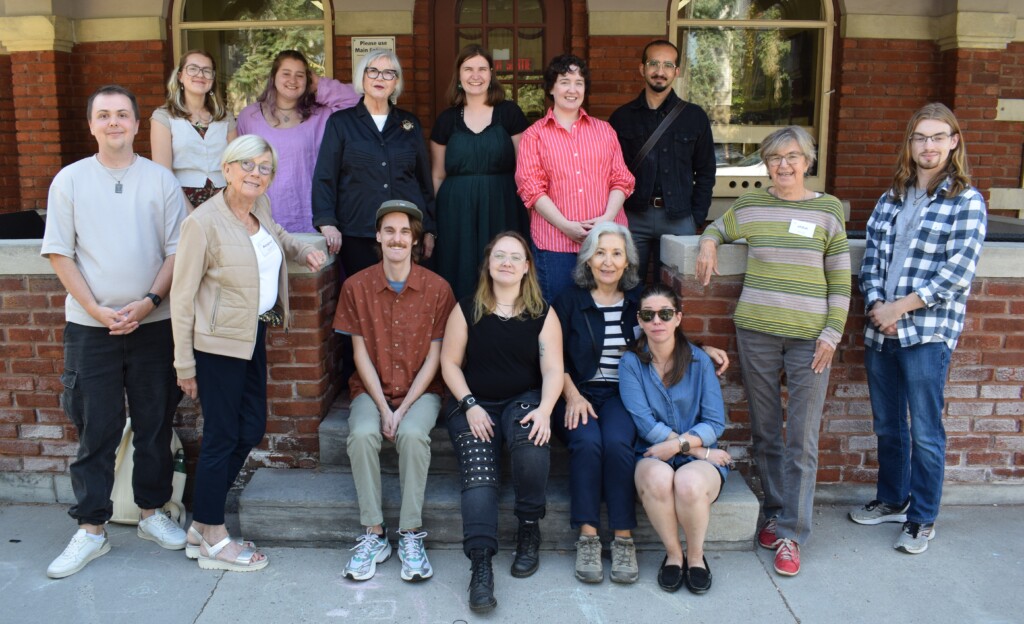
That critical orientation comes into focus in StudioDH’s first major project, developed in collaboration with Senior Watch Old Ottawa South. Using participatory methods such as body mapping and digital storytelling, the project explores social isolation among seniors. The work demonstrates how digital tools can support advocacy, public dialogue, and inclusive design, while remaining grounded in lived experience and community priorities.
Housed within the Faculty of Arts and Social Sciences and supported by a $2.2 million philanthropic donation, StudioDH is the public-facing, community-based arm of Carleton’s interdisciplinary Master’s in Digital Humanities. Its launch builds on years of groundwork by Montague, Graham, and Dr. Laura Banducci, Associate Professor in the College of the Humanities and coordinator of its MA program.
“Some of the most urgent questions about equity, memory, labour, and misinformation can’t be answered from a single disciplinary perspective,” Banducci says. “Digital humanities gives us a shared language for working across boundaries. StudioDH creates the conditions where that collaboration can happen.”
As generative AI and digital systems increasingly shape education, creative practice, and public decision-making, StudioDH’s approach is deliberately careful. The emphasis is less on novelty than on responsibility, reflection, and long-term impact. Community partnerships follow a trust-based model that begins with community-identified needs and unfolds through dialogue, shared design, and sustained relationships.
And while the tools may include VR, GIS, 3D photogrammetry, and natural language processing, the underlying commitment remains human. “Innovation isn’t just doing something new,” Montague says. “It’s doing it differently, with ethical intention, with attention to whose voices are included, and with a clear awareness of who might otherwise be left out.”
For Montague, Graham, and Banducci, StudioDH’s success is inseparable from its setting. Carleton’s long-standing culture of interdisciplinarity and community-engaged scholarship makes it a natural home for this work. The MA in Digital Humanities already brings together fourteen disciplines across campus, and Ottawa’s mix of policymakers, artists, civil society organizations, and memory institutions provides an unusually rich environment for collaboration.
With the support of a transformational endowment, StudioDH now has the infrastructure to grow. “This gift is a real vote of confidence,” Graham says. “It allows us to expand digital humanities in ways that simply weren’t possible before. And we’re only just getting started. Just wait until you see what comes next.”