Dr. Corrie Scott
Joint Chair in Women’s Studies (JCWS)
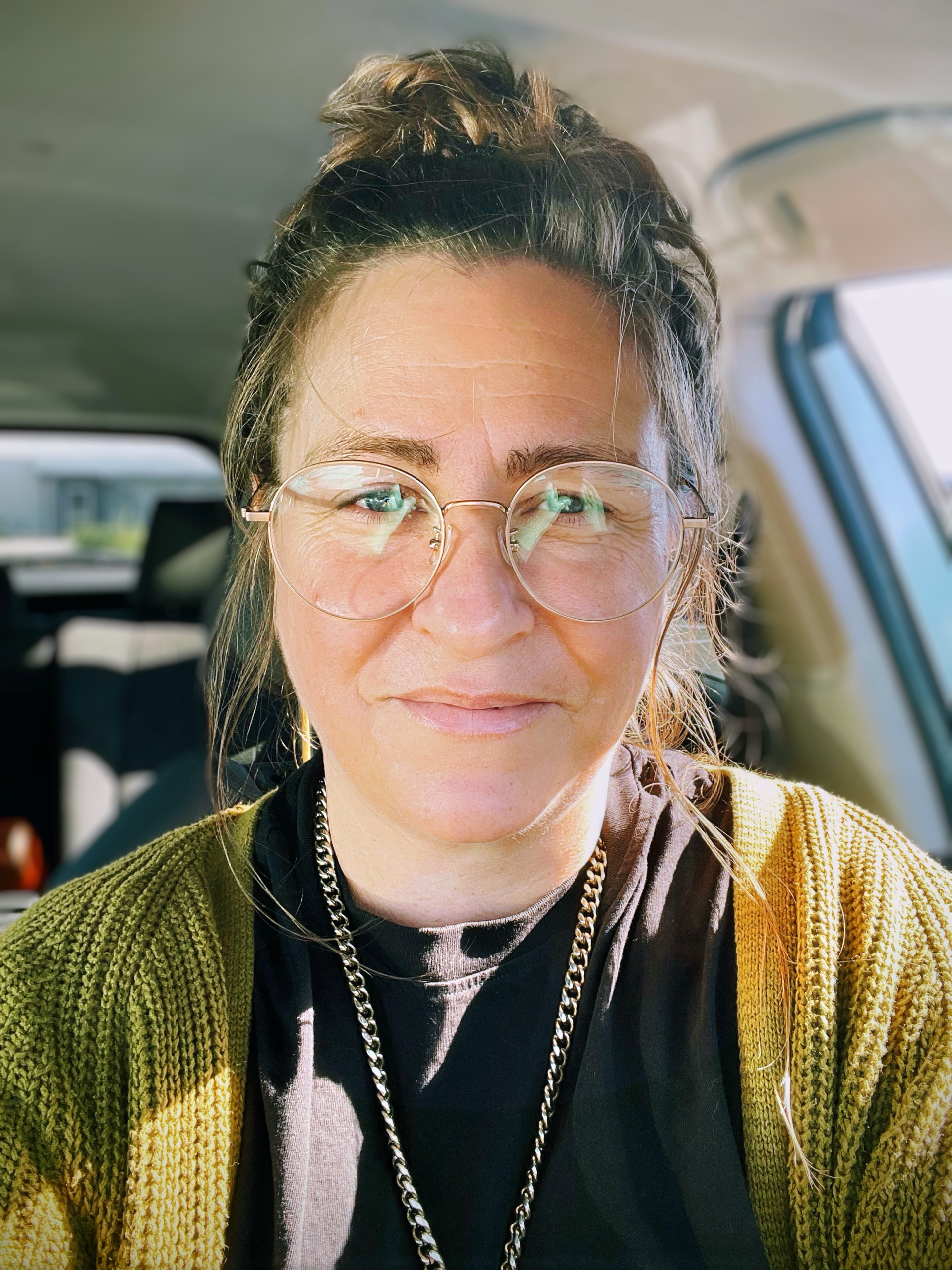
Dr. Corrie Scott is an Associate Professor in the Institute of Feminist and Gender Studies (IFGS) at the University of Ottawa, where, since 2011, she has been a very active community member. She holds a PhD in Lettres françaises with a specialization in Women’s Studies from the University of Toronto (2011). While at the University of Toronto, she met fellow doctoral students, Joëlle Papillon (now an Associate Professor of French at McMaster) and Nigel Lezama (now an Associate Professor of Fashion at TMU), who have become her life-long bosom buddies. She struggled to complete her thesis while caring for her son who was born around the same time as she wrote chapter four, but she got there in the end thanks to support from her family. Dr. Scott’s PhD thesis was transformed, with great difficulty, into a book entitled, De Groulx à Laferrière: un parcours de la race dans la littérature Québécoise, published in 2014 with Éditions XYZ, the year her daughter was born. It was a busy, exhausting, and fruitful time in her life.
Before becoming a professor at the University of Ottawa, she was a course instructor in Women and Gender Studies at Carleton University (now FIST), where she met some of her most cherished forever friends, like Dr. Rena Bivens (now an Associate Professor in Communication and Media Studies at Carleton) and Dr. Aubrey Anable (now an Associate Professor in Film Studies). At uOttawa, Dr. Scott teaches undergraduate classes and graduate seminars in both French and English. She particularly loves teaching FEM1100 Women, Gender, Feminism: An Introduction, which she has taught every year for 15 years. She also enjoys teaching FEM5300/5700 Feminist Theories/Théories féministes and FEM8501/8501 Professional PhD seminar. Like many other professors at the Institute, Professor Scott has greatly benefited from the generous mentorship of Dr. Michael Orsini throughout her years at uOttawa. She also supervises both MA and PhD students, including her first PhD student, Dr. Celeste Orr, who’s thesis became an award winning book entitled Cripping Intersex (UBC Press). Professor Scott has also been a regular contributor to public debates, publishing op eds in Le Devoir (2015, 2020), The Conversation (2018) and the Ottawa Citizen (2020), among others. Alongside many of her IFGS colleagues, she has been involved in campus activism promoting gender inclusive washrooms, academic freedom and Palestinian Justice.
She is an invited columnist at the scholarly journal Voix et Images where she writes about queer studies in Quebec. For example, her chronique, “La suprématie blanche, le colonialisme et le queer”, is set to appear in the most recent volume of the journal. She is also a member of the advisory board for the series New Directions in Francophone Studies: Diversity, Decolonisation, Queerness, published by the Edinburgh University Press. And she was a long-time Associate Member of the Queer Studies Research Team in Quebec (ÉRÉQQ). Another career highlight was being invited to participate in an educational gathering at Kahnawá:ke, Mohawk Territory/QB, in which a dozen scholars from across Canada listened to Mohawk Elders, Knowledge Keepers, scholars, and artists share their teachings as part of a SSHRC funded project (“Indigenous Approaches to the Western Literary and Visual Canon”, Lauren Beck and David Garneau). Although there never seems to be enough time to do everything that she wants to do, Dr. Scott is grateful to have been included in these different forums.
Over the years, Professor Scott has written about the works of authors like An Antane Kapesh, Nelly Arcan, Dany Laferrière, Billy-Ray Belcourt, Sergio Kokis, Tomson Highway, Marie-Claire Blais, Virginia Pésémapéo Bordeleau, Pierre Vallières, Ying Chen, Félix-Antoine Savard, Michèle Lalonde, Michel Jean, Lionel Groulx, Georges Sioui, Jean Désy, Louis Hamelin, Véronik Picard Yokwas Yänenda’yeh and Anya Nousri. Although she mostly publishes in French, she has occasionally written articles in English, like, “How French Canadians Became White Folks, or Doing Things with Race in Quebec”, which appeared in Ethnic and Racial Studies, and more recently, “Colonial Constraint, White Supremacy, and Ceding Authority in An Antane Kapesh’s Eukuan nin matshi-manitu innushkueu”, which appeared in Studies in Canadian Literature. In French, Dr. Scott has written about the role that certain forms of Québécois masculinity play in the construction of “métis” discourse (“Le ‘feeling’ métis au masculin au Québec et son héritage colonial”, La revue d’études autochtones, 2024). And she is particularly proud of her contribution to a 2022 special issue of Voix plurielles, “La blanchité sous la loupe des écrivains autochtones”, in which she examines works by several Indigenous writers who explicitly see and name whiteness with curiosity, compassion, and anger.
If there is a common thread running through Dr. Scott’s work, it is her commitment to developing anticolonial reading and writing practices, both in and out of the classroom. The methodological “ways of being” (Liboiron 2021) that have guided her research and pedagogy will continue to shape her work as she takes on this Joint Chair project. For example, she will further wrestle with what it means to be invested in anticolonial practices while recognizing that she cannot always remove herself from the colonial context that shapes her responsibilities and relationships. And she remains committed to centring BIPOC scholars, experts, and theorists whose research, critical apparatuses, questions, and ideas guide her own quest for knowledge. This approach will inform her proposed work as Joint Chair. As we build feminist AI literacy on campus, Joint Chair activities will centre the research and leadership of disabled, trans and BIPOC scholars, activists and artists.