Carleton University history professor Jennifer Evans is studying how conspiracy theories evolve and why they resonate
Article By: Ahmed Minhas (he/him/his), MPC
Communications Officer
Department of University Communications
Carleton University
Conspiracy theories aren’t new. For centuries, they’ve been used to target groups cast as outsiders, from anti-Semitic myths in Europe to misogynistic and xenophobic narratives that frame social change as a threat. These stories have been used to divide societies and consolidate power.
Today, those same dynamics are playing out in a digital world where misinformation spreads faster, reaches wider audiences and shapes public discourse in ways that undermine trust and threaten democratic institutions.
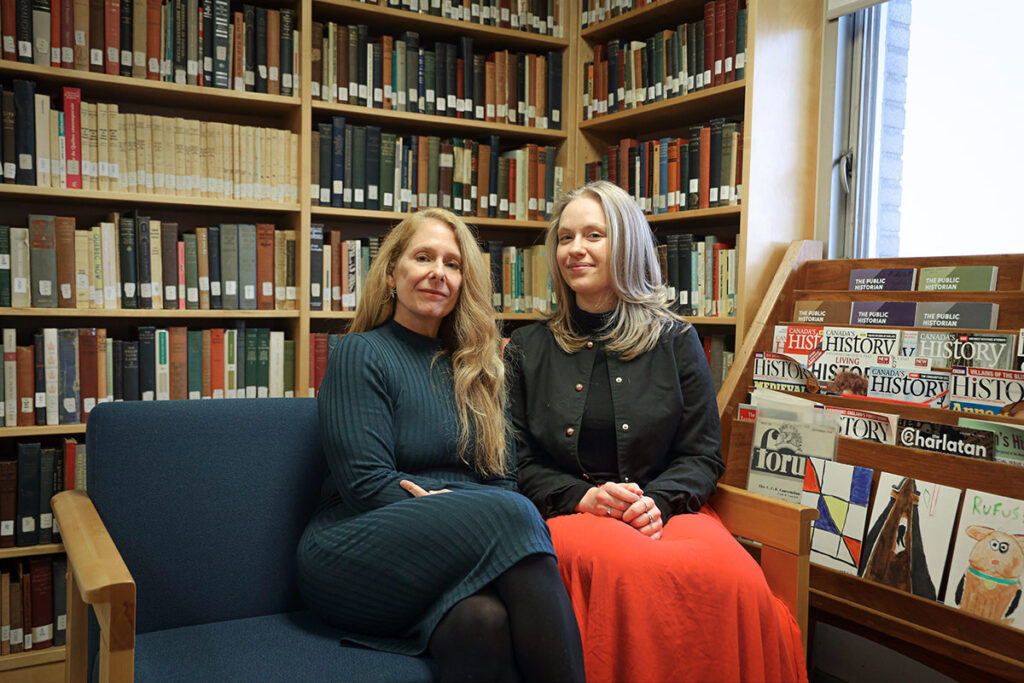
Carleton University history professor Jennifer Evans is studying how conspiracy theories evolve and why they resonate. Leading the Populist Publics project with Carleton communications professor Sandra Robinson, Evans is tracing conspiracy narratives across history to understand when they emerge, who they target and how they adapt to new media.
Her goal is to help people develop the critical skills needed to recognize and resist conspiratorial thinking.
A Historian’s View on Modern Conspiracy
We can’t understand conspiracy theories without looking at how information circulates online, according to Evans.
“The biggest change is social media,” she says.
“Our belief that we understand how it works because we’re users is harmful. The mechanisms aren’t transparent and it takes sophisticated tools to interpret what we see.”
People feel like they have a window into what others think online, but they’re seeing a curated perspective shaped by algorithms, influencers and bad actors.
Evans’ research shows that conspiracy theories tend to surface at moments of upheaval — economic instability, pandemics, political disruption — when people are trying to make sense of rapid change.
“Conspiracy theories are best understood as having both irrational and rational elements,” she explains.
“People are trying to find answers and language to interpret massive changes around them and they land on alternative explanations that make sense to them.”
Those explanations fill gaps left by institutions struggling to communicate clearly or quickly. During COVID-19, for example, shifting guidance, confusing messaging and gaps in public communication created fertile ground for misinformation.
Fionnuala Braun — a Carleton master’s student working with Evans who studies trust and misinformation in the public health sphere — says conspiracies often begin with uncertainty, not ideology.
“People are drawn to conspiracy theories when official sources are confusing,” says Braun.
“When they feel they’re not being told the full story, they’ll turn to unofficial and unreliable sources.”
Click the Link for the full article When Hate Goes Viral: Countering the Power of Conspiracy