Carleton’s Research Excellence Recognized with Four New Canada Research Chairs
Carleton University researchers Kelly Fritsch, Mohamed Al Guindy, Sriram Subramanian and Jaisie Sin have been announced as the university’s newest Canada Research Chairs (CRC). Their research excellence in the areas of disability justice, economic network formation, artificial intelligence methods and technology accessibility for older adults tackles pressing real-world challenges.
“These new Canada Research Chairs underscore Carleton’s culture of innovation,” says Rafik Goubran, vice-president (Research, Innovation and International). “Congratulations to all the researchers on this well-deserved recognition of their ground-breaking work.”
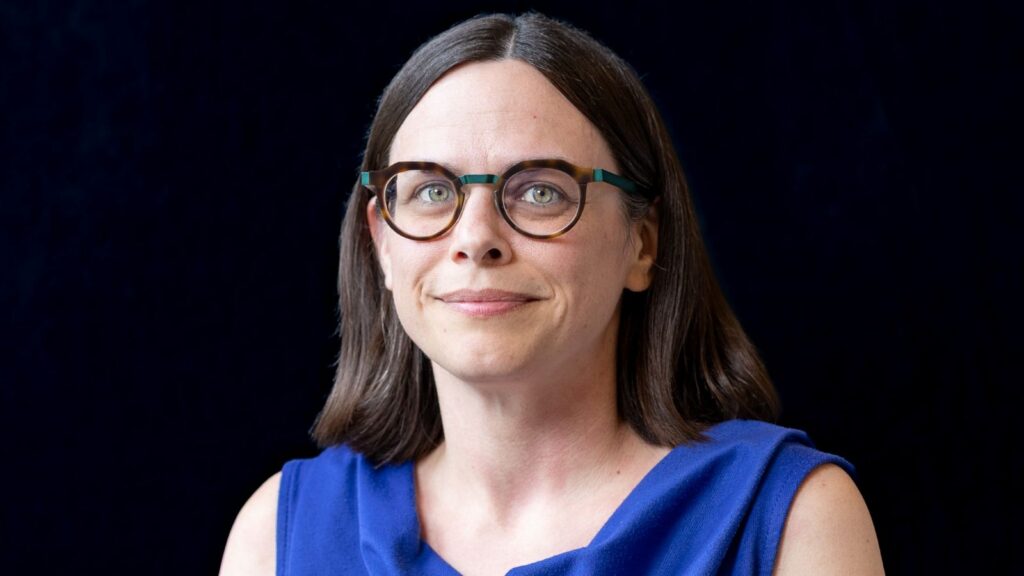
Kelly Fritsch, CRC in Disability, Health and Social Justice (Tier II)
Fritsch, a researcher in the Department of Sociology and Anthropology, is working to illuminate the persistent and intersecting barriers that impede disabled people’s flourishing in Canada. Her research program collects, analyzes and disseminates knowledge about the historical and current ways disabled people resist ableist social structures through disability justice.
Fritsch’s research explores what is possible if we anticipate and desire disabled people as part of our communities, and how disability justice activists, artists, scholars and policy makers work to collaboratively dismantle ableism and foster accessibility. It will inform Canadian disability policy, challenge ableism and inaccessibility, enhance disability justice as a scholarly area, preserve the knowledge of disabled people and cultivate their contributions.
Documenting the knowledge, culture and practices of disability justice social movement participants will yield innovative insights enabling society to better understand and respond to the needs of disabled people in Canada.
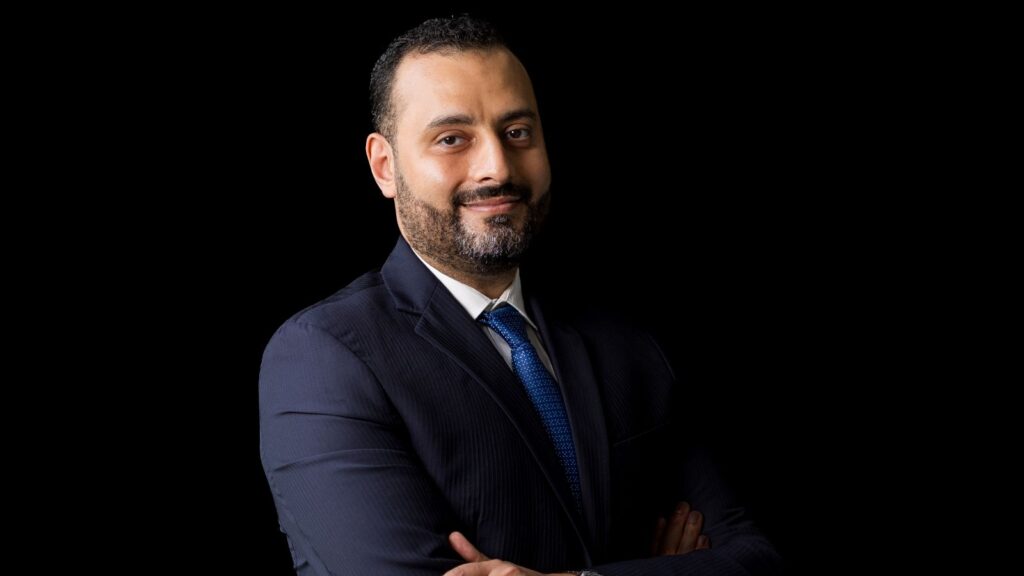
Mohamed Al Guindy, CRC in Financial Networks and Business Analytics (Tier II)
A researcher with the Sprott School of Business, Al Guindy’s work uses Business Analytics techniques, including artificial intelligence and machine learning, to extract business insights from large financial datasets such as social media, business media, and the Bitcoin blockchain to understand the intersecting relationship of businesses, media and the economy.
Modeling the economy as a network of connected entities, his research uncovers the underlying network structure of the economy and its evolution over time. It examines what factors affect network formation and evolution, as well as how information and noise are transmitted within the economy. His research program will also model the network structure of the Bitcoin blockchain, offering unprecedented insights into the Bitcoin network and its interactions with social, economic and technical trends. Additionally, he studies the prevalence and impact of robo-generated media content in financial markets.
Looking forward, his goal is to transform how economic interconnections are understood, experienced, and used. The research will not only advance academic frontiers but also reshape policy conversations and industry by making the invisible structure of the economy visible, tangible, and actionable – for scholars, regulators, and citizens alike.
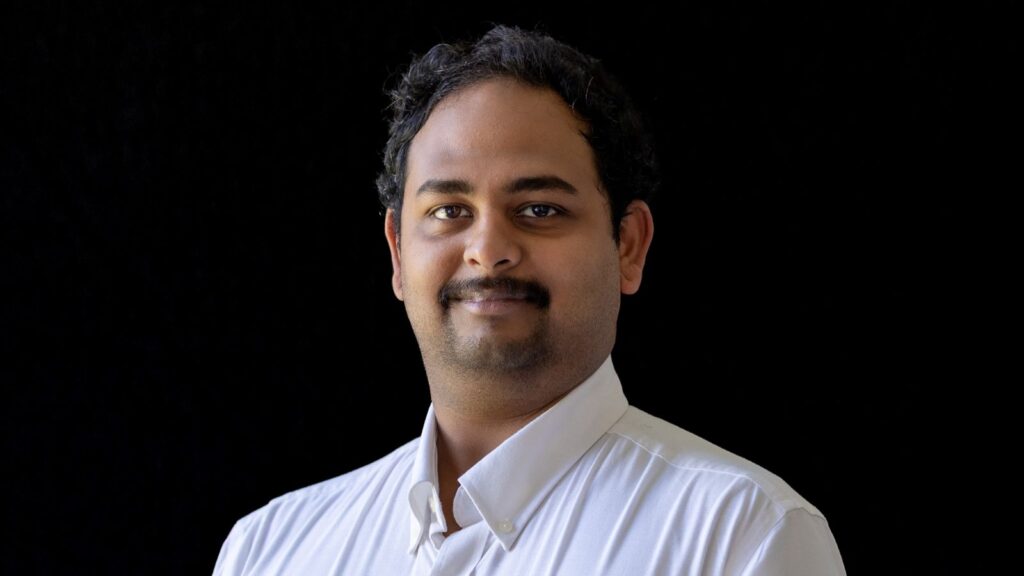
Sriram Subramanian, CRC in Artificial Intelligence
(Tier II)
In the field of artificial intelligence, multi-agent reinforcement learning (MARL) provides algorithms for autonomous agents to learn effective sequential decision-making policies in shared environments. Despite its potential, MARL has yet to be widely used in large-scale real-world decision-making challenges such as fighting wildland fires or autonomous driving.
Subramanian, a researcher in the School of Computer Science, aims to make MARL applicable to real-world problems by improving its sample efficiency, scaling MARL algorithms to environments with many agents, and investigating its effectiveness in potential practical application domains.
This research will help advance the field of MARL by designing novel algorithms to assist in transferring knowledge and accelerating MARL training, as well as resolving the drawbacks of existing designs to improve algorithm scaling. The potential for these newly designed algorithms to be deployed in complex, real-world environments will be explored.
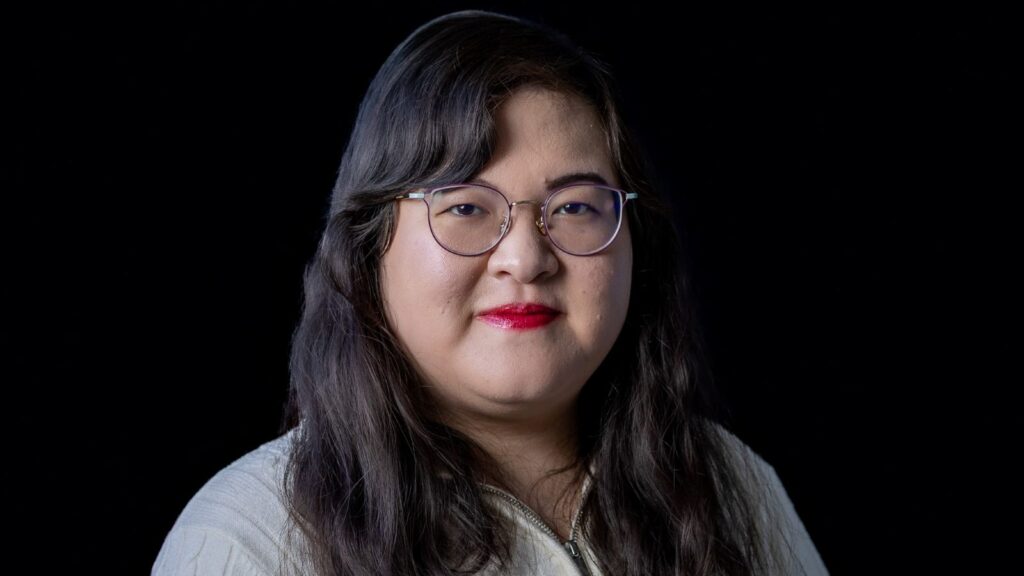
Jaisie Sin, CRC in Accessibility and Digital Technology (Tier II)
Digital technology can help older adults enjoy safe, healthy and socially connected lives within their homes and communities. However, current accessibility considerations emphasize their physical and cognitive needs at the exclusion of other important sociotechnical considerations such as digital literacy, physical surroundings and social stigma.
Jaisie Sin, a researcher in the School of Information Technology, is working to create tools to evaluate the sociotechnical impact of emerging technologies such as voice user interfaces and virtual reality. Her research will develop technology that facilitates older adults’ essential activities in society and supports their social engagement and sociotechnical considerations.
This research aims to bring new methodologies to incorporate older adults in the creation of novel technologies, fill a significant gap in the design and development of new technologies for this underrepresented user group, and create tools to support the development of technology to better meet older adults’ sociotechnical needs.
In addition to the announcement of four new CRCs, Carleton is celebrating the CRC renewal of two of its esteemed researchers.
Erin Tolley, a researcher in the Department of Political Science, is being renewed as the CRC in Gender, Race, and Inclusive Politics (Tier II) and Reza Kholghy, a researcher in the Department of Mechanical and Aerospace Engineering is being renewed as the CRC in Industrial Decarbonization (Tier II).
Find out more about Carleton’s CRCs here.