Graduate Spotlight: Ann Laubstein, B.A., M.A., PhD, Professor of Linguistics and now, B.Sc.
Following a distinguished career as a professor of Linguistics at Carleton, Ann Laubstein realized she didn’t much care for the idea of a quiet retirement. She was intrigued by the idea of learning about how the brain works, though.
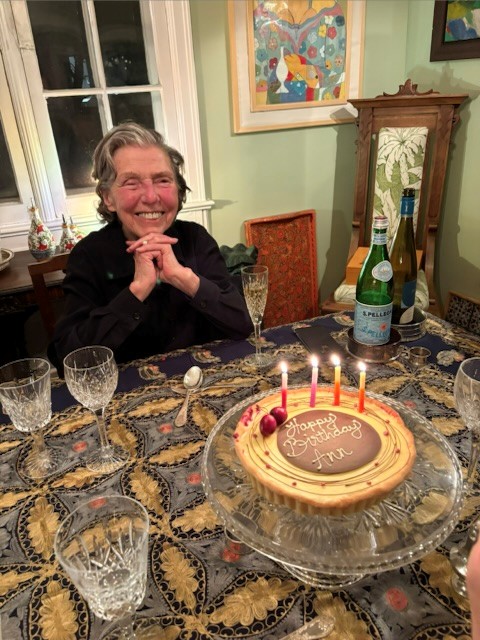
What’s a retired professor to do other than enroll in a B.Sc. in Neuroscience just for the love of learning?
Ann Laubstein graciously answered a few questions for us, offering some insight into her unique perspective, having experienced Carleton both as a professor and as a PMC student.
- Q: After retiring from your career as a professor, what motivated you to pursue an undergraduate degree in Neuroscience?
A: I loved teaching and did NOT want to retire. But…
I decided I would try to get more fluent in the languages I spent my career studying by way of going to the relevant countries and immersing myself. I started in Argentina, but discovered that what had once been a natural facility for learning had disappeared due to my deafness.
So, what else did I want to do? Learn about the brain. My research had always been investigating the language structures in the brain that were involved in speech production – more specifically the phonological structures like the syllable. - Q: You mentioned previously that this degree is important to you. Why?
A: When I decided to enroll in the B.Sc. program, I hadn’t necessarily intended to actually complete it. In the end though, I thought most of the courses in the Neuroscience and Mental Health program looked interesting, and I decided to try even though the math was a potential obstacle (I had done grade 13 math way back in 1957-58).
And now, here I am with a BSc! It’s been fascinating. The physics and calculus courses surprisingly difficult, but doable thanks to lots of help from the professors teaching them. - Q: Do you have plans for what you would like to do with the knowledge you gained from this degree?
A: Now what? I am not sure. There are so many interesting potential directions. For instance, I am thinking about how to integrate my earlier research with what I now know about the brain. But so many new things are tempting me. - Q: As someone who has been on the professor’s side of things, what is something you wish more PMC students knew?
A: As a PMC student, I have had access to all sorts of things available to hard-of-hearing students: note takers, recorders, amplifier’s, front of class seating, etc. In addition, the constant availability of PMC staff to answer my questions was a godsend - Q: As a PMC student, what is something you wish all professors knew?
A: I knew PMC students had access to separate exam rooms and time extensions, when I was a professor, since I had to pick up exams at PMC to mark them. I did not know time extensions were available to OLD students like me; nor how much more was available.
Ann spent a career teaching students about linguistics and her retirement exemplifies how to always lead with curiosity, adjust instead of giving up when obstacles arise, and to not count yourself out before ever stepping up to bat. Professors, teachers, and educators might retire but they never really stop giving the rest of us things we can learn from them.