After more than a decade in the making, the Carleton Vintage Computer display has officially launched in room Herzberg 4155 during the School of Computer Science Open House on Friday March 27, 2026. The contributions of numerous generous donors have helped Carleton University secure a proud place in the vintage computing community.

Vintage computing has emerged as a fascinating new phenomenon. Microcomputing began in the 1970’s, over 50 years ago, and what was once the cutting edge of technology has now become part of our shared technological heritage. In the early years, few imagined that these machines would one day be historically significant. When they became obsolete, many were simply recycled or discarded; whether they were seen as important or as junk often depended entirely on perspective.
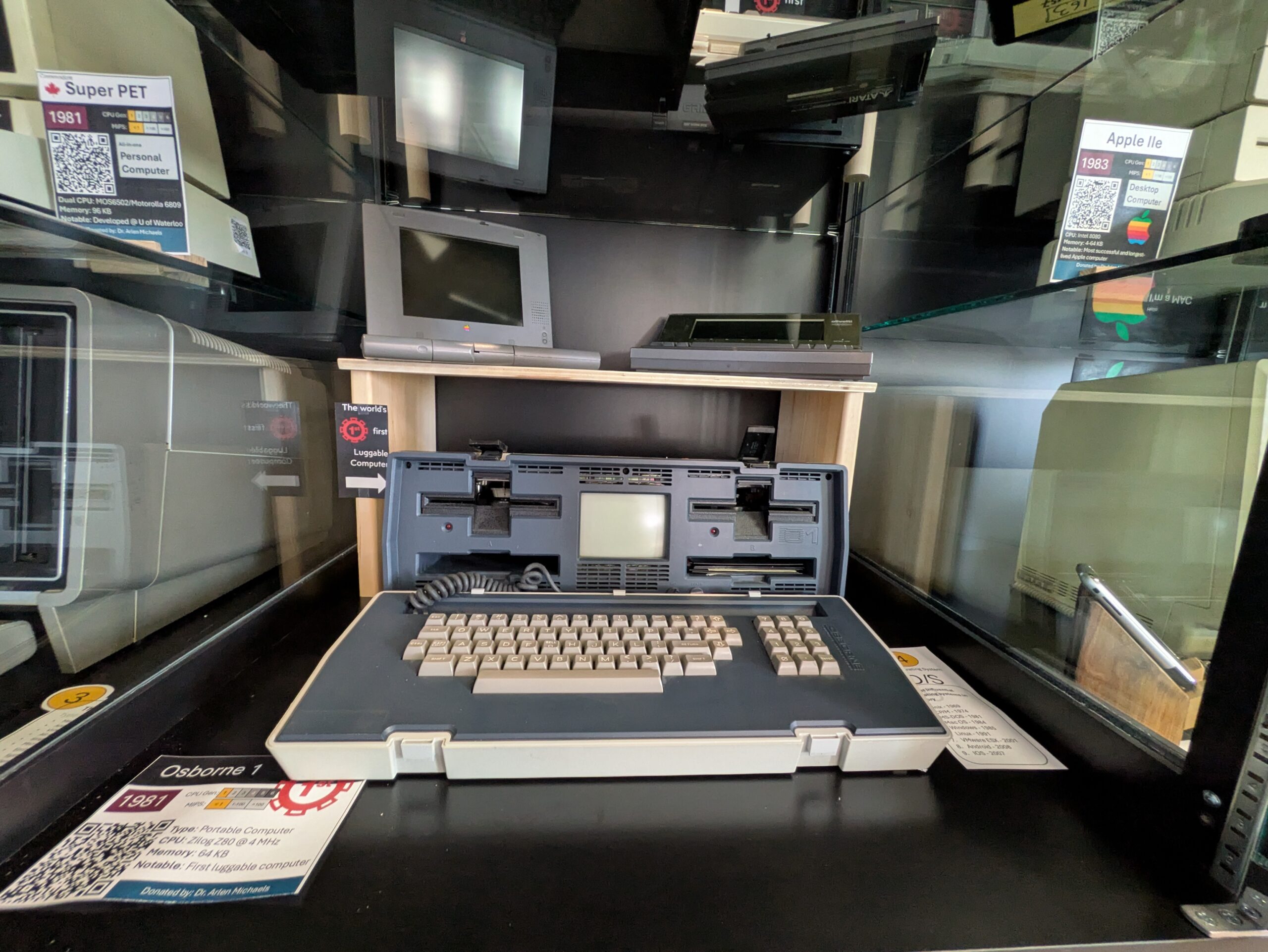 Some individuals had the foresight to preserve notable computers rather than recycle them. Their efforts helped lay the groundwork for today’s renewed appreciation of computing history. As many of these early systems reach the half-century mark, they are increasingly recognized as milestones that shaped our digital world, collected, preserved, and celebrated for their role in pushing the industry forward.
One such local enthusiast spent his career working with microcomputers and had the rare opportunity to witness the entire evolution of personal computing firsthand. Rather than discarding notable systems as they became obsolete, he ‘rescued’ them, recognizing their historical value. That individual was Dr. Arlen Michaels.
As Dr. Michaels described it:
“…the collection includes nearly one hundred diverse examples of desktop, industrial, and portable microcomputers. No, this is not an uninteresting pile of rusting PCs. Many items date from the earliest, very creative, very diverse period of microcomputer evolution, namely from the pre-PC 1970s to the early 1990s. They often foreshadow what was yet to come. Many were designed and manufactured by small, short-lived companies – a few based in Ottawa, in fact – and are now exceedingly rare. Most still function. They are true living fossils.”
Dr. Michaels contacted Carleton University’s School of Computer Science to donate his entire collection to the school.
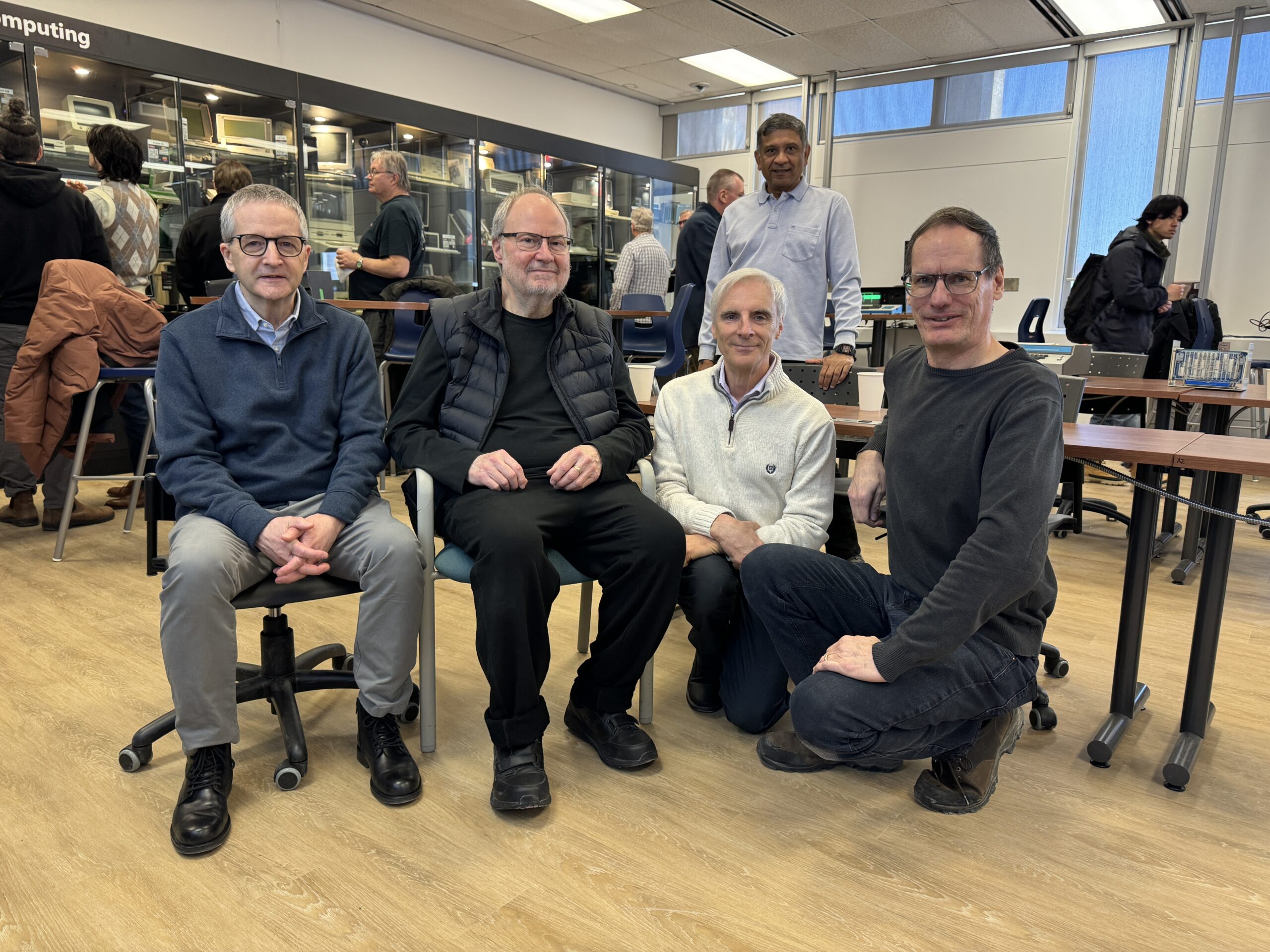
Left to right: Dr. Michel Barbeau, Dr. Arlen Michaels, Dr. J-P Corriveau, Andrew Miles, Dr. Anil Maheshwari (at the back)
“The first time we visited Arlen’s house, dozens of boxes, monitors and computers were stacked six feet high along both sides of his basement. A narrow path wound through the space like a maze, each box filled with equipment, manuals, and software. Many were simple cardboard produce boxes, but inside them were remarkable vintage computing treasures,” noted Andrew Miles, Senior Systems Administrator from the School of Computer Science.
Over the course of two years, the school undertook the careful and deliberate task of relocating his extraordinary lifelong collection of vintage computers to Carleton University. What began as a donation has grown into a living resource, one that students, faculty, staff, and visitors can explore, learn from, and appreciate firsthand.
Many of the systems remain fully operational, a testament both to their original engineering and to the care they have received. The collection has also inspired the formation of a grassroots initiative: Carleton Vintage Computing (CVC), a dedicated group committed to using, displaying, testing, repairing, and maintaining these historic systems. Their work ensures that the collection is not simply preserved but actively engaged as a resource.
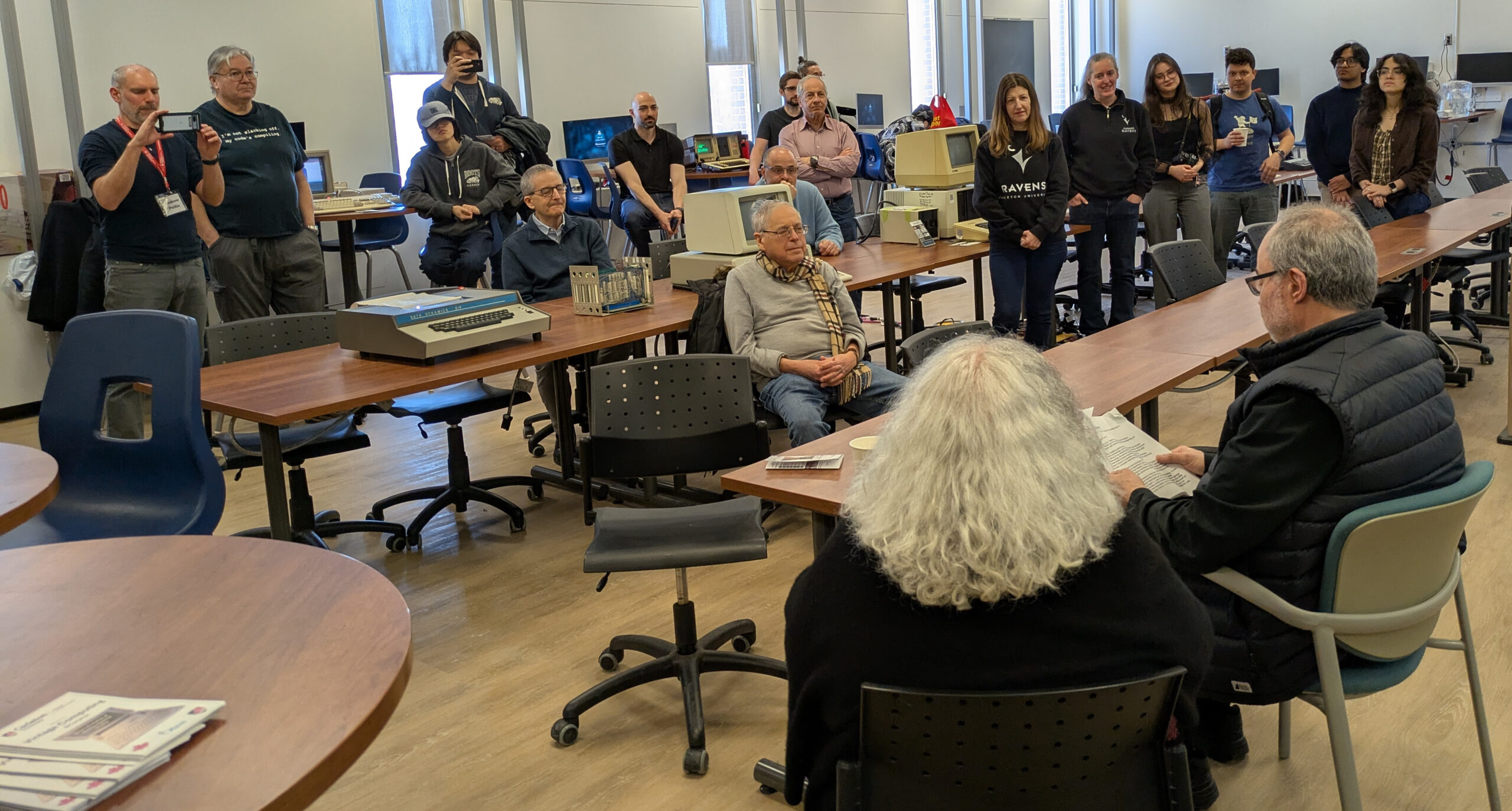
Arlen Michaels speech at the Open House
Today, a significant portion of the collection is showcased in the Vintage Computing Display and in recognition of this remarkable contribution, the school has named the exhibit “Arlen’s Evolution of Microcomputing.” It stands out as an acknowledgment to Dr Michaels and his message that preserving technological history enriches the future of innovation.
Fifty years of computing spans multiple generations, and as an earlier generation of technologists retires, so do their vintage computer collection. This was the case with our second generous donor, Grant Bechthold Jr., whose father was a “rocket scientist” at Canada’s National Research Council and one of the earliest adopters of personal computing in the Ottawa region.
Grant Bechthold Sr. worked with one of the first personal computers available locally, produced by the Ottawa-based company NABU, which released the NABU 1100, a networked personal computer that briefly captured the imagination of early adopters.
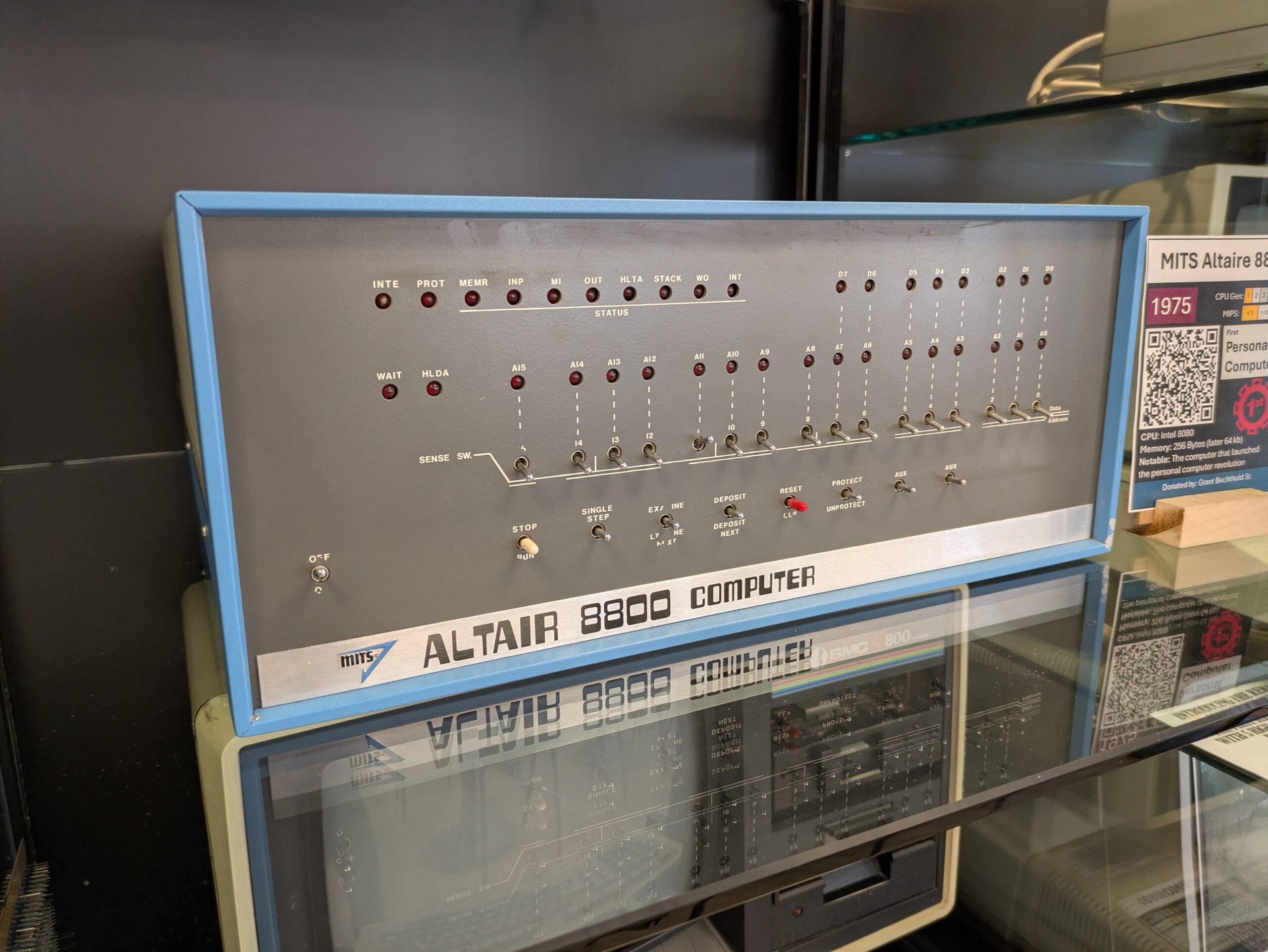 Along with this piece of Ottawa computing history, Grant Jr. also donated what is widely regarded as one of the most historically significant microcomputers ever built: the MITS Altair 8800. Introduced in 1975, the Altair 8800 is often credited with igniting the personal computer revolution. Sold as an affordable kit built around the Intel 8080 processor, it inspired a generation of computer enthusiasts and helped launch the modern era of personal computing. The School of Computer Science recognized Grant’s incredible donation during their Open House with a ‘surprise computer reveal’.
With the redesign of its tutorial laboratory, the School of Computer Science has created a space where the vintage computing collection is a natural and inspiring feature. The collection has grown to include more than 200 vintage computers, along with software, accessories, and computing artefacts. The lab’s Open House celebrates both the official opening of Carleton’s vintage computing display and the generous contributions of Arlen and Grant, whose support helped make it possible.