Apple Power Mac G4
The Apple Power Mac G4, launched in 1999, was notable for introducing the PowerPC G4 processor with the AltiVec “Velocity Engine,” enabling it to achieve supercomputer-level performance—over one billion floating-point operations per second—making it a top choice for graphics, video, and professional applications. Its claim to fame was being classified as a “personal supercomputer” by the U.S. government, leading to export restrictions, and outperforming similarly clocked Intel Pentium III PCs, especially in multimedia tasks. The Power Mac G4 was highly popular among creative professionals and helped cement Apple’s dominance in design and video production.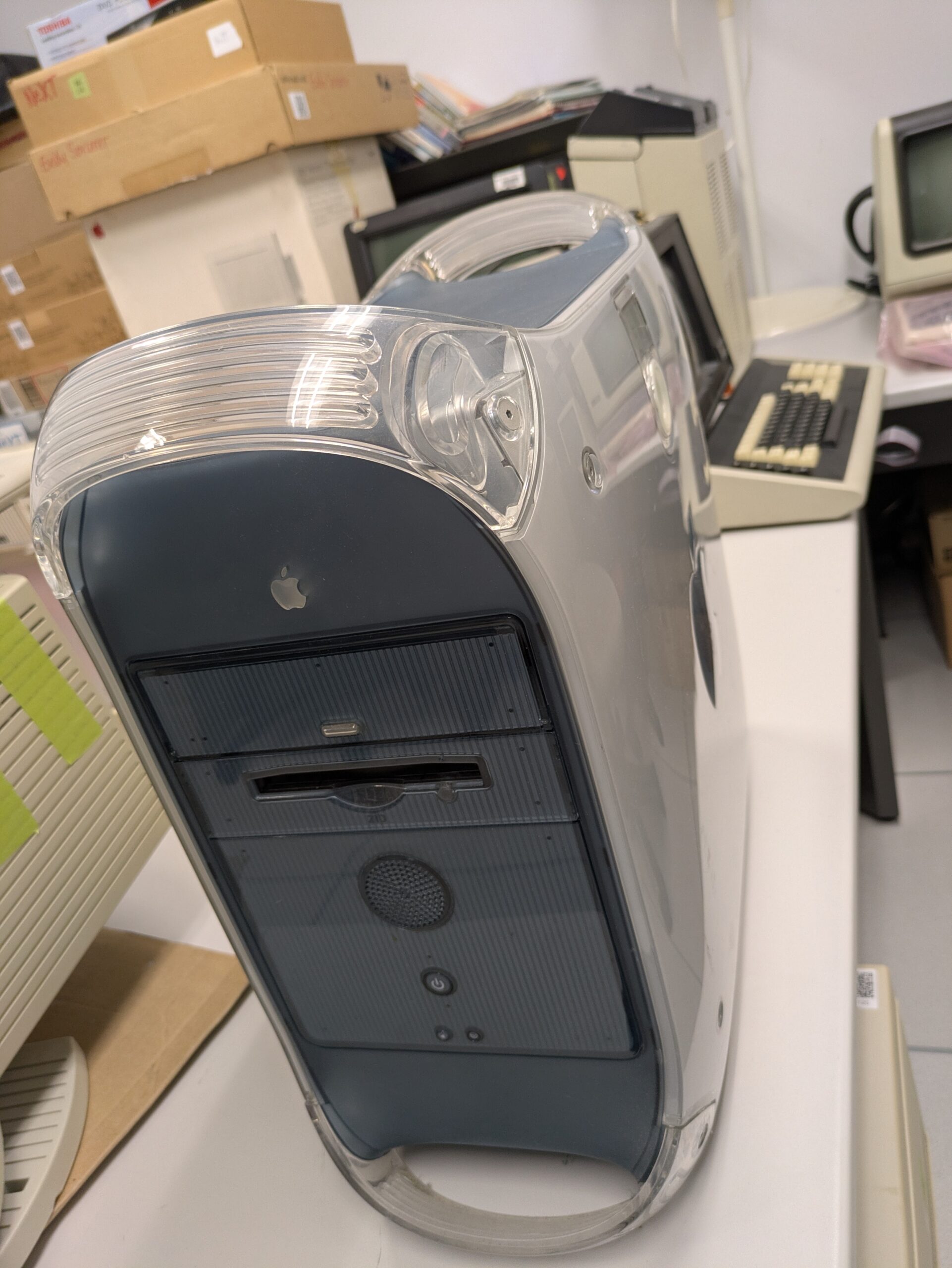
- Manufacturer: Apple
- Type: Desktop computer
- Release Date: 1999
- Cost at release: USD $1,599 (CAD ~$5,500 adjusted for inflation)
- Cost with peripherals: USD $4,500 (CAD ~$11,500 adjusted for inflation)
- MIPS: 7-10
Hardware Specifications
- CPU: Motorola PowerPC 7400
- Memory: 4 RAM slots, supporting PC100 SDRAM, with 64 MB to 1.5 GB maximum RAM (varies by model)
- Storage: Hard drive options from 10 GB to 27 GB (ATA-66 or SCSI interface).
- Media: No floppy drive; optical drive included (DVD-ROM or DVD-RAM)
- Graphics: 16 MB AGP graphics card (expandable in later models), supporting resolutions up to 1280 x 1024
- Ports: Three FireWire 400 ports and two USB 1.1 ports for external connectivity.
- Networking: 10/100Base-T Ethernet networking.
- Optional AirPort (Wi-Fi) wireless networking.
- Three PCI slots and one AGP slot for expansion.
- PlainTalk microphone support and built-in speaker/headphone ports.
- Tower form factor: 17″ H x 8.9″ W x 18.4″ D, 30 lbs
Operating System & Programming Languages
- Operating System: The Power Mac G4 originally shipped with Mac OS 8.6 or Mac OS 9.x, and is capable of running up to Mac OS X 10.4.11 “Tiger” natively; some later models can run Mac OS X 10.5 “Leopard” with limitations
- Supported Languages:
- C and C++ (via Apple’s Developer Tools/Xcode and GCC)
- Objective-C (primary language for Mac OS X application development)
- Java (supported through Apple’s Java Virtual Machine and tools)
- Scripting languages such as Perl, Python, and Ruby (included with Mac OS X)
- AppleScript (for automation and scripting within the Mac environment)
- Pascal, Fortran, and others (available through third-party compilers or developer tools)
- Classic Mac OS languages (such as HyperTalk for HyperCard, and older BASIC or Pascal environments)
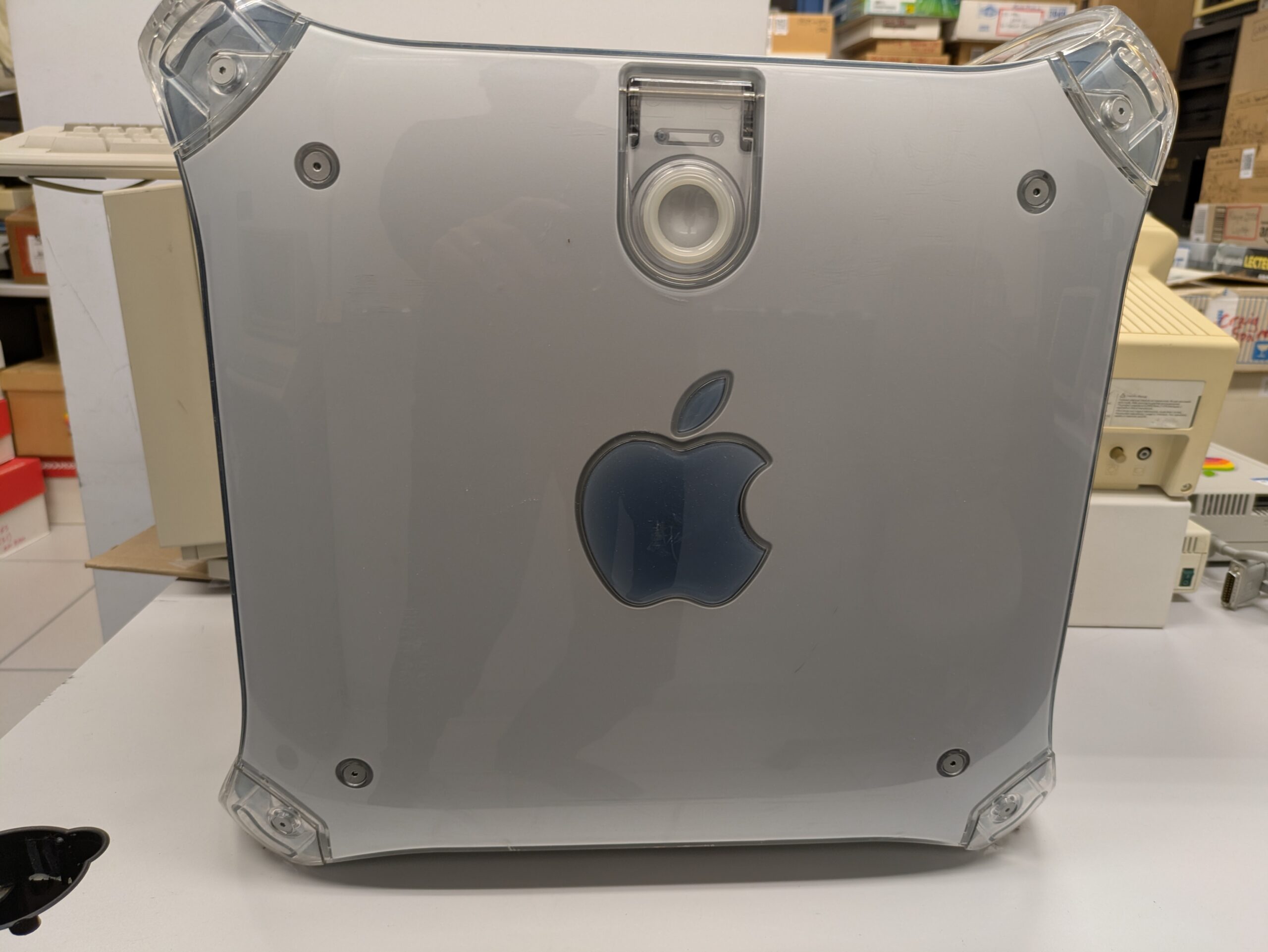
Notables
- The Power Mac G4 was famously marketed as a “personal supercomputer” because its PowerPC G4 processor with Velocity Engine could achieve over one gigaflop, leading the U.S. government to briefly classify it as a munition and restrict its export to certain countries.
- Apple used this export restriction as a bold marketing angle, running ads that humorously depicted the G4 as a weapon and highlighting its superiority over Pentium PCs.
- The G4’s easy-to-upgrade case design and high performance made it a favorite among creative professionals and contributed to Apple’s resurgence in the late 1990s and early 2000s.
- The Power Mac G4’s place in computing history is as a pivotal machine that bridged the gap between consumer and professional computing, setting new standards for desktop performance and influencing both hardware regulation and marketing in the tech industry
Donated by: Dr J.P. Corriveau