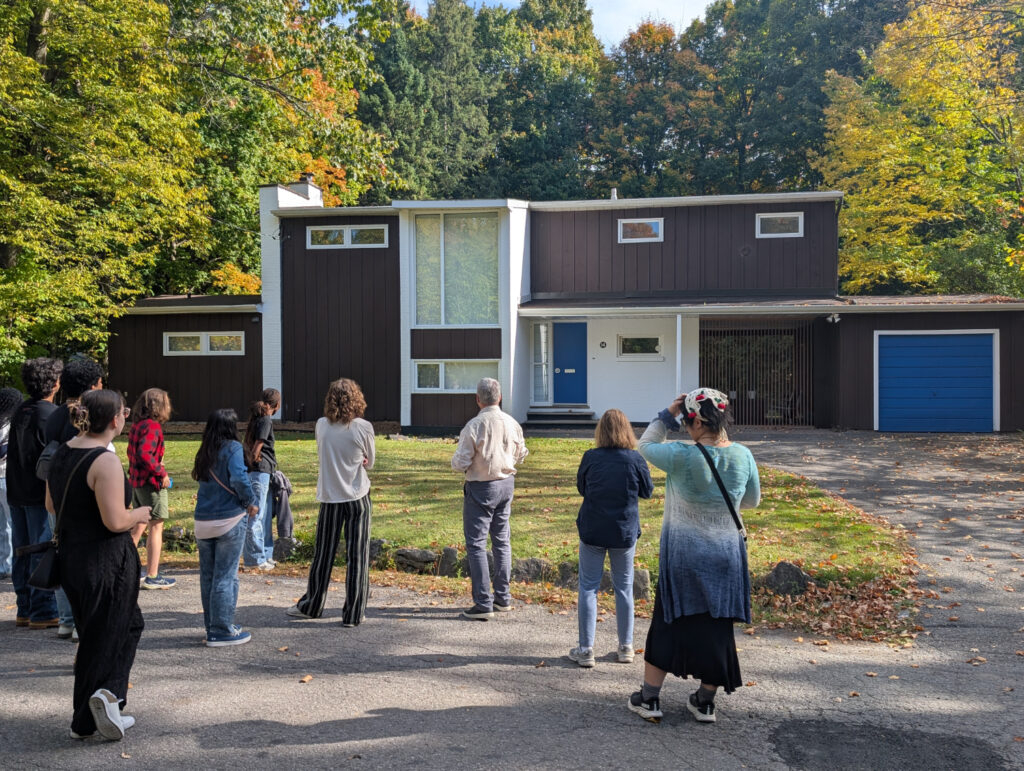
Discovering Ottawa’s Hidden Modernist Gems
HTA student Daniella Dickson experiences the ideals and the beauty of Mid-Century Modern neighbourhoods firsthand.
By Daniella Dickson
Daniella Dickson is a second-year student in the History & Theory of Architecture program.
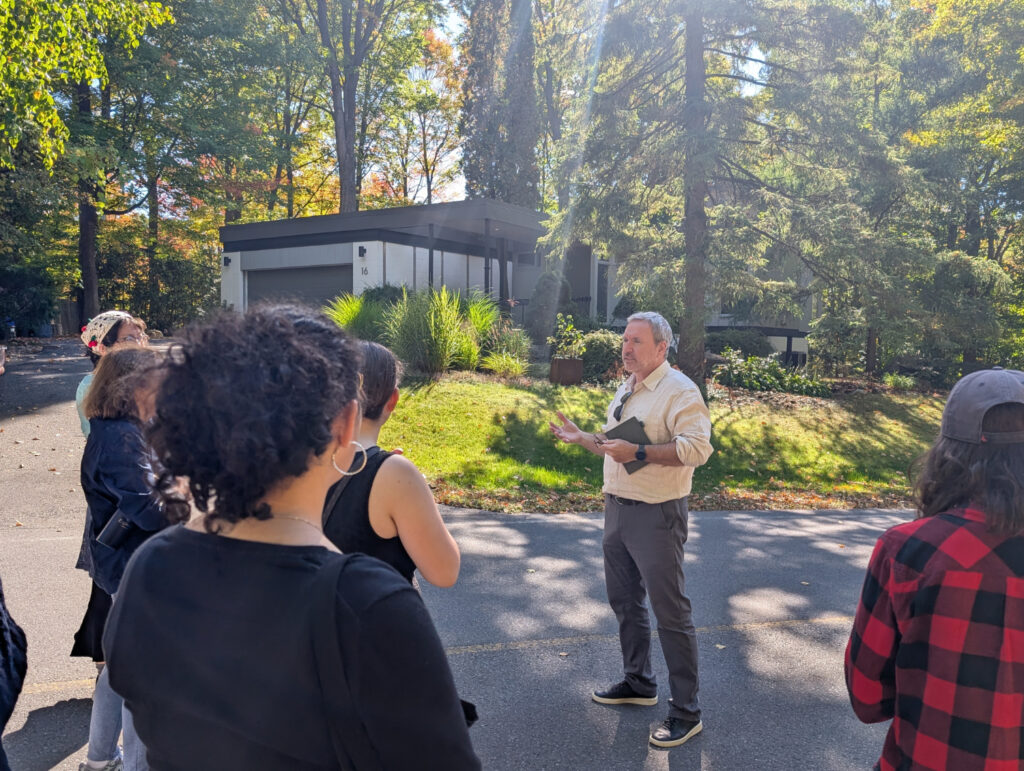
Ottawa is known for its monumental architecture, from the Neo-Gothic Parliament Buildings to modernist museums. However, on a brilliantly sunny Friday afternoon in October, I boarded a bus to discover a different side of the city. Along with my peers in the History & Theory of Architecture (HTA) program, we discovered a collection of more modest modernism tucked away in two planned neighbourhoods.
A Road Trip into Modernism
As an HTA student, learning about revolutionary styles in class is one thing, but walking through a neighborhood built in these very styles is unique. That was the incredible opportunity I had on a recent architecture tour led by Adjunct Professor Andrew Waldron that explored the history of mid-century Modern design through the lens of two co-operative housing neighbourhoods, Briarcliffe and Fairhaven.
What Exactly Is a Co-op?
In this context, a co-op wasn’t a corporate entity but a radical post-war idea where a group of friends or like-minded individuals pooled their resources to purchase land. Their goal wasn’t just to build houses, but to create a cohesive community dedicated to preserving the natural landscape
As I stepped off the bus, the first thing that struck me wasn’t something I saw but something I heard. The constant hum of the city faded away, replaced by the gentle rustle of leaves in the wind. Our first stop was the Briarcliffe neighborhood, a designated heritage conservation district that protects this co-op in Ottawa, and which stands as a remarkable example of mid-century modern community planning.
Design and Nature in Harmony: Briarcliffe
The first house I was introduced to was the Butler House. Waldron explained that Briarcliffe was built under a unique set of design covenants, which we could see in the design of this house as well as the others nearby. Homeowners could choose from approved Canadian Mortgage and Housing Corporation (CMHC) designs or commission private architects, but everyone had to follow the same modernist principles. This result was evident as every house was unique, yet all spoke the same architectural language.
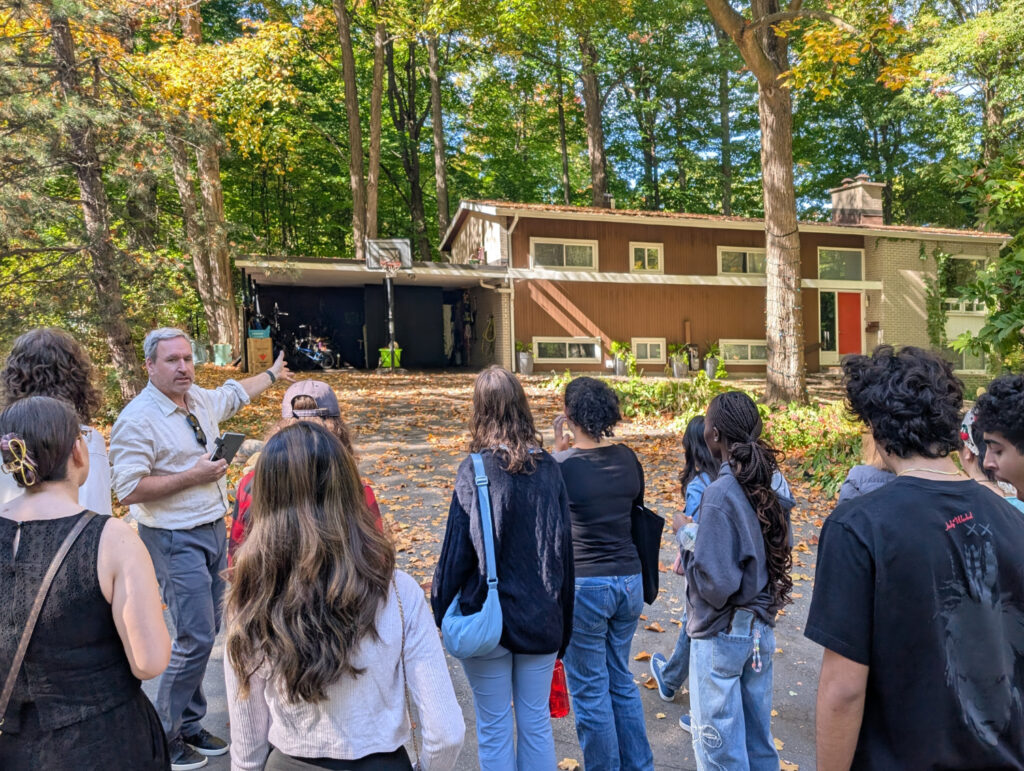
That language was one of rectangular and cubic forms, with a powerful emphasis on horizontality. Even though ornamentation was eliminated, beauty lay in:
- The engagement with nature: Houses were buried in the landscape, using the natural slope of the land.
- The privacy: A clever use of high windows or minimal windows on the street side created a strong sense of privacy.
- The modern details: Carports replaced bulky garages, cantilevered balconies seemed to float in mid-air, and decks appeared to hover above the ground, all enhancing the sleek, horizontal feel.
- The materials: the rich, warm tones of wood and the textured honesty of cinderblock were repeated throughout, grounding the homes in their natural setting.
The community had such a dedication to nature. There were no streetlights, no garbage cans, and the central park wasn’t a typical playground, but a preserved woodland with a simple path winding through the trees.
While each home was a gem, two homes particularly captured my attention. The Treehouse (architect: James Strutt) captivated me with its unique, dramatic roof that made it stand out from its peers. And the Butler House (architect: Brian Barkham) struck me with its stunning simplicity; a white cuboid with hints of oak.
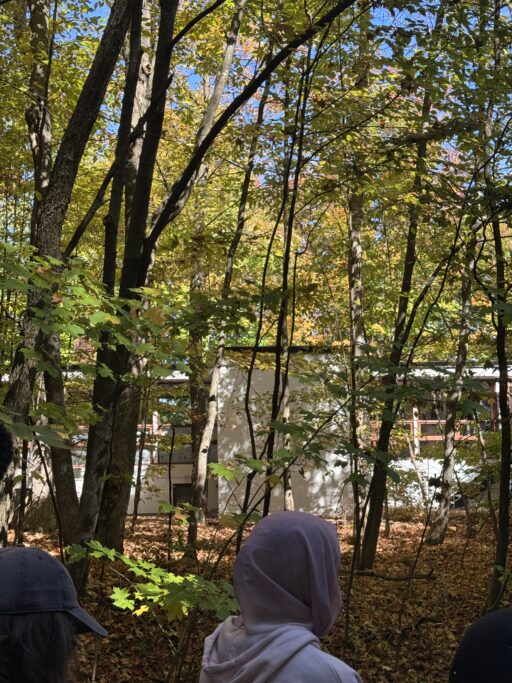
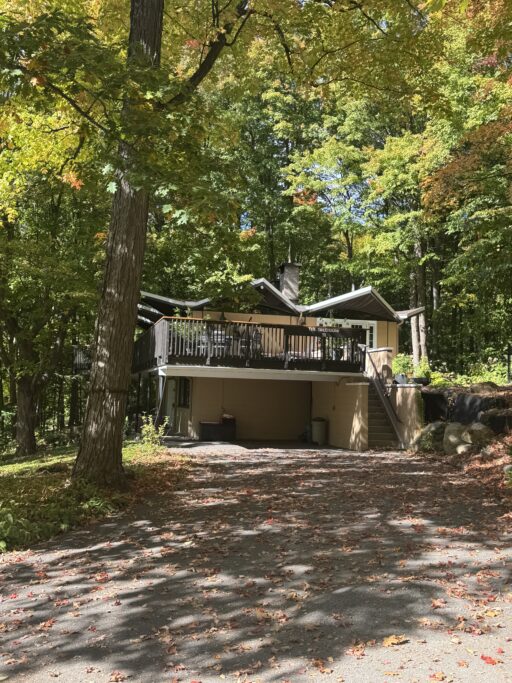
As I walked through Briarcliffe, it was impossible not to see the ideologies of Frank Lloyd Wright (in the horizontality and integration with the site) and Le Corbusier (in the cubic forms and raw materials), which I learned about in class. It was incredible to know I was walking through a gallery of works by renowned Ottawa architects like James Strutt, Matthew Stankiewicz, and Paul Schoeler, who brought these global ideas to life in the city of Ottawa.
Architecture and Community: The Fairhaven Experience
After absorbing the serene vision of Briarcliffe, the architectural journey continued just a short drive away in the Fairhaven neighborhood. As an older co-operative establishment, it presented a different character. What fascinated me most was learning that this neighborhood still operates on its original systems, with many houses relying on septic tanks and not having central heating. The true magic of Fairhaven wasn’t just in its buildings, but in its people. The neighbourhood felt alive. We saw nurses and hospital workers walking through, and residents were out and about.
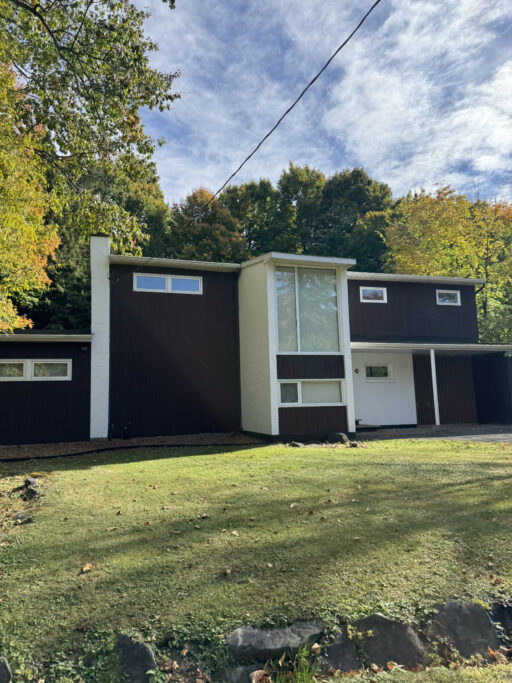
Interactions with residents profoundly enriched the experience. The current homeowner of the Tom Wood House, with its deceptively plain exterior, noticed our group’s interest and generously invited us inside. Stepping inside that house was like walking into a textbook diagram of Frank Lloyd Wright’s open plan principle. The staircase was deliberately placed to the side, rather than in a central hallway, to create a fluid living area.
Another homeowner gladly welcomed us to view the exterior of her house. It was the Crabtree House, a designated heritage home perched close to an old quarry. While we couldn’t go inside or see the original doors carved by the architect Matthew Stankiewicz, the exterior was a masterpiece. A subtle piece of ornamentation on one of the walls truly caught my eye.
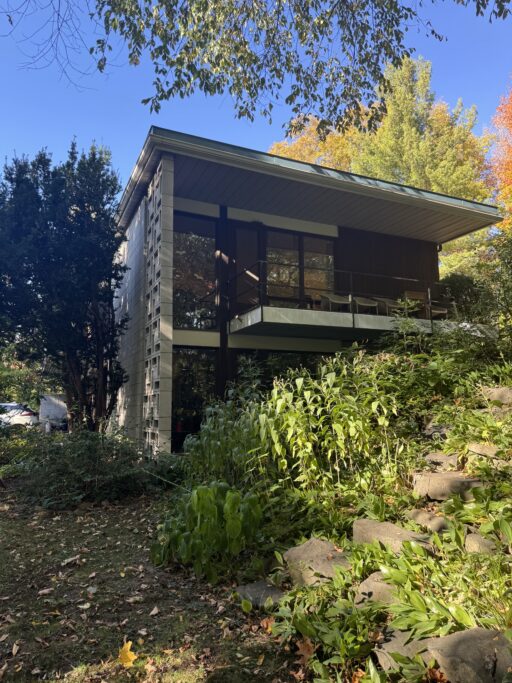
The core design principle, however, remained a deep connection with nature. We saw this theme amplified in almost all houses as they presented a private face to the street with minimal windows, but their rear areas were transformed into glass-walled pavilions open to landscapes.
The chance to interact with residents and even step inside their homes made the architecture feel not like a relic, but a living, evolving part of people’s lives.
A Lasting Impact: from Theory to Reality
This trip was more than just a bus ride and a walk through some streets in Ottawa. Andrew Waldron and Professor Michael Windover, who organized and curated this incredible day, didn’t just show us buildings; they bridged the gap between theory and reality, giving me a much greater understanding and appreciation for the architecture I’m learning about in my classes.
If you ever have the chance, whether you’re an architecture enthusiast or just curious about Ottawa’s hidden history, I highly recommend taking a trip to see Briarcliffe and Fairhaven. It was an absolutely insightful journey.