Recollections of Venice
For this History & Theory of Architecture student, a term spent studying in Venice left a lifetime of memories.
By Pardis Farrokhi
Pardis Farrokhi is a third-year History & Theory of Architecture student. She recently returned from spending the fall term studying the art and architecture of Venice – in Venice. This opportunity is offered by Art & Architectural History at Carleton in collaboration with the University of Warwick’s Art History department.
It was a bittersweet feeling returning back home from Venice. I knew these emotions would hit. Even while I was abroad, I was aware that I would miss these moments one day and cherish them forever while they were happening. After a few weeks of classes, I am finally falling back into my groove, my routine. Sweet memories seep into my daily routine; flashbacks hit me at random times during the day – when I am washing dishes, chatting with friends, writing in class. Thinking back now, it all felt like a dream. What an opportunity.
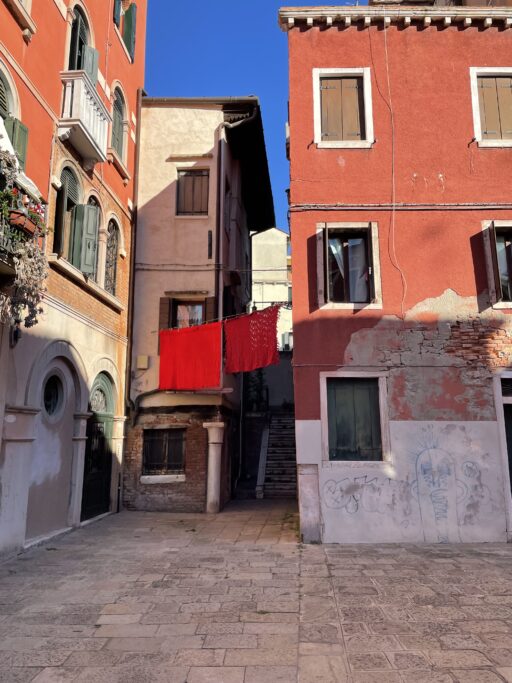
As much as I enjoyed the on-site lectures and day trips, studying abroad in Venice offered me so much more. This experience expanded my understanding of the city. I was living there, observing everyday life, and seeing how people interact with the spaces I learned about in lectures here in Canada. I spent a lot of time at tiny cafes, ordering macchiatones (espressos with foamed milk which I later learned is a Venetian specialty) and cicchetti (appetizers eaten with spritz), attempting to speak Italian with the owners and locals as well as to observe people as they go about their day. Sitting by windows or tables outside, I would encounter elderly women dressed in chic attire walking their dogs, others carrying their children’s scooters to the nearby campi (square) for them to play, men fishing by the lagoon, and waiters of neighboring businesses outside trying to lure customers in. Certain individuals I would recognize and see every once in a while, walking the same path as always, they became characters that inhabited my mind. While Venice is often labeled as a museum city, it is very much alive and evolving. Television antennas, satellite dishes share the cityscape with pinnacles and domes. Every time my mind drifts back to Venice, I wonder what these characters are up to, I picture them engaging in the rhythm of the daily routine I was once a part of.
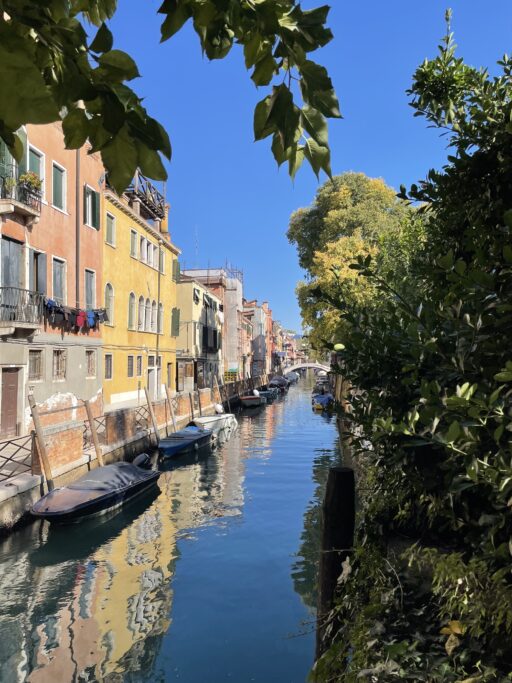
Often, I would purposefully get lost in the city, as everyone had told me that the way to truly experience Venice is to avoid (as much as you can) the use of maps. I had many “aha!” moments when a winding calle (street) would lead to a familiar campi. With every path I took, the city offered something new, something I had not stumbled upon before.
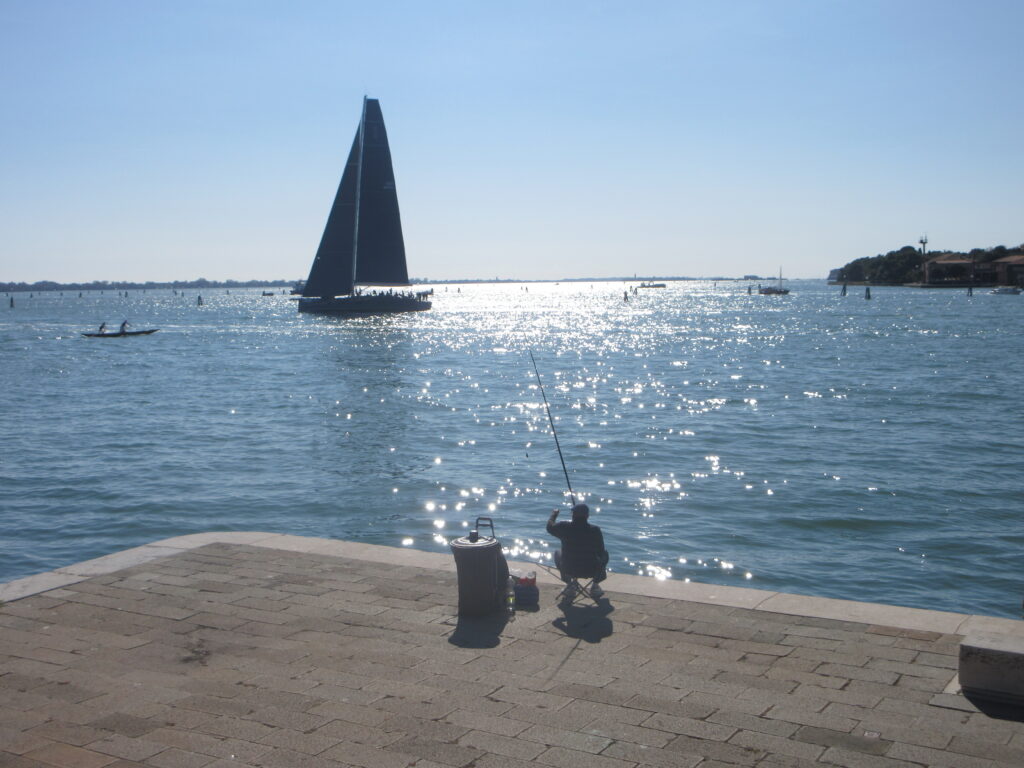
A little anecdote I have told many people when asked about Venice is the feeling of awe I had every time I left the grocery store near my flat. The store was located right at the edge of the water, as I walked out of the doors I would look out towards the vast expanse of the lagoon. The water softly rippled and the sun’s rays reflected off the water creating a kaleidoscope of colors. I would just stand at the edge for a few moments, grocery bags in hand, reflecting on the surrealness of this whole experience. I thought: ‘I truly live here, in this floating city of intersecting layers of history, culture, and architecture, once a pilgrim stop, a dukedom then a commune, that rose timber by timber.’
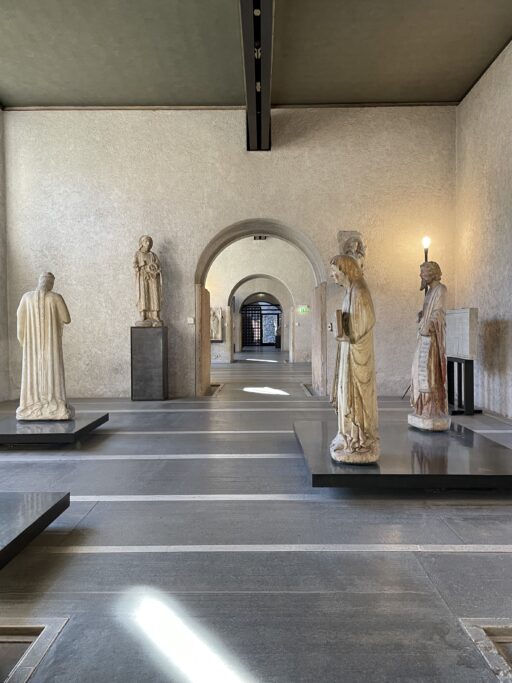
With boats, buses, and trains I traveled to a dozen cities: Bologna, Bassano Del Grappa, Castelfranco, Mantua, and Vicenza, just to name a few. I had experiences I could not have had any other way. My campus building where I went for lectures was a 17th century palace, the Palazzo Giustinian Lolin that overlooked the Grand Canal. With class, we visited the Venice Architecture Biennale which I always desired to see. Day trips to Verona and San Vito d’Altivole also gave me the chance to engage directly with the work of Carlo Scarpa, an architect I deeply admire. I got the chance to become profoundly acquainted with the work of ‘my dear friends’ Bellini, Tinteretto, Titian, and Veronese at the Galleria dell’Accademia. I was able to apply what I learned in the classroom on-site: discussions about modern architecture and the historic city became tangible.
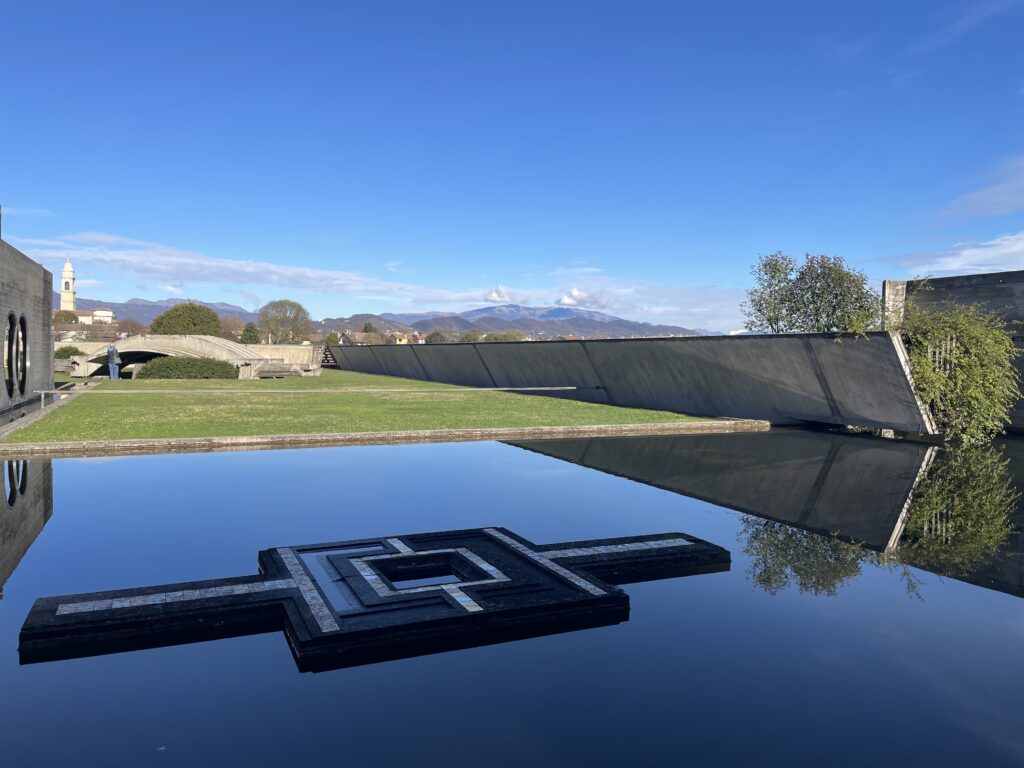
Looking through my photos now, I realize I have so many more stories to tell.
I miss Venice deeply, but I am relieved to be back home with a pocketful of memories (in this case, it should be a boxful of memories).
Pardis Farrokhi, third-year HTA