Carleton Engineering students selected for International Rover competition in Utah
By Alejandra Fernandez
The Carleton Planetary Robotics team (CPRT) has been selected as a finalist in the 2026 University Rover Challenge, a leading Mars Rover competition set to take place in Utah this May. CPRT is one of only four Canadian universities heading to the tournament.
Before qualifying for this global stage, the team competed and earned third place in the Canadian International Rover Challenge (CIRC), an important milestone that highlights their technical strength and dedication.
This achievement positioned them among the top student robotics teams in Canada and helped secure their place in the upcoming global competition, where they will be in the running with 38 teams from 12 countries, making this a significant opportunity for Carleton University students to showcase their work on behalf of the university and Canada.
A cross-disciplinary engineering collaboration
Over the academic year, members of CPRT designed and built their fully functional rover. This ambitious, hands-on project reflects the strengths of student innovation and community-building at Carleton.
The collaboration spanned multiple fields, including mechanical, electrical and software engineering and science. Each discipline played a critical role in the design of a rover capable of performing in complex and unpredictable environments. For the students, this interdisciplinary approach offered real-world experience in teamwork, systems integration and problem-solving, which are key skills in today’s engineering and technology sectors.
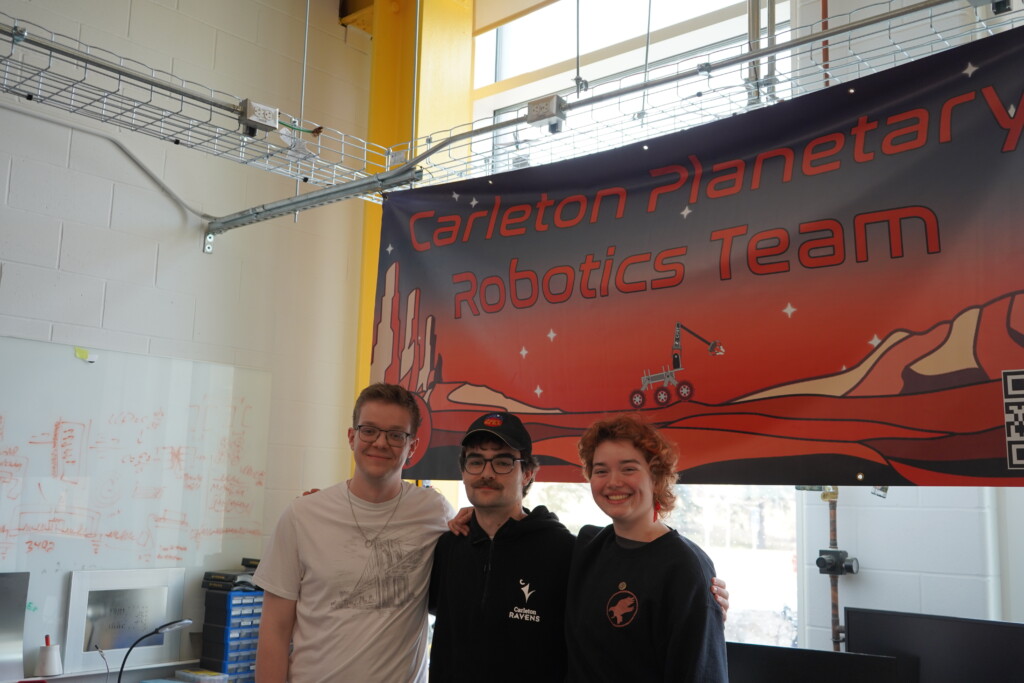
“The best example of cross‑collaboration on our team is the science module. It brings everyone (mechanical, electrical, software and science) together toward a shared goal. Every part of the rover connects those disciplines, so no one works in isolation. Over time, that collaboration means people gain skills beyond their own area, so everyone knows a little more than just their own role,” says Will Richards, CPRT’s VP External.
Meet Eileen: a rover designed for real-world planetary exploration
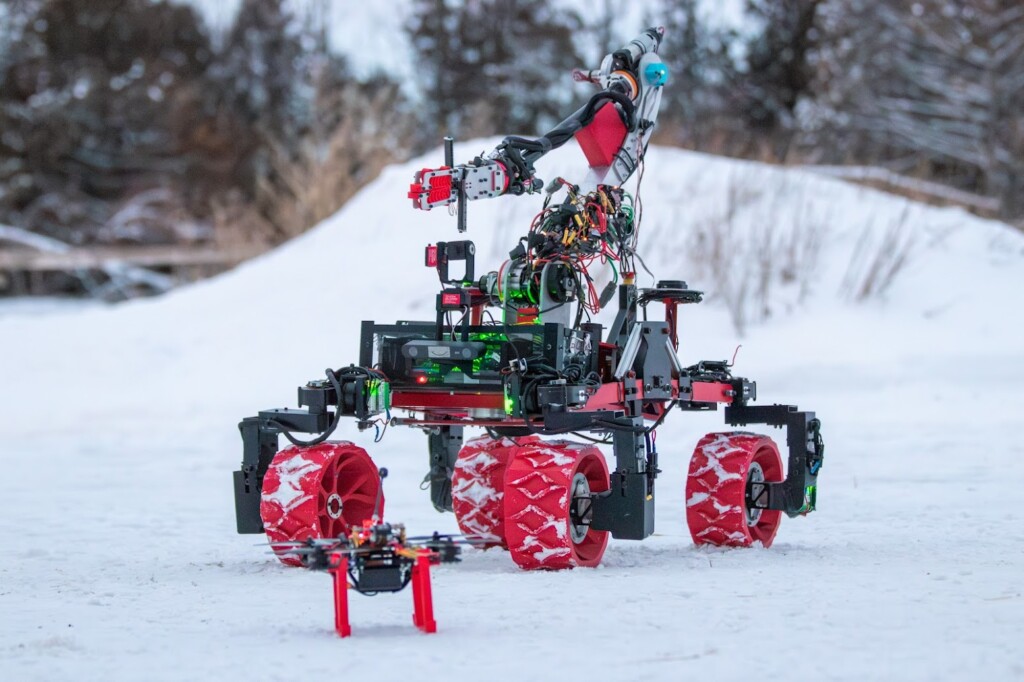
The team’s rover, named Eileen, has a story that reflects the trial-and-error nature of engineering design. Early in development, the rover tended to lean, an issue the team has since corrected. The name, however, stuck, becoming a symbol of the challenges they overcame throughout the build process.
Despite the origins of its name, Eileen is a highly capable planetary rover designed to perform complex scientific tasks. It can drill into the ground, collect soil samples and conduct on-site analysis, mirroring the type of work carried out in real Mars exploration missions.
Once samples are collected, the rover is designed to analyze them, introducing a strong chemical and physical science component to the project. This is where collaboration extends beyond engineering, bringing in students with backgrounds in chemistry and physics.
This integration of disciplines allows the team to simulate real-world planetary exploration more accurately, where understanding soil composition and detecting potential signs of life or habitability are critical objectives.
Testing a Mars rover in Ottawa’s conditions
One unique advantage for the Ottawa-based team has been the ability to test their rover in extreme winter conditions. Snow, ice and freezing temperatures created additional challenges that pushed the team to refine their design and improve performance.
These harsh testing environments may ultimately give them an edge, as the competition simulates Mars’s demanding terrain and conditions.
Representing Canada at an international level
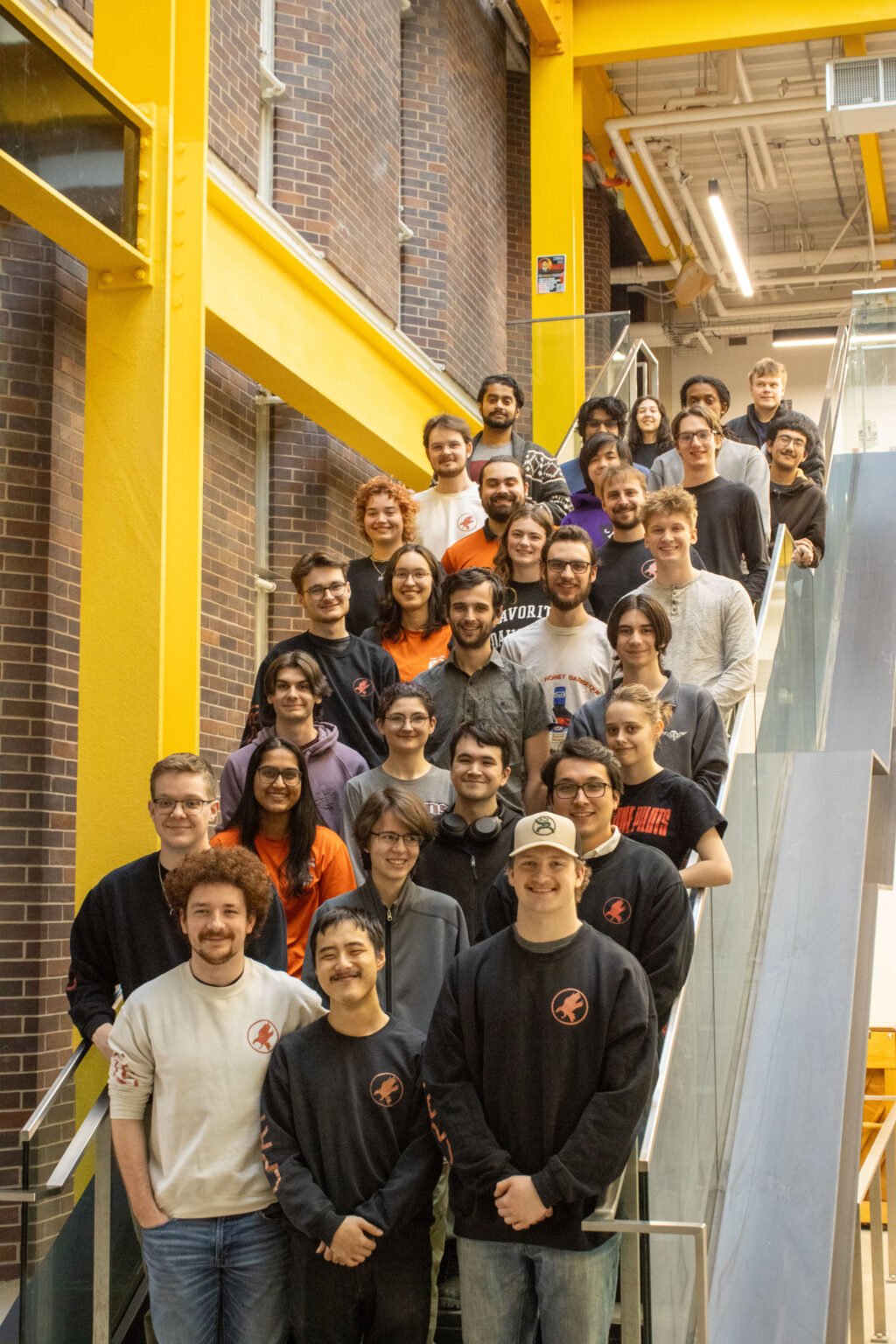
The upcoming competition in Utah will bring together top university teams from around the world. Participants will face the same set of challenges, requiring their rovers to complete tasks across varied terrain within strict time limits.
For the CPRT team, reaching this stage reflects not only technical skill, but also the support they’ve received from the university
“We achieved this in part because of Carleton and the support behind us. The university really has our back, from funding to letters of support, especially when we go to competitions. It feels like we’re bringing a medal back to Carleton and continuing a legacy,” says Richards.
Beyond the results, the competition experience itself has reinforced a strong sense of national pride among team members, who see themselves as ambassadors for both Carleton University and Canada.
“Being one of only four Canadian universities at the competition is huge, and after CIRC, it truly feels like we are representing Canada. (In previous years’ competitions) All the Canadian teams even gathered to sing the national anthem together. It was a really special moment,” adds Jack Tremblay‑Lessard, CPRT’s Senior Mechanical Lead.
Advancing the future of space exploration
Mars rover competitions are designed to simulate real-world planetary exploration missions. The technologies developed by students reflect the same principles used in space robotics, including autonomy, durability and precision.
For the CPRT, this project represents more than a competition. It is a chance to contribute to the future of space exploration while building the technical and collaborative skills that will define their careers.