Carleton Lab Upgrades Pave the Way for Future Discoveries
By: Ty Burke
We live in an age of technological transformation, and change can come at you fast.
Only a few years ago, a 3D bioprinter that can manufacture cellular tissue seemed like something straight out of a science fiction movie. But this technique is just one of the technological advancements transforming the field of biomedical engineering. And Carleton’s Faculty of Engineering and Design has upgraded its lab equipment to keep up with the pace of change.
“Biomedical engineering is a rapidly evolving field, and things have advanced a lot,” says Andrew Harris, an Assistant Professor of Biomedical and Mechanical Engineering. “We wanted to be sure that our students graduate with the skills they will need to be at the cutting edge of the biomedical industry.”
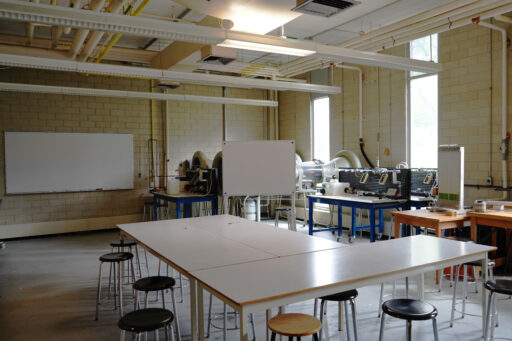
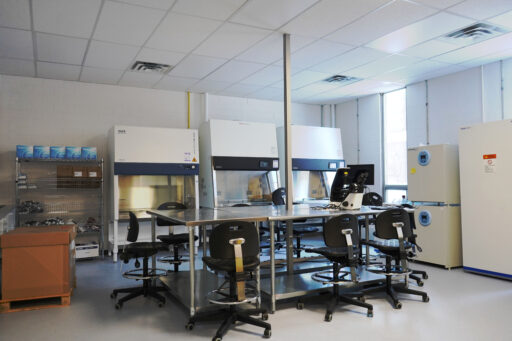
New mechanical testing systems, bioprinters and microscopes will allow Carleton biomedical and mechanical engineering students to make tissue scaffolds, load them with cells and study how they respond to being stretched or to bearing a load. This type of lab grown tissue is increasingly used in drug discovery and could potentially serve as a replacement for skin and cartilage.
In one new lab activity, students use the equipment to manufacture hydrogels as a replacement for articular cartilage, perform compression testing with levels of force similar to those in the knee joint and look for changes in the sample structure with optical microscopy.
“Students can really get a sense of how strong tissues are, how resistant they are to mechanical load and what can lead to a tissue becoming more brittle and fragile,” says Harris, noting that the program wanted to move towards hands-on learning activities with benchtop machines that students can operate themselves.
“I firmly believe that you learn best when you get stuck in and feel what you’re doing, and run some experiments. With the new infrastructure and lab space, students prepare the samples, run the experiments and learn from their results,” he adds.
New nanomanufacturing capabilities enable on-site production of biocompatible sensors
Recent upgrades to lab equipment at Carleton aren’t only benefitting undergraduate students. This type of investment is also helping researchers publish in leading journals and strengthen partnerships in the National Capital Region’s research community.
In research published in Nature’s NPJ Biosensing Journal, Associate Professor of Engineering Ravi Prakash used biosensors made in the Organic Sensors and Devices Laboratory to detect early signs of Parkinson’s Disease. Currently, Parkinson’s Disease is diagnosed only through the observation of symptoms in a clinical setting, and no approved test for the disease exists.
Prakash’s team designs and makes biosensors using synthetic nanoparticles. These highly sensitive devices target specific molecules. And in an animal model, one of Prakash’s biosensors successfully identified levels of a protein called alpha-Synuclein in blood serum samples. The misfolding and accumulation of this protein causes Parkinson’s, and it can happen undetected for many years before clinical symptoms appear.
“A lot of the techniques we use did not even exist ten years ago,” says Prakash.
“We do a lot of direct printing of organic and metallic nanomaterials, and we needed technological upgrades to do this. We can now make sensors on plastics and on disposable, biocompatible materials. And we can manufacture them at a low cost and in high volumes to support pre-clinical and clinical trials.”
Prakash’s lab received funding for these nanotechnology additive manufacturing systems from the Canada Foundation for Innovation, the Ontario Research Fund and Carleton’s Office of the Vice-President (Research, Innovation and International). And he credits the new equipment upgrades as a key reason his research was published in such a prestigious journal. It allowed the research team to meet Nature’s rigorous testing criteria.
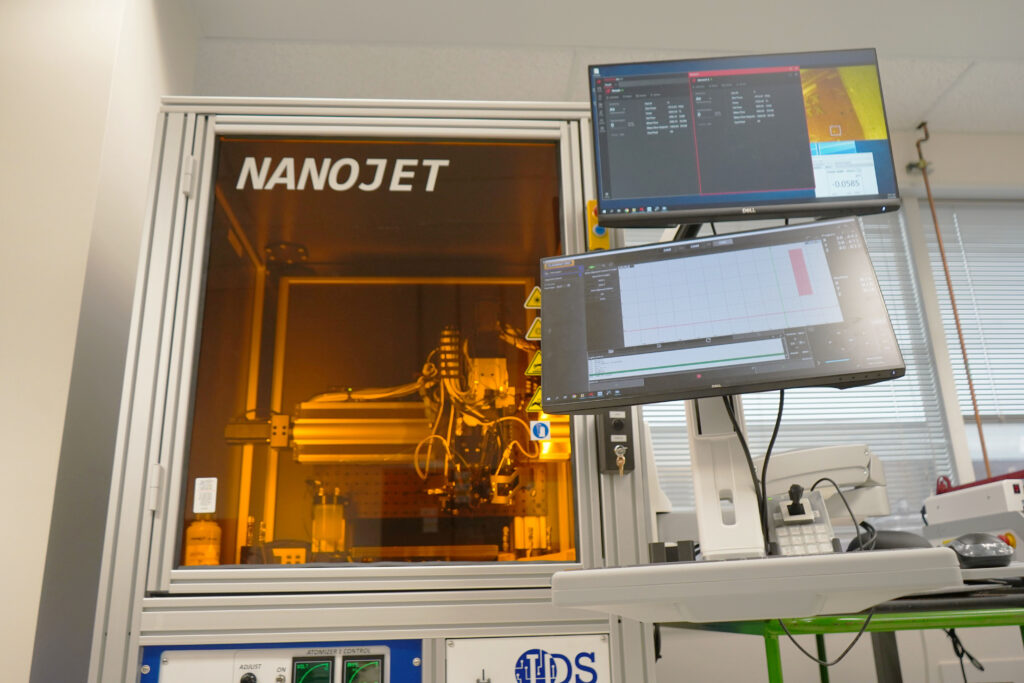
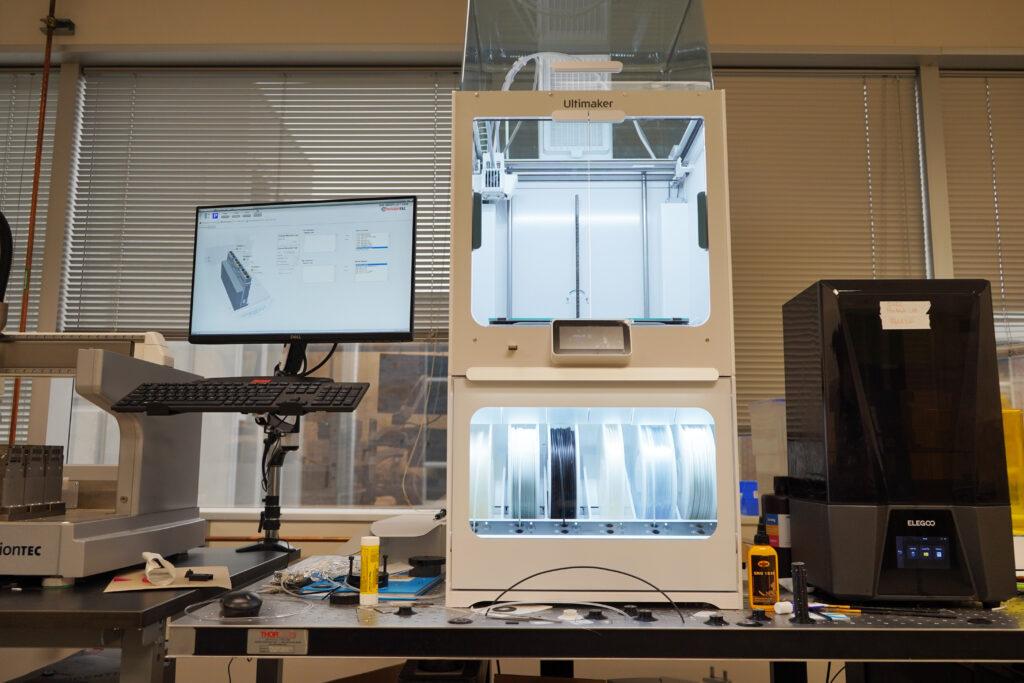
The ability to prototype biosensors in-house has also enabled partnerships with other labs at Carleton, non-profit research organizations like the National Research Council and private sector companies like Siemens, a German multinational technology company.
“When industrial partners see that we have these prototyping resources right here in Ottawa, they often reach out to work with us,” says Prakash. “It strengthens our research infrastructure and our research ecosystem. Being able to make this type of sensor means we can work with people who would otherwise need to look to Montreal, Toronto or even to other countries to find this type of resource.”