Celebrating 50 Years of Impact: Professor Jim Wight’s Legacy at Carleton
Story by Alejandra Fernandez, video by Nicholas Arcuri
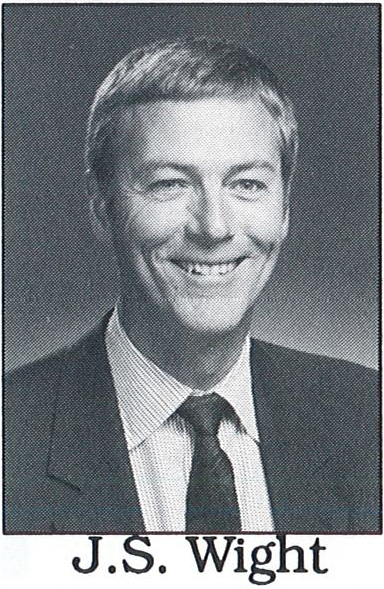
After five decades at Carleton University, Department of Electronics Chancellor’s Professor Jim Wight still walks into the classroom with the same energy that first brought him to Ottawa in the early 1970s.
Wight’s career spans from training generations of engineers and helping to shape the aerospace program to launching multiple successful startups, reflecting the evolution of the Canadian technology sector and the long-lasting value of hands-on learning.
“I come here and do my daily workout,” he says of teaching. “It’s a mental workout.”
A journey shaped by opportunity
Wight’s path to Carleton began in Calgary, where, during his undergrad, professors encouraged him to consider a relatively new engineering school in Ottawa. At the time, the city was emerging as a hub for telecommunications and research, with institutions like Bell-Northern Research and the Communications Research Centre offering rare access to industry, government and academia in one place.
Initially planning to stay only a few years before pursuing a PhD in the United States, Wight quickly realized the opportunities in Ottawa were unmatched.
“I had the run of the private sector, government and the university,” he says. “Somewhere else, I would have just been a grad student in a lab.”
He stayed, completed his doctorate and joined Carleton as a professor in 1976.
Building bridges between the classroom and industry
Throughout his career, Wight has prioritized connecting students with real-world experience. Long before co-op programs became standard, he connected graduate students directly with companies across Ottawa.
He describes it as a “win-win-win” model: students gain experience, companies assess potential hires and universities strengthen industry ties. That approach also helped him grow one of the largest graduate research groups in his field, with students contributing to active projects in telecommunications, satellite systems and radar technologies.
From professor to entrepreneur
Alongside his academic career, Wight founded or co-founded five startups, blending research with commercialization.
His first company, Cal Corporation, grew to 600 employees, while another, IceFyre, reached a valuation of $50 million. In each case, Carleton supported his entrepreneurial work, while ensuring his teaching and research responsibilities remained strong. Wight’s experience navigating both academia and industry gave him a unique perspective.
“Most engineers specialize in one level,” he explains. “I work at both the system level and the circuit level. That’s part of why I’ve been able to build companies.”
He also witnessed the volatility of the tech sector firsthand, including near-successes and sudden collapses driven by market forces beyond engineering itself.
“There was the Nortel meltdown,” he reflects. “I remember being at a major trade show in Barcelona, and Nortel had this huge booth. One year later, there was no Nortel. Just like that,” he says.
Shaping programs and curriculum
Wight played a key role in developing Carleton’s aerospace engineering program, particularly its electronics stream, helping position the university as a leader in space and communications engineering. Over the years, he has designed and taught multiple courses, many of which he continues to update annually to reflect current and emerging technologies.
“I’ve composed all the courses I teach and they are all centered on real-world radio systems: how GPS works, how satellites work, how Wi-Fi works. Every year I update them. It’s always incremental, but I’m constantly bringing in what’s new, so students are learning the latest developments as they happen,” he adds.
Despite decades of change, his teaching style remains deliberately traditional. “I’m chalk and talk,” he says. “No slides.”
The approach resonates with students. His upper-year courses consistently draw high attendance, a rarity in large lecture settings.
Adapting to a changing field
When Wight began his career, computers were not part of everyday academic life. Students relied on punch cards and waited hours or days for results.
“When I came to Carleton, we didn’t have computers; we had card decks. You’d punch them on these big machines, take them over to the Admin Building, and wait a day for them to run your file. It was like the Dark Ages. It wasn’t until the 1980s that we were sort of forced to have PCs, and even then, there was almost no power in these machines,” he shares.
Today, engineering education is shaped by software, artificial intelligence and rapidly evolving tools. While he acknowledges the benefits of new technologies, he remains cautious. He believes one constant remains: the need for strong analytical thinking and problem-solving skills.
Lessons from 50 years
Across teaching, research and entrepreneurship, Wight emphasizes persistence over talent.
“To achieve anything, you have to do it one brick at a time,’ he says.
He encourages students to stay committed even when projects become difficult, rather than shifting direction too quickly.
“People who leave when things get hard don’t achieve much,” he adds. “You have to put your head down and grind.”
Wight is optimistic about the future of Carleton’s engineering programs and he remains committed to teaching and mentoring the next generation. After 50 years, that curiosity and growth mindset continue to define both his career and his impact on Carleton’s engineering community.