Finding Direction through Engineering Practice
For Mahdi Alquzweeni, engineering has always been more than just an academic interest. From an early age, he was drawn to mathematics and physics — not simply because he excelled in the subjects, but because they offered a way to understand how things worked. While he grew up surrounded by writers, poets, and artists, Mahdi found his own creativity in solving technical problems and exploring how physical principles translate into real-world systems.
“Engineering didn’t just feel like a subject I enjoyed,” he says. “It started to feel like a sense of purpose.”
That purpose led Mahdi to complete a bachelor’s degree in Civil Engineering Technology at the Australian University in Kuwait in 2014. In the years that followed, he built his career in Iraq, working across major infrastructure projects, historical restoration initiatives, and even COVID-19 emergency hospitals. His responsibilities ranged from site supervision of structural works to project management — experience that grounded his technical knowledge in practical application.
“Being on site allowed me to directly apply what I had learned during my undergraduate studies,” he says.
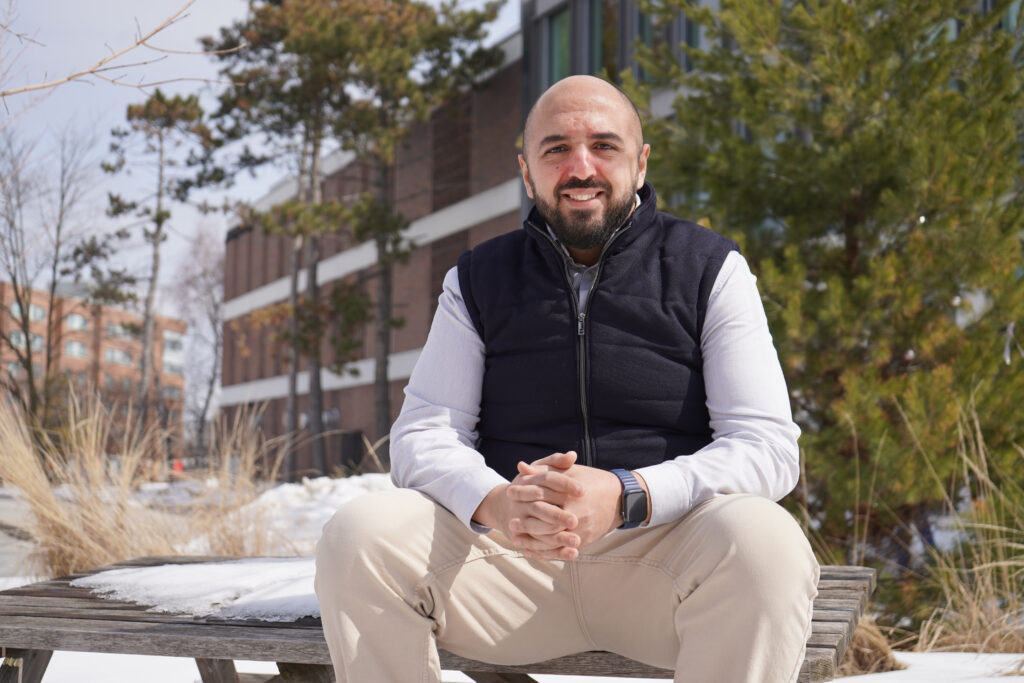
“That experience really shaped my identity as an engineer and confirmed that civil and structural engineering was the field I wanted to continue growing in.”
A Deliberate Step Forward
When Mahdi began exploring graduate studies at Carleton, he researched its Master of Engineering – Engineering Practice (EP) program thoroughly and sought advice from former professors before enrolling. His goal was twofold: strengthen his academic foundation and better understand the Canadian engineering landscape.
“I wanted to align my previous experience with the expectations of the Canadian engineering market,” he explains. “At the same time, I was thinking long-term about continuing into advanced study.”
That combination — professional alignment and academic growth — quickly became central to his experience in EP.
Connecting Practice and Research
During his first term, Mahdi enrolled in a combination of engineering and professional courses — a pairing that proved especially meaningful in shaping his academic direction. One engineering course, Reinforced Concrete Design, introduced him to Canadian codes and standards, helping him ground his structural knowledge within the regulatory framework used across the country.
Alongside his technical engineering coursework, Mahdi also took Engineering Communications — an employment-oriented skills course. Taught within a Canadian academic and professional context, it strengthened his ability to write clear, concise technical documents, a skill he now sees as essential but often underestimated by engineering students.
“It strengthened my technical writing in a very real and practical way,” he says. “It taught me how to structure ideas clearly, write in plain English, and communicate engineering concepts confidently.”
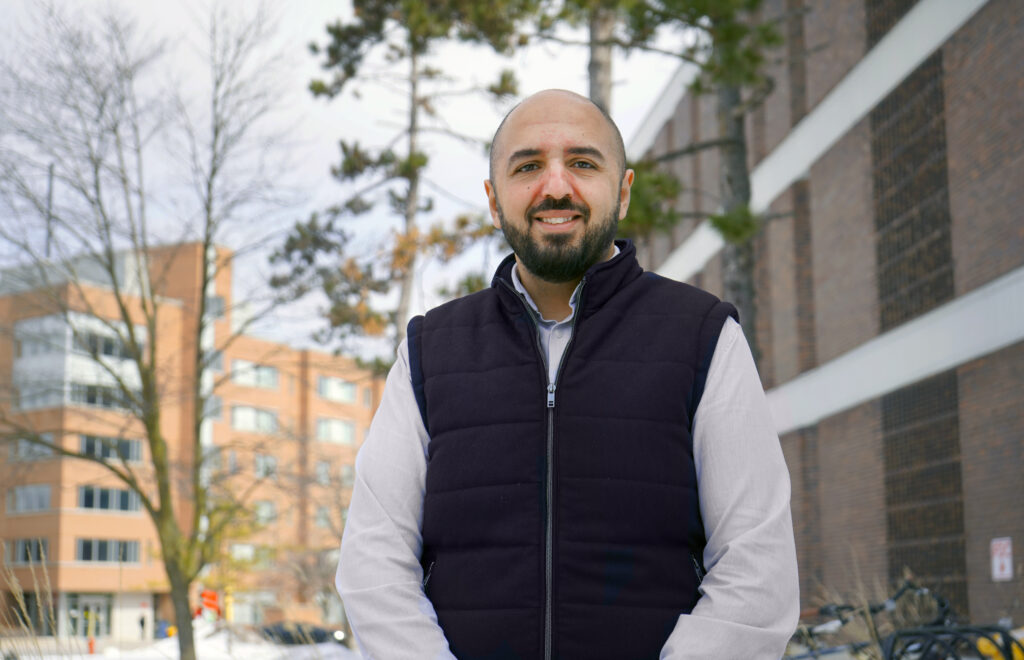
His foundation deepened further through the Research Methods for Engineering Practitioners course. Through structured exposure to research design, literature review, and academic writing, Mahdi began to see more clearly how his technical background could extend into a research-focused environment.
“It gave me first-hand exposure to how research questions are framed and how ideas are developed into structured academic work,” he says.
“It was the first time I really saw how my engineering background could translate into research and that experience resonated with me moving forward.”
Discovering a New Path
Mahdi found himself gradually developing an interest in pursuing a Master of Applied Science through conversations with his instructors. As they came to understand his long-term interest in academia and continuous learning, they encouraged pivoting to a research-focused master’s as a natural progression.
To explore this direction, Mahdi was given a trial research task and asked to present his findings in a formal written report. It was a pivotal moment — a chance to test whether research was the right path for him.
The experience confirmed that he was ready to take the next step. Drawing on the communication and research skills he had developed in EP, Mahdi was able to approach the project with clarity and confidence — and see, firsthand, how his background could translate into a research environment.
“The courses I took helped prepare me for that step,” he says. “They gave me the structure and confidence to approach research in a meaningful way.”
Throughout the transition, he credits the EP team for helping make the process clear and manageable — coordinating with Carleton’s Department of Civil and Environmental Engineering, facilitating access to required courses, and guiding him through academic and administrative steps.
“That level of support made the transition feel structured and achievable rather than uncertain,” he says. “It gave me confidence moving into a more research-oriented program.”
Now entering the MASc program under the supervision of Professor Vahid Sadeghian, Mahdi is focused on deepening his understanding of structural engineering through simulation and numerical modeling. He is particularly interested in modern materials and emerging research directions within the field.
“I feel very fortunate to be given this opportunity,” he says. “It places me in an environment where I can explore the future of structural engineering while continuing to grow both technically and academically.”
A Lasting Foundation
Although he completed just over a semester in EP, Mahdi describes the experience as formative, allowing him to carry forward stronger technical communication skills, a clearer understanding of Canadian engineering standards, and greater confidence navigating academic expectations.
For internationally trained engineers considering their next step, he sees the program as offering a balance between academic depth and professional orientation, delivered in a supportive environment that helps students advance their career aspirations.
“Even though my time in EP was relatively short, it had a lasting impact,” he says. “It strengthened my foundation and gave me clarity about where I wanted my journey to take me.”