Carleton Students Awarded Funding for EDI-Related Research
Carleton has awarded students funding to support summer research projects related to equity, diversity and inclusion (EDI).
The Student Equity, Diversity and Inclusion Research Award responds to a specific recommendation in Carleton’s EDI Action Plan and is a landmark recognition for EDI scholarship in Ontario higher education. Students will present their research process and findings during Carleton’s annual Inclusion Week in Fall 2023.
The award is funded by the Office of the Provost and Vice-President (Academic) and administered by the Department of Equity and Inclusive Communities.
The following students are recipients of the 2023 Student EDI Research Award.
Table of Contents
Shadea Nance (she/her)
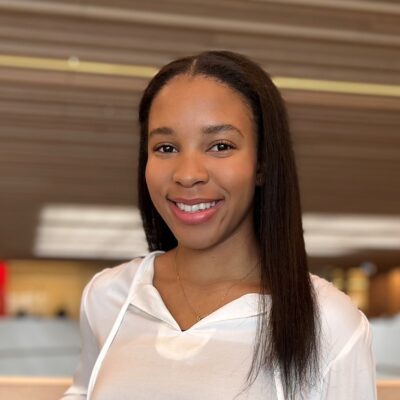
Shadea Nance is currently a fourth-year Journalism and Film Studies (Honours) student who will be pursuing a master’s degree in communications and media studies at Carleton in the fall.
By bridging pop culture studies, intersectional feminism, and media studies approaches, Nance’s project will study the most sold Wii games; analyzing diverse representation in their characters and the quality of these representations. To bring this study full circle she will also analyze games from Nintendo’s newest gaming console, the Nintendo Switch, to track diverse representation on this newer system.
“In recent years, there has been increased pressure to include more diverse representation regarding gender and race in video games,” said Nance. “My goal is to gain a better understanding of current representation on the Nintendo Wii and its historical development.”
Nance will be working with Sioabhan Angus, Assistant Professor of Communication and Media Studies. “Shadea is a brilliant and dedicated emerging media studies scholar doing innovative research with significant real world-implications,” said Angus. “She has done incredible work at Carleton to lead conversations around equity and inclusion and her project will make a significant contribution to game studies through its intersectional focus.”
“It is imperative to understand the dominant content consumed by any generation during their formative years, especially content that asks users to identify with it” said Nance.
Olivia Little (she/her)

Olivia Little is a fourth-year Bachelor of Sociology (Honours) student with a minor in Film Studies. She will be researching the barriers to education that students with ADHD face at University, with a focus on the impacts of the pandemic on their learning.
“I was inspired to pursue this project because of my own experiences as a student with ADHD,” said Little. “Over my years of university, I’ve noticed that the way many courses are designed can make it difficult for me to get a lot out of them, and I’ve often found myself imagining how I could have designed the course to better meet my needs.”
Little will be working with Tonya Davidson, Assistant Professor of Sociology and Anthropology, to produce learning guides that will be used to inform the instructional design of courses across several faculties.
“Olivia is very passionate about nourishing learning environments that are accessible and welcoming,” said Davidson. “Her many years as a peer-assisted study session facilitator have well-equipped her to undergo this important research.”
Through her work, Little hopes to reshape the way the university functions, making it a more enriching and inclusive experience for all students, regardless of ability. “This project is so exciting to me because I see it as an opportunity for students with ADHD to have more agency regarding their education,” said Little.
Aanya Baindur (she/her)
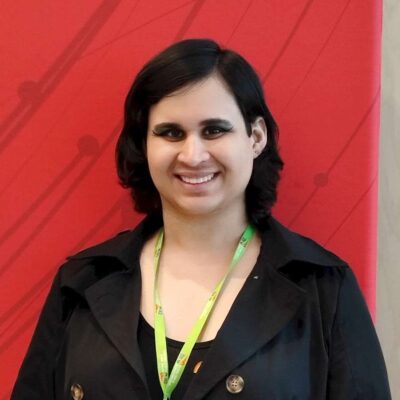
Aanya Baindur is a second year Bachelor of Commerce (Honours) student with a concentration in Marketing whose research will identify and provide solutions to barriers to success, discriminatory practices, and systemic problems experienced by 2SLGBTQ+ students at Carleton.
“This study will bring to the forefront problems faced by Carleton’s 2SLGBTQ+ community and in doing so provide a voice to a community that so often in society isn’t afforded one,” said Baindur.
Working with Rick Colbourne, Sprott Associate Dean of Equity & Inclusive Communities and Associate Professor of Indigenous Leadership & Management, Baindur’s project will help inform changes to classroom pedagogy to better support 2SLGBTQ+ students.
“I am thrilled to be working with Aanya on this important project,” said Colburne. “She is a passionate and committed member of the Sprott and Carleton University community.”
“As a trans women of colour, this project is important to me,” said Baindur. “I would like to give the 2SLGBTQ+ community at Carleton the opportunity to voice their concerns and help eliminate any barriers to success experienced by them.”
Cosette Arseneault-Deraps (she/her)

Cosette Arseneault-Deraps is a third-year combined honours student in Indigenous and Canadian Studies with a minor in Environmental Studies. Her research will look to discover to what extent Indigenous knowledge and consent are included in fisheries research.
“I realized there was room to combine my areas of study with my passion to create a research project that will be a starting point for future research in my academic career,” said Arseneault-Deraps in regards to the project’s origin.
Arseneault-Deraps is working alongside Prof. Sheryl Ann Simpson, assistant professor in the Department of Geography and Environmental Studies, to determine whether there are protocols or general knowledge among researchers on how to respectfully ask for consent and participation from Indigenous groups.
“I’m excited to learn from Cosette’s research,” said Simpson. “She’s doing the hard work of caring for Indigenous self-determination and thriving by asking how non-Indigenous systems and practices around environment studies need to change.”
“I hope to begin a conversation about implementing standards of practice throughout natural science research on including Indigenous voices,” said Arseneault-Deraps.
Pallavi Sodhi (she/her)
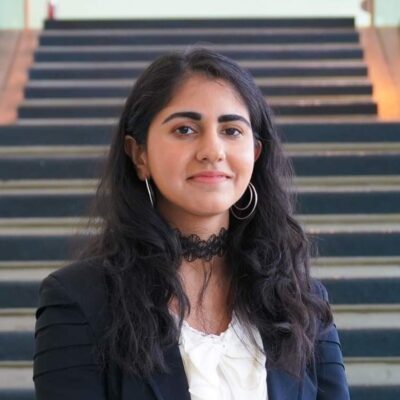
Pallavi Sodhi is a first year master’s student in the Human-Computer Interaction program. Through her research, Sodhi will be exploring accessibility in video games; understanding what accessibility features are available, how they are designed, and what their benefits and limitations are from the perspective of those who create and play them.
“The importance of accessibility in games cannot be overstated since it allows games to be inclusive to everyone,” she said. “It should be possible for all individuals to enjoy and fully participate in the gaming experience, regardless of their abilities or disabilities”.
Working with both Dr. Audrey Girouard, Associate Dean in the Faculty of Engineering & Design, and Associate Professor in the School of Information Technology, and Dr. David Thue, Assistant Professor in the School of Information Technology, Sodhi’s research will aid in developing an accessibility-focused framework for game designers that will enable them to create new customizable accessibility features for players.
“We see Pallavi’s project as a key step toward making video games more accessible to a wider range of players,” said Thue.