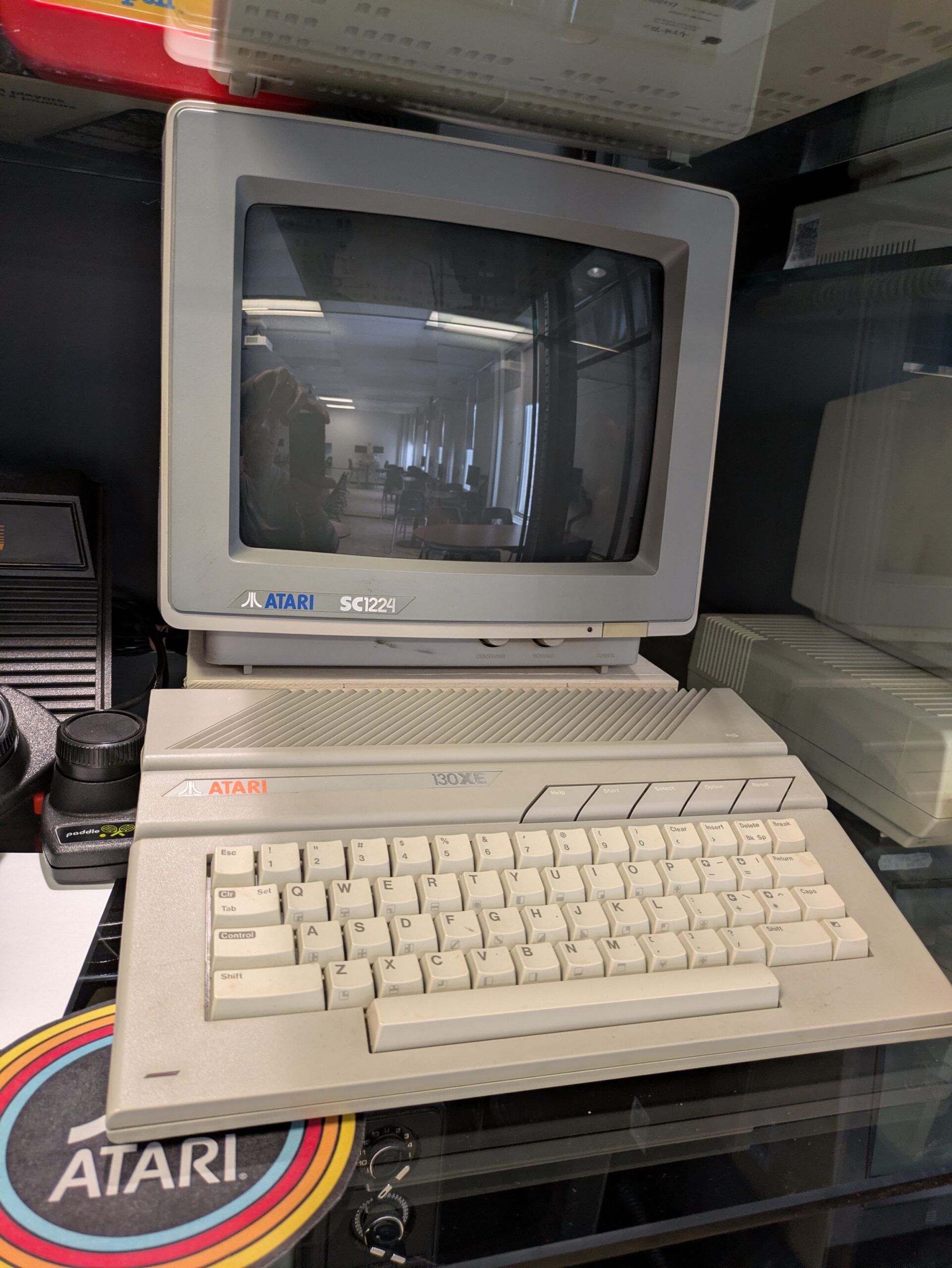
Atari 130 XE
[Vin103]
The Atari 130XE, released in 1985, was the most powerful model in Atari’s 8-bit XE series, notable for doubling the RAM to 128KB through bank-switching technology, which was significant during a time when 64KB was the standard limit for such systems. It featured an Enhanced Cartridge Interface (ECI) for potential expansions and maintained compatibility with earlier Atari 8-bit software and peripherals, reflecting Atari’s attempt to extend the life of its 8-bit line while transitioning focus to 16-bit computers. Although it was overshadowed by emerging 16-bit machines and never became a bestseller, the 130XE stands as the last flagship in a venerable Atari 8-bit legacy, valued by collectors for its enhanced memory, robust graphics, and sound capabilities.
- Manufacturer: Atari Inc.
- Type: Personal computer
- Release Date: 1985
- Cost at release: $149.95 (~$525 adjusted for inflation)
- MIPS: 0.5 (500 KIPS)
Hardware Specifications
- CPU: MOS 6502C running at 1.79 MHz (NTSC) / 1.77 MHz (PAL)
- RAM: 128 KB total (64 KB main memory + 64 KB bank-switched memory)
- ROM: 24 KB (16 KB OS + 8 KB Atari BASIC)
- Graphics: 16 colors with 16 intensity levels, maximum resolution 320 x 192 pixels, 16 graphic modes
- Text display: Up to 40 x 24 characters in five text modes
- Sound: 4-voice sound chip (POKEY) spanning 3.5 octaves
- Co-processors: ANTIC (video/display lists), GTIA (video output/sprites), POKEY (sound/I/O), FREDDY (memory management)
- I/O Ports: Composite video output, Enhanced Cartridge Interface (ECI) port, cartridge slot, SIO peripheral port (for tape, disk, printer, modem), two joystick ports
- Keyboard: Full-stroke keyboard with 57 keys including 5 function keys
- Power supply: External, 5V DC at about 1A current
- Weight: 2.7 kg (~ 6 lbs)
- Operating System & Programming Languages
-
- Operating System: the Atari 8-bit family operating system, which was a built-in OS stored in ROM. This OS managed hardware resources and provided a BASIC interpreter, known as Atari BASIC, allowing users to write and run programs directly on the machine.
- Supported Languages:
- Atari BASIC (built-in interpreter in ROM), widely used for general programming and learning.
- Assembly language for the MOS 6502 processor, offering high performance and direct hardware control.
- Other languages available via cartridges or disk-based software included variants of Pascal, FORTH, and LOGO, as well as some compilers and interpreters for C and COBOL
- Notables
-
- The 130XE was the last and most powerful model in Atari’s 8-bit XE series, notable for doubling RAM to 128 KB with bank-switching, a feature quite advanced for 8-bit computers at the time.
- It was launched in 1985 by Jack Tramiel’s Atari Corporation as a final push into the 8-bit home computer market while the company focused on developing the Atari ST.
- The 130XE had a strong gaming library, benefiting from compatibility with Atari 5200 games (which shared much of its chipset), making it one of the best gaming computers of its time aside from dedicated consoles.
- The extra RAM was often used as a RAM disk, but most software didn’t fully utilize this expanded memory.
- In advertising and marketing, the Atari 130XE was promoted as a powerful home computer with advanced graphics and sound capabilities, intended to appeal to both gamers and home users, though it faced strong competition from Commodore 64 and emerging 16-bit systems.
- The 130XE represents the closing chapter of Atari’s pioneering 8-bit computer line before the company’s shift to 16-bit architecture, holding a nostalgic place in vintage computing history
Share: Twitter, Facebook
Short URL:
https://carleton.ca/scs/?p=22015