Atari 1040ST
Atari 1040ST
[Vin105]
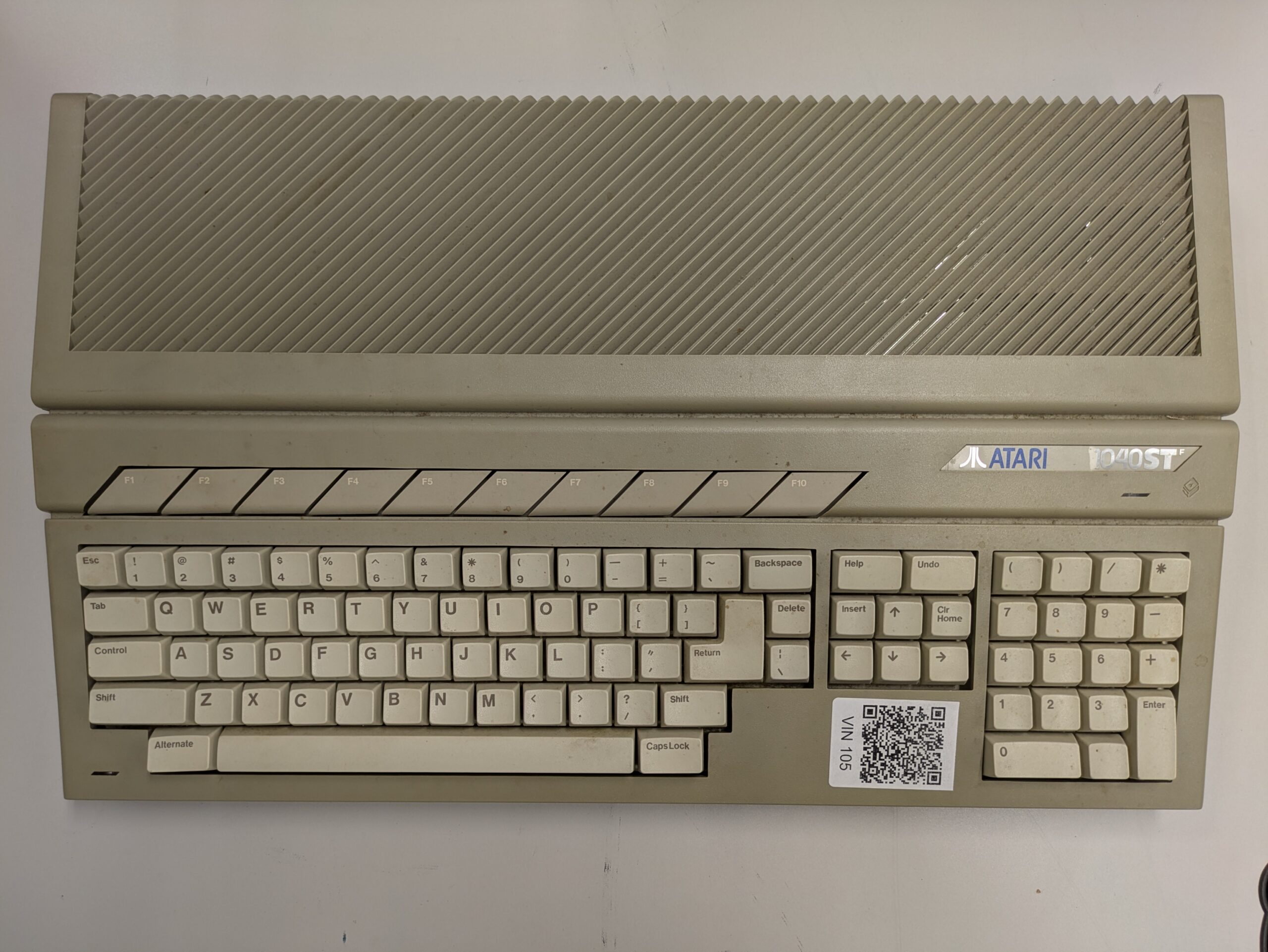
The Atari 1040ST, released in 1986, was notable as the first home computer to offer 1 MB of RAM at a price under $1 per kilobyte, making it a breakthrough in affordability and performance. It featured a bitmapped colour graphical user interface with Digital Research’s GEM environment and built-in MIDI ports, which helped it gain popularity in both desktop publishing and music sequencing. The 1040ST’s combination of advanced graphics, competitive pricing, and music capabilities made it important in the history of personal computing, selling over two million units and influencing software and game development significantly during the mid to late 1980’s.
- Manufacturer: Atari Inc.
- Type: Personal computer
- Release Date: 1986
- Cost at release: ~$4,000 (adjusted for inflation)
- MIPS: 1 (1,000 KIPS)
Hardware Specifications
- CPU: Motorola 68000 running at 8 MHz
- Memory: 1 MB (expandable)
- Display: Bitmapped color graphics with a graphical user interface (GEM)
- Storage: Built-in double-sided floppy disk drive (3.5-inch)
- Ports: Built-in MIDI ports for music sequencing
- Graphics: Supported resolutions up to 640×400 pixels (monochrome) or 320×200 pixels (color)
- Weight: ~6.5 kg (14.3 lbs)
Operating System & Programming Languages
Operating System: TOS (The Operating System), sometimes referred to as the Tramiel Operating System. TOS combined Digital Research’s GEM graphical user interface (GUI) with a DOS-like disk operating system called GEMDOS. It was stored in ROM for fast loading and provided a fast, stable, and memory-efficient environment with a graphical desktop interface.
- Supported Languages: Assembly language, BASIC (notably Atari ST BASIC and third-party dialects like GFA BASIC), C, Pascal, Modula-2, Fortran, Lisp, Logo, Forth, COBOL, PL/I, Prolog, and Smalltalk
Notables
- The Atari 1040ST holds a special place in computing history as the first home computer to offer 1 MB of RAM for under $1 per kilobyte, a groundbreaking price-performance milestone in 1986.
- It featured a bitmapped color graphical user interface with the GEM desktop environment stored in ROM, and built-in MIDI ports that made it exceptionally popular among musicians for digital music sequencing. The 1040ST was part of the influential mid-1980s 16/32-bit computer generation, competing closely with the Commodore Amiga.
- Overall, the Atari 1040ST is remembered as a pioneering, versatile home computer that brought high-end memory and graphical capabilities into affordable reach, leaving a lasting legacy in both computing and digital music communities.
Donated by: Dr. Arlen Michaels