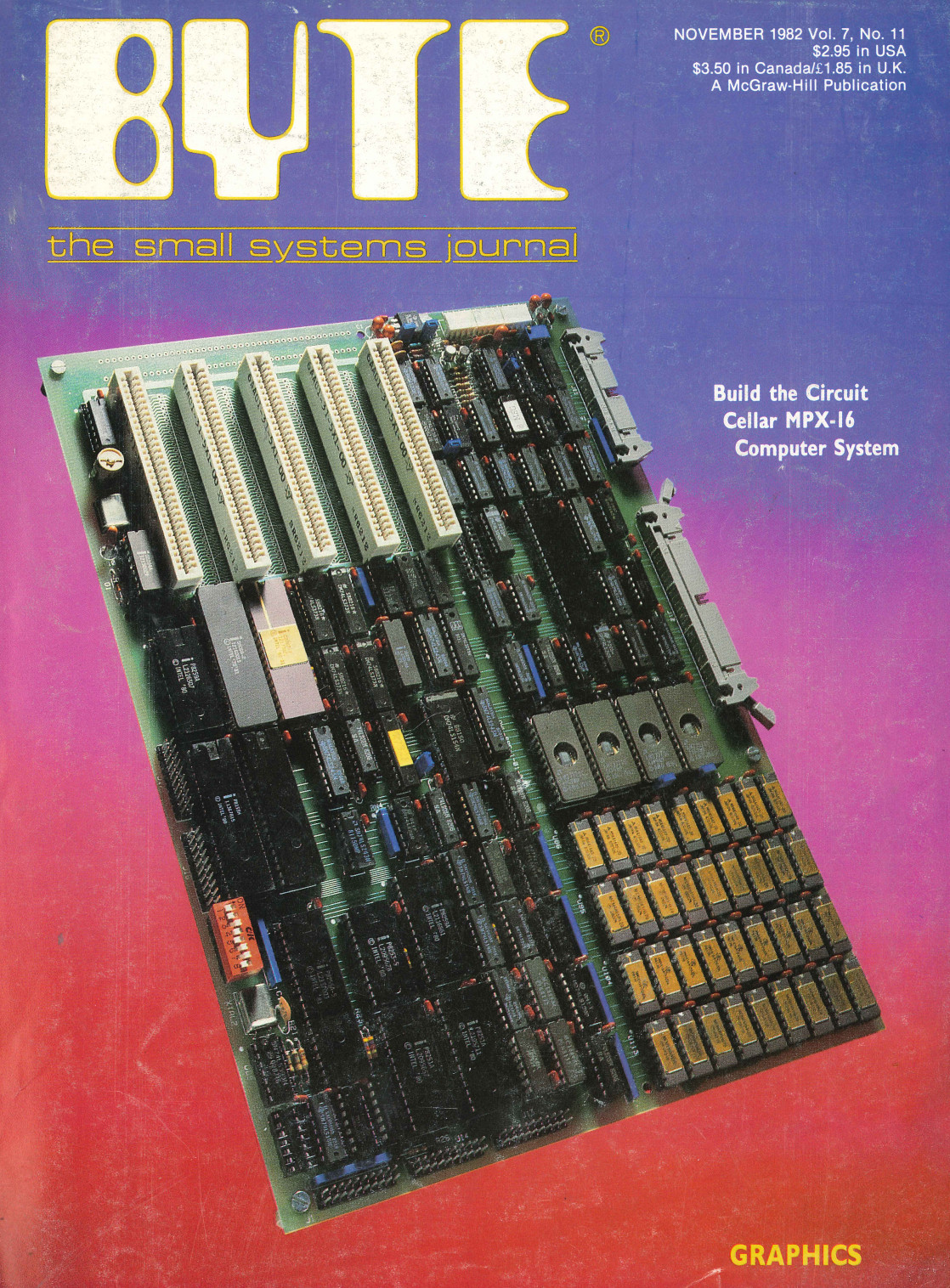
Micromint MPX-16
[Vin119]
The Micromint MPX-16 was a notable early 1980s build-it-yourself IBM PC-compatible single board computer designed by Steve Ciarcia, featured on the cover of BYTE magazine. Its claim to fame was its combination of Intel 8088 CPU with PC/AT bus compatibility and integrated serial terminal console capability, making it a flexible, low-cost option for hobbyists and small offices. Although it never achieved mass-market popularity, with around 400 units made mostly for in-house use, it was important historically as one of the first DIY kits bringing near-PC functionality to the hobbyist and academic communities, bridging the gap between simple SBCs and full PCs in university vintage computing collections. Its main OS was CP/M, and it had planned support for MS-DOS, highlighting its transitional role in early personal computing.
- Manufacturer: Micromint
- Type: Single Board Computer
- Release Date: 1979
- Cost at release: usd $1,895 (CAD ~$9,000 adjusted for inflation)
- MIPS: 0.5 (500 KIPS)
Hardware Specifications
- CPU: Intel 8088 microprocessor, 4.77 MHz clock speed
- Memory: Typically 256 KB RAM expandable; includes ROM (up to 64 KB)
- I/O: Integrated serial and parallel interfaces, floppy disk controller
- System board: Single 9 x 12 inch, 5-layer printed circuit board
- Clock generator: Intel 8284 generates system clock and reset signals
- Operating Systems: CP/M-86 and early MS-DOS support
- Compatibility: IBM PC-compatible bus and hardware architecture
- Expandability: Multiple I/O expansion slots for peripherals
- Power supply: External power supply unit
Operating System & Programming Languages
- Operating System: CP/M-86 operating system, an early OS for 16-bit microprocessors. It also offered compatibility with early versions of MS-DOS due to its IBM PC bus and architecture compatibility, allowing it to run some MS-DOS software
- Supported Languages: Assembly language for Intel 8088, BASIC (notably Tiny BASIC interpreters compatible with 8088), Higher-level languages available for CP/M-86 and MS-DOS such as Pascal, C, and FORTRAN (subject to availability of compilers for these operating systems at the time)
Notables
- It was one of the first IBM PC-compatible single board computers produced, pioneering PC compatibility in a compact OEM form factor.
- The MPX-16 appeared on the cover of BYTE magazine, highlighting its significance in early PC history and hobbyist culture.
- Designed by Steve Ciarcia, it bridged the gap between hobbyist kits and fully compatible IBM PC clones, making PC technology more accessible.
- Known for its high reliability and quality, it included features like watchdog timers and battery-backed RAM uncommon in hobbyist systems of the era.
- It had nine expansion slots fully compatible with IBM PC I/O buses, allowing extensive peripheral expansion.
- While not widely popular commercially, it became a cult classic among early PC enthusiasts and academic collections for its innovative design.
- Its nickname “Vest Pocket Computer” referred to its unusually compact single-board format for the time.
- No notable unusual advertisements survive, but its BYTE magazine feature helped cement its place in vintage computing lore.
Donated by: Dr Arlen Michaels