Nabu Personal Computer NPC-2
[Vin136]

The Nabu Personal Computer NPC-2 is historically significant as the world’s first cable-ready home computer, pioneering the concept of delivering software and data via a high-speed cable TV network starting in 1983. This innovation anticipated key aspects of modern cloud computing and subscription software services decades ahead of their time. The NPC-2, a Zilog Z80-based system, uniquely combined downloadable operating systems and software from network servers with local computing, making it a rare example of early distributed computing. While important historically for its innovative networking approach and software delivery model, the Nabu PC had limited commercial success and remained relatively obscure compared to contemporaries like the Commodore 64.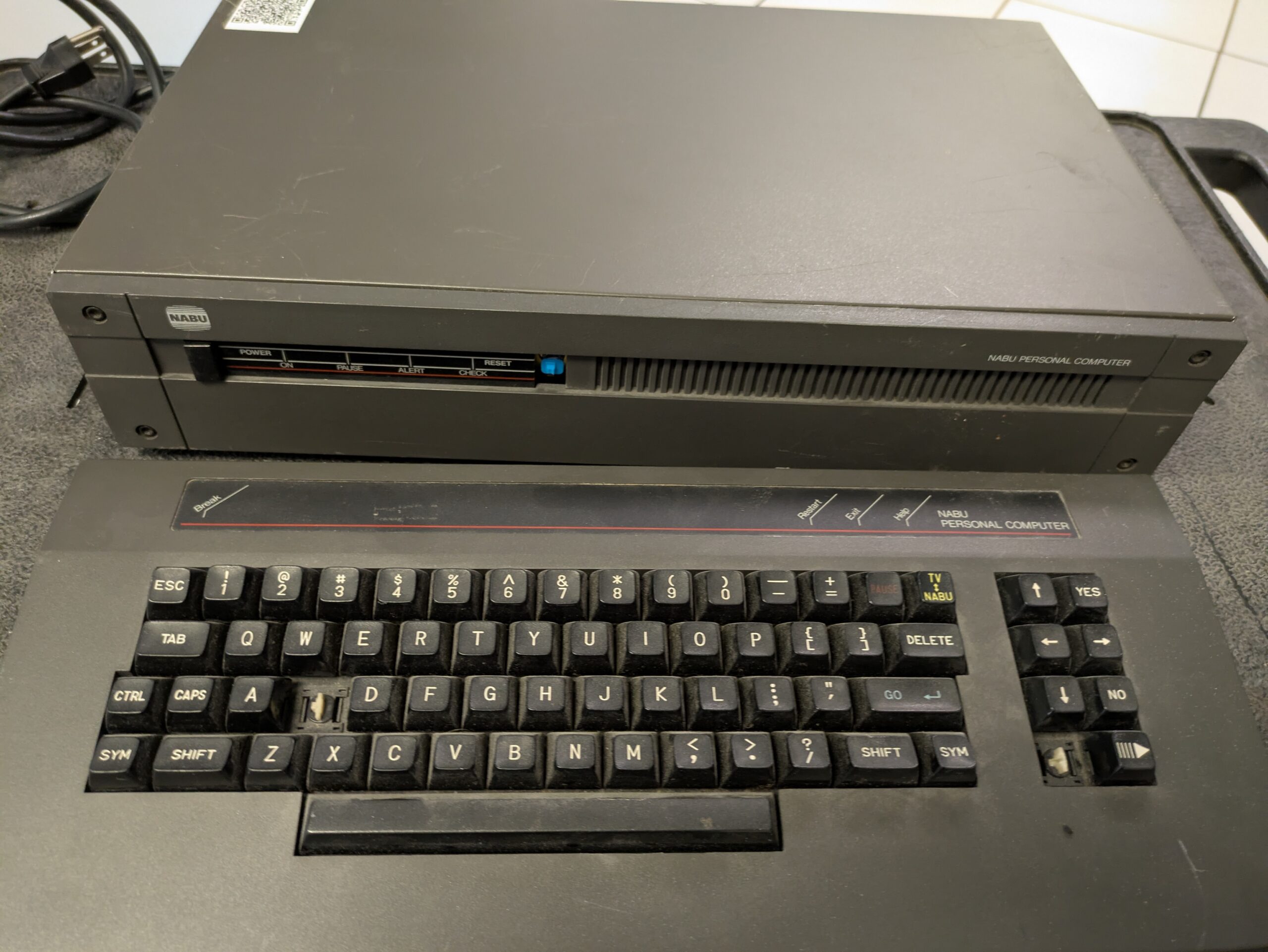
- Manufacturer: NABU Manufacturing Corp., a Canadian company based in Ottawa.
- Type: Personal computer
- Release Date: 1982
- Cost at release: CAD ~$3,450 (adjusted for inflation)
- MIPS: 0.58 (580 KIPS)
Hardware Specifications
- CPU: Zilog Z80A, 8-bit, running at 3.58 MHz
- Main memory: 64 KB RAM under CPU control
- ROM: 4 KB or 8 KB for bootstrap, self-test, and initialization
- Video memory: 16 KB RAM controlled by the video processor
- Video display processor: Texas Instruments TMS9918A supporting 256×192 graphics with 16 colors
- Sound generator: General Instrument AY-3-8910 programmable sound chip
- Storage: No built-in offline storage by default; optional floppy disk drive and hard drive available via expansion
- Expansion: Four 30-pin expansion ports
- Keyboard: 66-key QWERTY detachable keyboard with microprocessor control and two game controller ports (DB-9)
- Display: Required dedicated monitor or TV with RF modulator output
- Ports/connectors: Serial RS-422 interface, parallel printer port, keyboard connector, video/audio RCA jacks, cable IN and OUT RF connectors
- Data transmission rate over cable: Up to 6.312 Mbits per second
Operating System & Programming Languages
- Operating System: Downloadable operating system called NABU BDOS (NABU Basic Downloadable Operating System) and modules called XIOS1 and XIOS2 (Extended Internal Operating Software). This OS was unique because it was downloaded dynamically from the cable network server rather than stored permanently on the device.
- Supported Languages:
- NABU BASIC, a version of BASIC accessible through the network and local execution
- Assembly language for the Zilog Z80 CPU, including tools like an editor and assembler
- CP/M was also available but hidden on some versions and mainly used on the developer’s floppy-based systems
- Extended BASIC and other network-service-based programming environments were supported via downloaded software modules
Notables

- NABU = “Natural Access to Bi-directional Utilities” and named after the ancient Babylonian god of writing, wisdom, and understanding
- Created by Canadian entrepreneurs John Kelly and Bruce Hempell; company incorporated June 1981
- World’s first cable-ready personal computer (1982)
- First Canadian microcomputer designed for home use
- First commercial computer network providing high-speed software downloads to homes (launched October 15, 1983)
- Pioneered “cloud computing” and subscription-based software model decades before it became mainstream
- Network went offline August 31, 1986 after only 3 years of operation
- 2,200 brand-new units discovered in a Massachusetts barn after 30+ years, sold on eBay starting at $59.99 in 2022-2023
- The computers were originally purchased in bulk by James Pellegrini, a retired computer designer, during the bankruptcy of Nabu Networks in 1989. After years of storage, Pellegrini decided to sell the units, first listing them on Craigslist for $20 and then on eBay for $59.99 each (later increasing to $99.99 as demand grew). The eBay listings quickly attracted attention from retro computing enthusiasts, with each batch selling out rapidly due to the rarity and historical significance of the machines.
- Over 140 titles available by 1984, including iconic games: Pac-Man, Q*bert, Zork I, Dig Dig, Galaxian
- Offered education, entertainment, home management, and business applications via cable download
- Preceded AOL and dial-up internet as an online service
- “The 80s computer you’ve never heard of” – predicted the internet’s future but failed commercially
Donated by: Dr. Arlen Michaels