Packard-Bell PC-XT clone
[Vin137]
The Packard-Bell PC-XT clone holds a notable place in vintage computing history primarily as an affordable alternative to IBM’s PC-XT, helping to democratise personal computing during the 1980s. From a museum perspective in a university setting, it exemplifies the early PC clone era characterised by wider hardware accessibility, albeit often with compromises in quality and proprietary designs that limited expandability. Its claim to fame lies in being among the first PC clone manufacturers to provide pre-installed MS-DOS and bundled software, which lowered the entry barrier for new users and contributed to its popularity, especially in the consumer and home-office markets where it captured a significant segment of the US PC market by the early 1990s.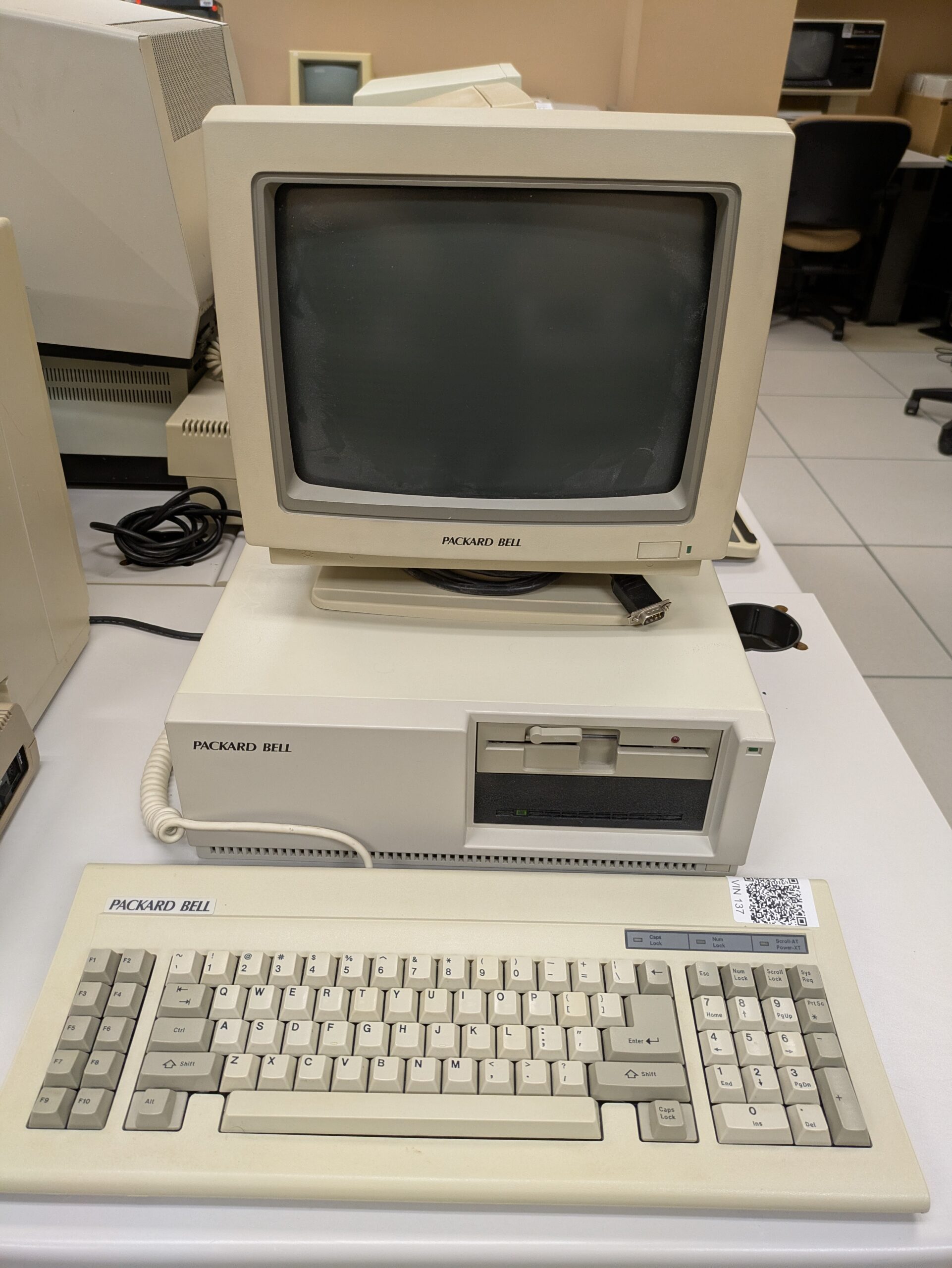
Manufacturer: Packard-Bell
Type: Desktop computer
Release Date: 1986
Cost at release: CAD ~$6,800 adjusted for inflation
MIPS: 0.33 (330 KIPS)
Hardware Specifications
- CPU: Intel 8088 running at approximately 4.77 MHz
- Memory: Initially 128 KB, expandable up to 640 KB RAM
- Storage: 10 MB Seagate hard drive standard, with some models supporting larger drives later
- Floppy Drives: 5.25-inch floppy drive(s) with 360 KB capacity per disk (some models up to 1.2 MB)
- Expansion Slots: 8 ISA slots (expanded from 5 in original IBM PC), with physical limitations on some slots
- Graphics: Options for Monochrome Display Adapter (MDA) or Color Graphics Adapter (CGA)
- Power Supply: Approximately 130 watts
- BIOS: Included IBM BASIC in ROM and displayed memory count at POST
- Optional: Intel 8087 math coprocessor socket for floating-point operations
- Weight: ~15 kg
Operating System & Programming Languages
- Operating System: MS-DOS 2.0, which was standard for IBM PC-compatible systems of the mid-1980s. It also included IBM BASIC in ROM, allowing users to program directly on startup without loading an operating system from disk.
- Supported Languages:
- BASIC (via IBM BASIC in ROM or disk-based interpreters)
- Assembly language (using tools like Microsoft Macro Assembler)
- Early versions of C (such as Microsoft C compiler)
- Pascal (via popular compilers of the era like Turbo Pascal)
- Other languages available at the time for IBM PC compatibles, including FORTRAN, COBOL, and Forth, depending on software availability.
Notables
- First PC clone manufacturer to preinstall MS-DOS and bundled software on hard drives, eliminating the need for users to format and configure their systems
- Pioneered color-coded rear connectors (purple for keyboard, teal for mouse) in the mid-1980s, predating the 1999 industry standard by over a decade
- Among the first to include both 3.5-inch and 5.25-inch floppy drives, bridging the format transition
- Famous slogan: “America grew up listening to us. It still does”, deliberately leveraging nostalgia from the original 1926 Packard Bell radio company
- Pioneered mass-market PC sales through big-box retail stores rather than speciality computer shops, democratising PC ownership
- Became the second-largest PC OEM in the U.S. by the early 1990’s
Donated by: Arlen Michael