Visual Technology 1050
[Vin14]
The Visual Technology Inc. Visual 1050 was a notable early 1980s 8-bit desktop computer distinguished by its dual-processor architecture, combining a Zilog Z80A CPU with a MOS Technology 6502 graphics coprocessor for advanced display capabilities. Its claim to fame was its high-resolution (640×300) bit-mapped graphics and robust CP/M Plus software suite, including WordStar and Microsoft Multiplan, which made it a powerful business machine for its time. While not a mass-market success, the Visual 1050 is recognized for its technical innovations.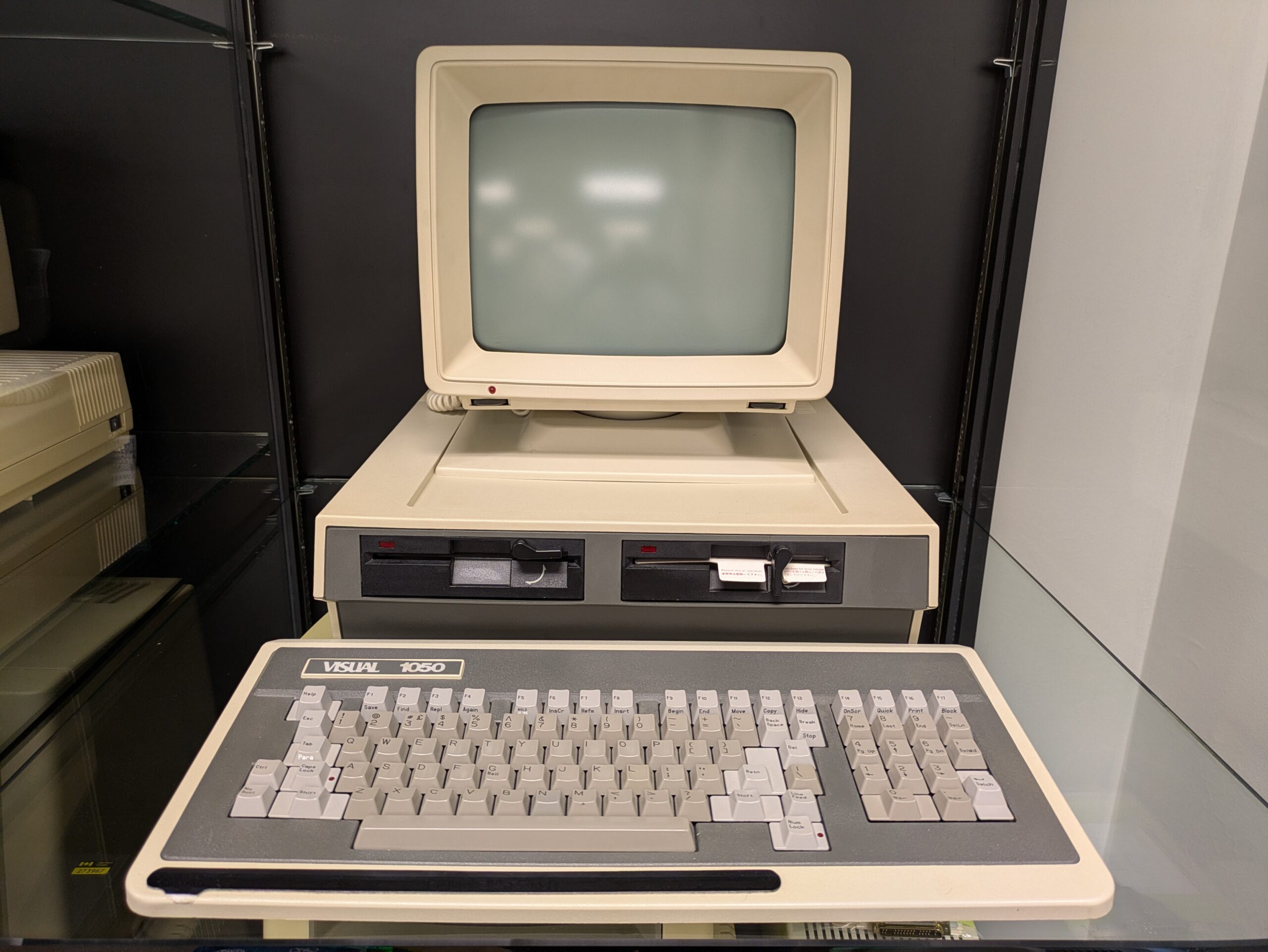
- Manufacturer: Visual Technology Inc.
- Type: Desktop computer
- Release date: 1983
- Cost at release: USD $2,695 (CAD ~$9,200 adjusted for inflation)
- MIPS: 0.58 (580 KIPS)
Hardware Specifications
- CPU: Z80A @ 4 MHz & MOS 6502 graphics coprocessor
- Memory: 128kB RAM, 8kb ROM
- Display: monochrome 80 chars. × 25 lines, 640 × 300 pixels
- Graphics: MOS Technology 6502
- Media: 2 x 400kb 5¼-inch floppy disks
- Input: Detached Keyboard Keytronic full stroke 93-key with numeric key pad & 17 function keys
- Dimensions: CPU – 5H × 17W × 17Din
- Mass: 15lbs
- Ports: RS-232 serial interface
O/S & Programming Languages & Software
- Operating system: CP/M Plus
- Supported Languages: CBASIC (bundled with the machine), Microsoft BASIC, FORTRAN, Pascal, and assembly language
- Bundled Software: WordStar, Microsoft Multiplan, GSX graphics extensions
Notables
- The Visual 1050 featured a rare dual-processor design, combining a Zilog Z80A for general computing and a MOS 6502 as a dedicated graphics coprocessor-an unusual setup for early 1980s business computers.
- Its advanced bit-mapped graphics (640×300) and bundled business software (WordStar, Microsoft Multiplan, DR Graph) set it apart from most CP/M machines of its era.
- The system originated from a design called the “Amigo” by Ontel before Visual Technology acquired and refined it.
- Although innovative, it was not a mainstream success and remains a niche collector’s item, notable for its technical ambition rather than commercial impact.
- Visual Technology, the company that made the Visual 1050, was an American firm best known for its video display terminals and later for computers like the 1050. After a period of growth and several acquisitions in the 1980s, the company faced financial difficulties and underwent bankruptcy and restructuring. Ultimately, Visual Technology was acquired by White Pine Software in 1993, marking the end of its independent operations.
- The Visual 1050 can now be emulated in MAME/MESS, preserving its legacy for enthusiasts.
Donated by: Dr. Arlen Michaels