Commodore VIC-20
[vin141]
The Commodore VIC-20 holds a landmark position in computing history as the first personal computer to sell over one million units, making it a pivotal force in democratising home computing and bringing technology to the masses rather than just the classes. Released in 1981 at the groundbreaking price of $299.95, it was the first color home computer to retail for under $300, featuring a MOS 6502A processor, 5KB of RAM (with 3.5KB available to users), and an accessible BASIC 2.0 programming environment that transformed countless households into learning laboratories. Its significance extends beyond raw specifications: the VIC-20 represented Commodore founder Jack Tramiel’s philosophy that “computers should be for the masses, not for the classes,” and its user-friendly design, affordable peripherals (including the first modem under $100), and celebrity marketing campaign featuring William Shatner helped remove the intimidation factor surrounding personal computers, ultimately inspiring an entire generation of programmers and tinkerers who would shape the digital revolution including Linus Torvalds, creator of Linux, for whom the VIC-20 was his first computer.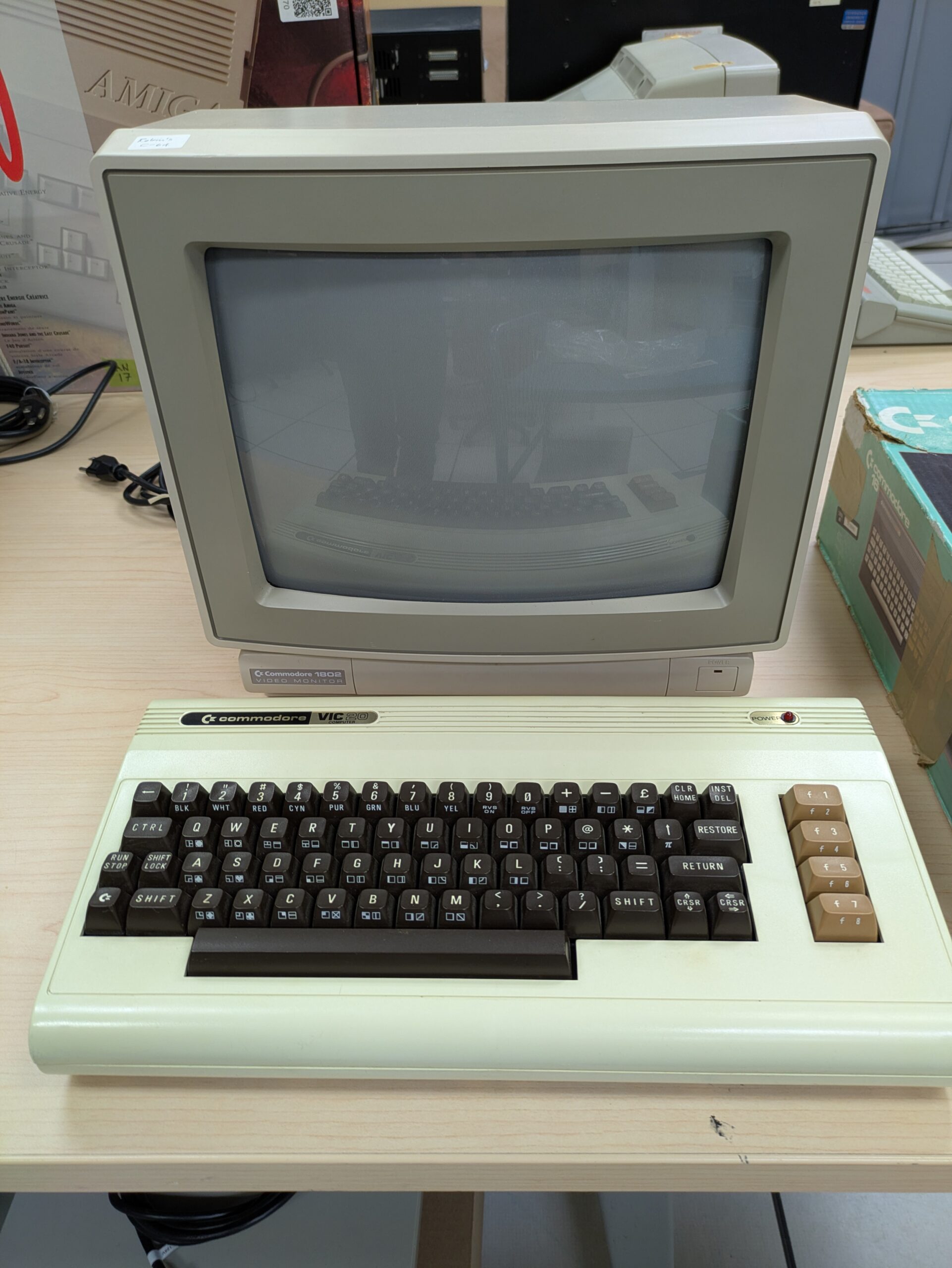
- Manufacturer: Commodore
- Type: Gaming Console / Personal Computer
- Release Date: 1981
- Cost at release: USD $299.95 (CAD ~$1,150 adjusted for inflation)
- MIPS: 0.09 (90 KIPS)
Hardware Specifications
- CPU: MOS Technology 6502A running at approximately 1.02 MHz (NTSC) / 1.10 MHz (PAL)
- RAM: 5 KB standard (3,583 bytes free for BASIC programming), expandable up to 32 KB with external cartridges
- ROM: 20 KB total (8 KB BASIC 2.0, 8 KB Kernal, 4 KB character set)
- Graphics: VIC-I 6560/6561 video chip
- Text mode: 23 rows x 22 columns (uppercase/lowercase, graphics characters)
- Graphics resolution: 176 x 184 pixels, with 16 background colors and 8 border colors
- Sound: VIC-I chip with 3 pulse wave generators and 1 white noise generator spanning ~128 notes
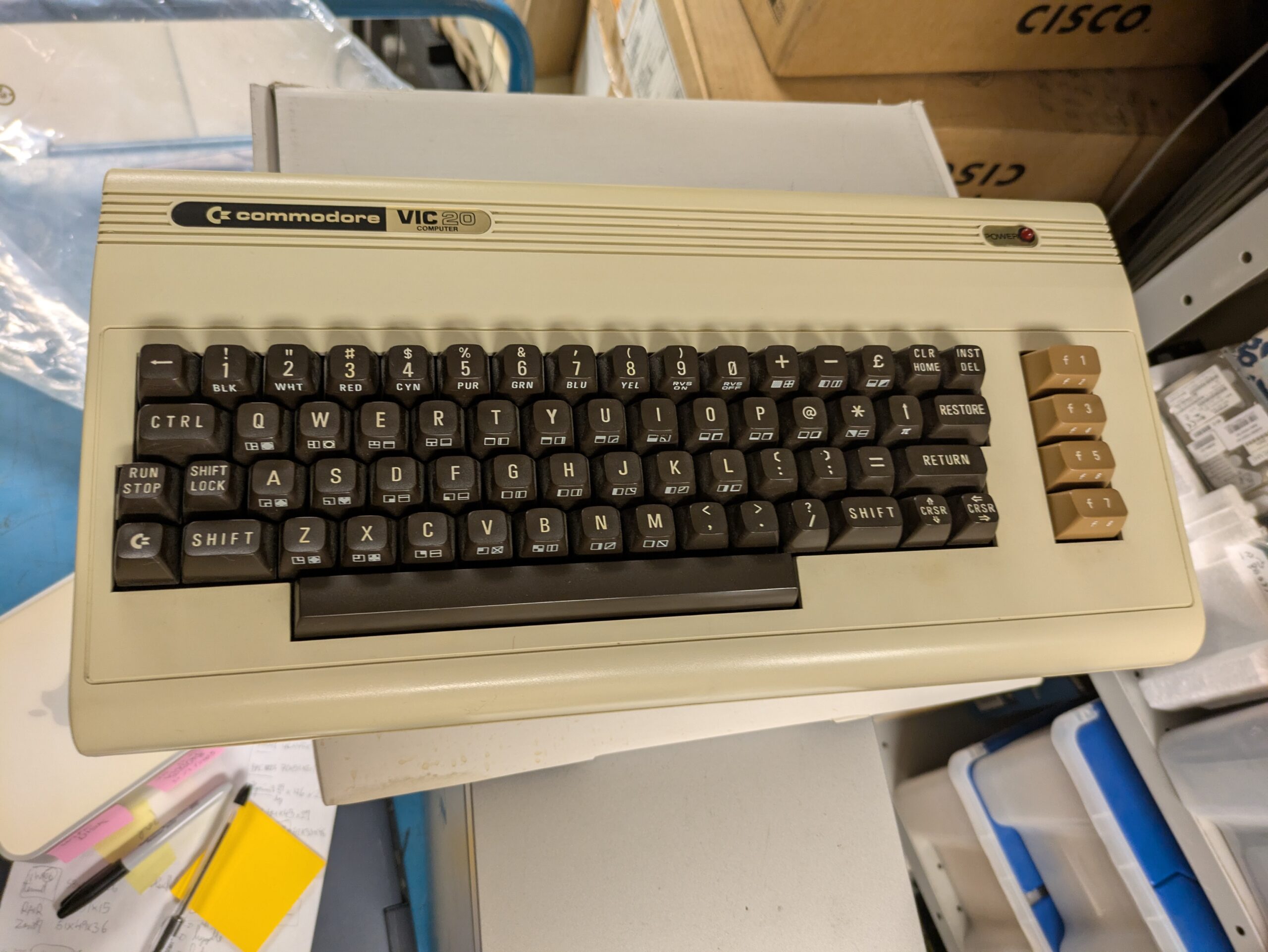
- Keyboard: 66-key QWERTY-style with 4 function keys
- I/O Ports:
- Expansion port (44-pin) for cartridges and memory expansions
- Audio/Video output (5-pin) for monitor or TV connection via RF modulator
- Serial bus (IEEE-488 compatible) for disk drives and printers
- Cassette port for Datasette tape drives
- User port (RS-232 or Centronics compatible)
- Joystick/game port (9-pin)
- Power Supply: 9 V AC with model variations (early 2-pin to later 7-pin DIN) ~25 watts
- Dimensions: approximately 403 mm (W) x 204 mm (D) x 72 mm (H)
- Weight: approximately 1.8 kg (about 4 pounds)
Operating System & Programming Languages
-
Operating System: built-in firmware with the user interface being the CBM BASIC V2.0 programming language interpreter stored in ROM
- Supported Languages: BASIC 2.0 (native, built-in), Assembly (machine language), Cartridge-based languages/tools (occasionally)
Notables
- The Commodore VIC-20 was famously nicknamed “The Friendly Computer” due to its approachable design and ease of use for beginners.
- It was the first color computer to sell for under $300 USD, making affordable home computing widely accessible.
- The VIC-20 was the first computer to sell over one million units, marking a milestone in personal computer popularity.
- It introduced affordable modems to the mass market, including the VICModem, one of the first sub-$100 modems.
- Linus Torvalds, creator of Linux, famously cited the VIC-20 as his first computer, inspiring a generation of future programmers.
- Its advertising campaign included William Shatner as spokesperson, leveraging celebrity appeal to popularize home computing.
- The VIC-20’s cartridge slot enabled plug-and-play software and hardware expansions—an innovation for user convenience.
- It helped Commodore establish dominance before the success of the Commodore 64, setting the stage for 1980s home computing.
- Its place in computing history is as a revolutionary entry-level computer that broke price barriers and expanded the market beyond hobbyists to the general public.
Media
Donated by: Mike Goetz (School of Industrial Design)