Apple Power Macintosh 7200/75
[Vin142]
The Power Macintosh 7200/75 was a landmark entry-level machine in Apple’s transition to PCI architecture, debuting at the 1995 MacWorld Expo and offering significant performance improvements over its NuBus-based predecessors, thanks to a PowerPC 601 CPU and competitive pricing. Its claim to fame was bringing PCI expansion and easier internal accessibility, features previously reserved for higher-end Macs, to mainstream education and business users, making upgrades, repairs, and networking simpler in institutional museum and university settings. The 7200 was quite popular, widely adopted for its reliability and cost-effectiveness at a time when Apple needed momentum, and it helped bridge the gap between classic Mac hardware and the modern era of PowerPC-based systems.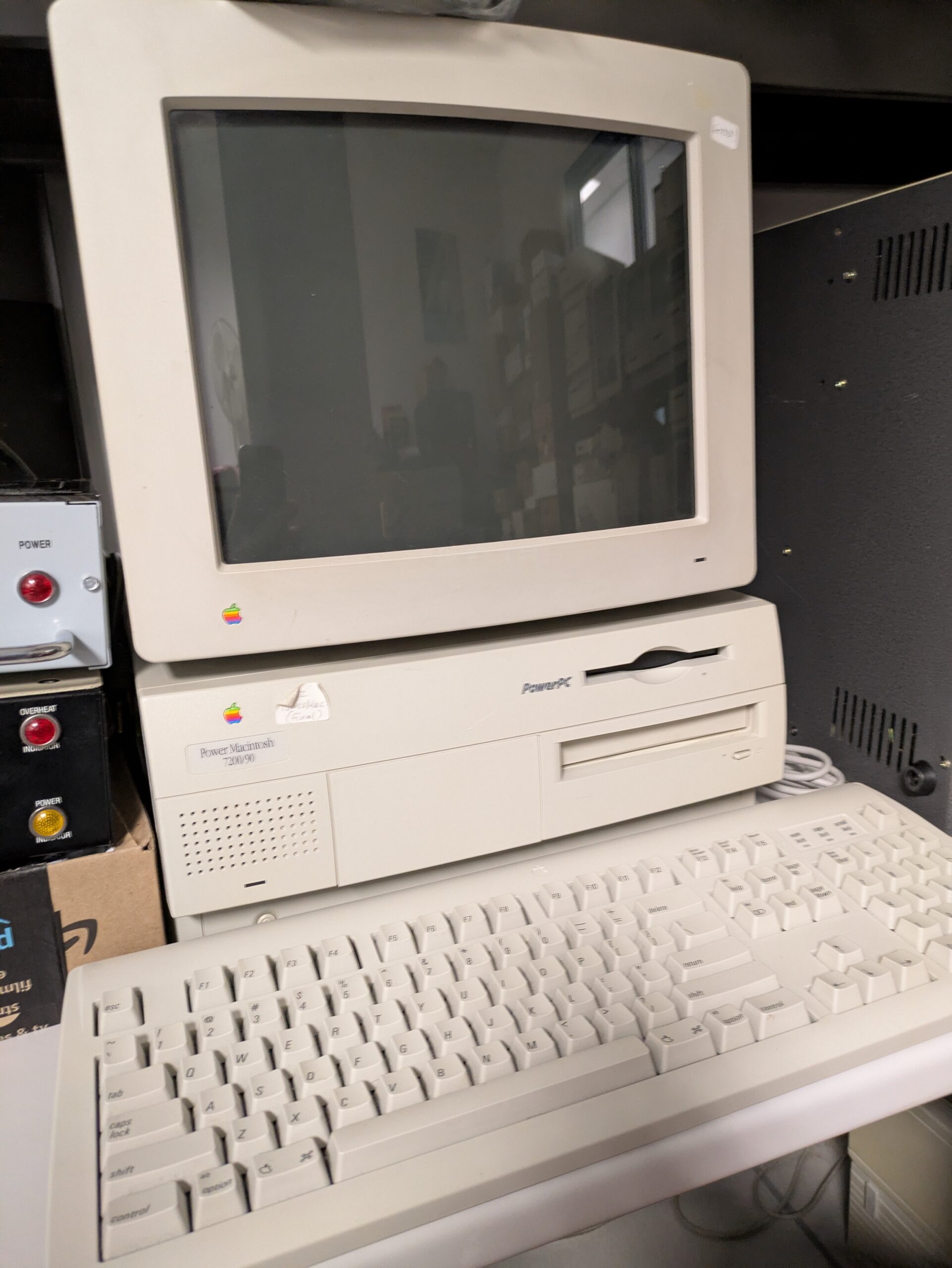
- Manufacturer: Apple Computer Inc.
- Released: 1995
- Type: Personal Desktop Computer
- Cost at release: USD $1,699 (CAD ~$4,300 adjusted for inflation)
- MIPS: 28
Hardware Specifications
- CPU: 75 MHz PowerPC 601 (with integrated FPU and 32K L1 cache) (RISC)
- Memory: 8 MB standard, expandable to 256 MB using four 168-pin DIMM slots
- Hard Drive: 500 MB SCSI
- Optical Drive: 4x CD-ROM
- Video Memory: 1 MB VRAM (soldered), expandable to 4 MB
- Expansion Slots: 3 PCI slots
- Ports: 1 ADB, 2 GeoPort serial, SCSI DB-25, AAUI and 10Base-T Ethernet, printer, modem, microphone
- Power Supply: 150W
- Weight: ~10 kg
Operating System & Programming Languages
- O/S: Mac OS 7.5.2 and supported operating system versions up to Mac OS 9.1
- Programming Languages: Its software ecosystem included native support for classic Macintosh applications and Apple’s graphical user interface. From a programming perspective, it could run software written in languages commonly used on the Mac platform at the time, such as:
- Classic Mac programming languages: Pascal, C, and C++
- AppleScript for automation and scripting tasks
- Assembly language for low-level programming on PowerPC architecture
- Other popular languages with Macintosh development environments: BASIC variants, Fortran, and later Java (via third-party runtime)
Notables
- The “Power” in Power Macintosh referred primarily to the use of the PowerPC processor line, a powerful RISC-based CPU architecture developed by Apple, IBM, and Motorola.
- First entry-level Mac to feature industry-standard PCI expansion slots, replacing proprietary NuBus
- Featured the innovative “Outrigger” swing-out chassis design for easy serviceability, a significant departure from previous Mac designs
- Available in a rare “PC Compatible” variant (7200/120) with a PCI card containing a 100 MHz Pentium processor, allowing it to run Windows
- Unlike its siblings (7500/8500), the 7200 had its PowerPC 601 CPU soldered directly to the motherboard, making it non-upgradeable, a cost-cutting measure that limited its appeal
- Represented Apple’s strategic push to compete with Windows NT/Pentium systems while transitioning the Mac platform to modern standards
Donated by: Dr. Arlen Michaels