Apple IIGS
[Vin144]
The Apple IIGS (1986–1992) represents a pivotal transitional machine in computing history, bridging the 8-bit Apple II line with more advanced 16-bit architecture while maintaining full backward compatibility with the entire Apple II software library. Arriving six months before the Macintosh II, it was Apple’s first computer with a color graphical user interface and a sleek platinum case matching the Macintosh design language. Powered by a Western Design Center 65C816 16-bit processor, the Apple IIGS ran at a deliberately conservative 2.8 MHz, though it was certified for over 4 MHz, to avoid cannibalizing Macintosh sales, illustrating how business strategy sometimes constrained engineering potential.
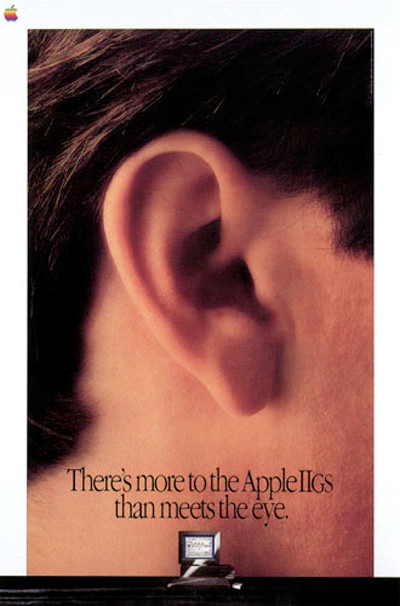
Its multimedia capabilities were revolutionary for its era: the Ensoniq 5503 wavetable synthesis chip offered 32 oscillator channels producing 16-voice stereo audio with 64 KB of dedicated sound RAM, arguably the richest sound of any personal computer at the time. Visually, its “Super High-Resolution” graphics supported up to 4,096 colors from a 12-bit palette, with up to 3,200 colors displayable simultaneously through palette manipulation. Despite selling only about 1-1.5 million units over six years, the Apple IIGS is remembered as a technically impressive and innovative bridge between the 8-bit Apple II heritage and the modern era of graphical computing, demonstrating both the possibilities and constraints of corporate-era personal computing.
- Manufacturer: Apple Computer Inc.
- Released: 1986
- Type: Personal Computer
- Cost at release (no monitor): USD $999 (CAD ~$3,500 adjusted for inflation)
- Cost with peripherals: CAD $6,500 (adjusted for inflation)
- MIPS: 0.22 MIPS (millions of instructions per second). This relatively modest performance was due to Apple’s deliberate decision to limit the clock speed despite the processor being certified for 4+ MHz operation.
- Hardware Specifications
-
- CPU: Western Design Center WDC 65C816 (16-bit)
- RAM (Original 1986): 128 KB expandable to 8 MB
- ROM (Original): 128 KB
- Video Controller: Custom Video Graphics Controller (VGC)
- Sound Chip: Ensoniq 5503 digital oscillator chip
- Expansion Slots: Seven Apple II Bus slots (50-pin card-edge)
- Floppy Drives: Support for 3.5″ (800 KB) and 5.25″ (140 KB) formats
- Hard Drive Support: SCSI interface available via expansion card
- Weight: 4.1 kg
- Operating System & Programming Languages
-
- O/S:
- Native 16-bit Operating Systems:
- ProDOS 16 (1986-1988): The initial operating system shipped with the IIgs, based on the 8-bit ProDOS but modified for 16-bit hardware. However, it was written primarily in 8-bit code and didn’t fully utilize the IIgs’s capabilities.
- GS/OS (System Software 4.0-6.0.1, 1988-1993): Apple’s true 16-bit operating system written entirely in 65816 code. It featured a Macintosh-like GUI, resource forks, device drivers, AppleShare networking, disk caching, and support for storage devices up to 4 GB. The final version was System 6.0.1, released in 1993.
- GNO/ME: A third-party UNIX-like multitasking kernel that provided preemptive multitasking under the GUI.
- Backward-Compatible 8-bit Operating Systems:
- The IIgs could run all earlier Apple II operating systems with approximately 95% software compatibility:
- Apple DOS 3.2 and 3.3
- ProDOS 8
- Apple Pascal
- CP/M (with appropriate hardware)
- Programming Languages:
- Built into ROM
- Applesoft BASIC: Built into ROM and available immediately upon startup, even without loading an operating system.
- Machine Language Monitor: Also in ROM, allowing simple assembly language programming.
- Available Development Languages
- Assembly Language: 65816 assembly programming through tools like APW (Apple Programmer’s Workshop), Apple’s command-line development environment similar to Macintosh Programmer’s Workshop.
- Pascal: Supported through Apple Pascal operating system.
- C: Available through APW and other development tools.
- BASIC variants: Including Integer BASIC and Applesoft BASIC.
- FORTRAN: Available through third-party compilers.
- Logo: Educational programming language support.
- COBOL: Through third-party implementations.
- The IIgs’s 65C816 processor could switch between 8-bit mode (for backward compatibility with 6502 code) and 16-bit mode, allowing it to run software written in either architecture.
- Notables
-
- First Apple computer with a color GUI, predating the Macintosh II by six months
- First Apple computer with Apple Desktop Bus (ADB), which became standard across all Apple computers for over a decade
- State-of-the-art Ensoniq audio chip produced the best sound of any personal computer in its era, with capabilities exceeding contemporary Macs
- The “GS” officially stood for “Graphics and Sound”, highlighting its enhanced multimedia capabilities as its defining features.
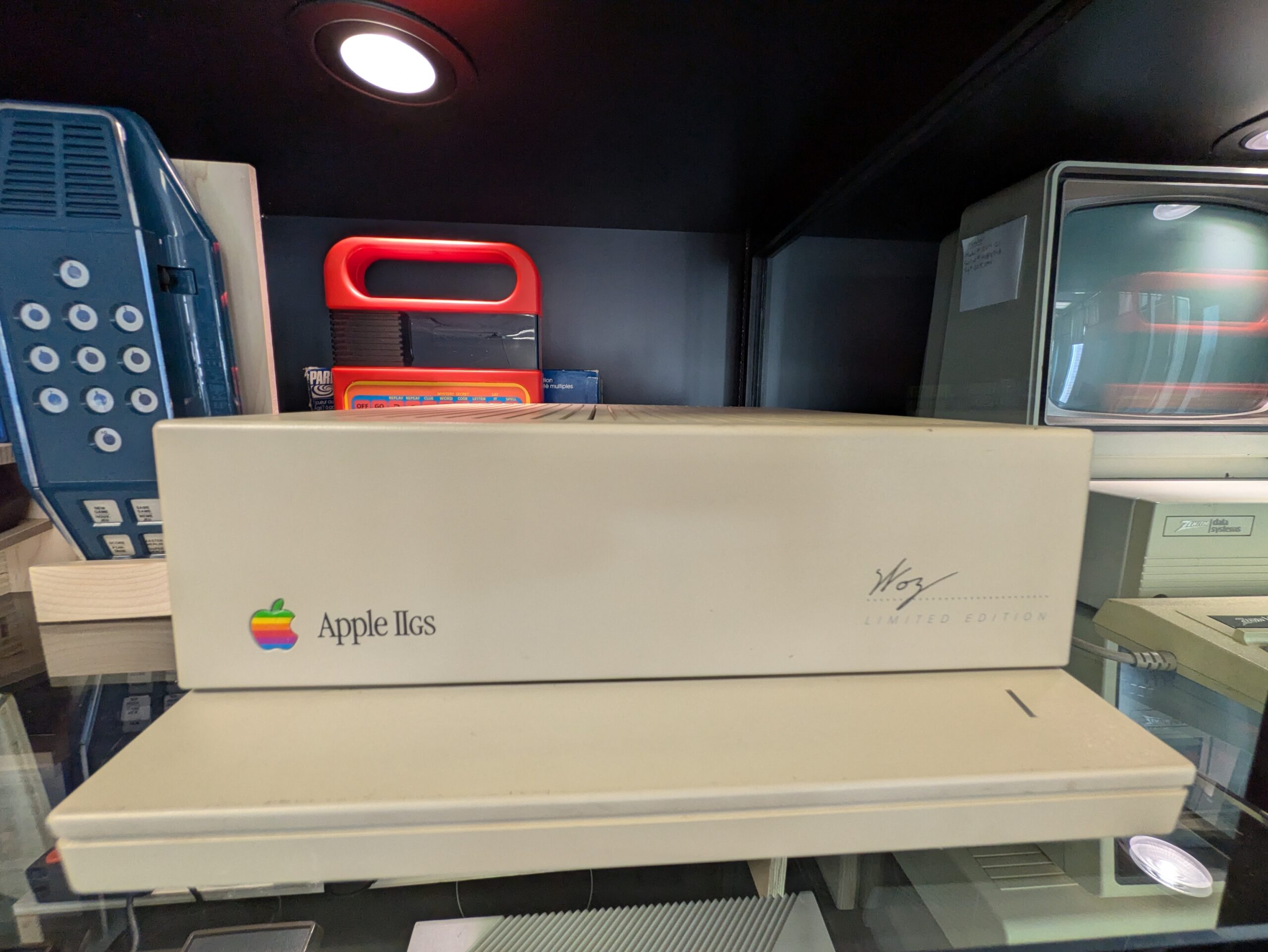
- Last computer in the original Apple II line designed by Steve Wozniak. “Woz” Limited Edition: The first 50,000 units featured Steve Wozniak’s signature printed on the front case with “Limited Edition” printed below. Buyers received a certificate of authenticity signed by Wozniak and 12 key Apple engineers, plus a personal letter from Woz himself. These limited editions are highly collectible today.
Share: Twitter, Facebook
Short URL:
https://carleton.ca/scs/?p=22806