Xerox 820
[Vin15]
The Xerox 820 was an early 1980s 8-bit desktop computer notable for using the popular CP/M operating system and a Zilog Z80A processor, offering compatibility with a wide range of business software at the time. Its claim to fame was being Xerox’s first widely marketed personal computer, leveraging the company’s strong reputation in office technology, but it was criticized for being expensive, slow, and lacking innovation compared to competitors like the IBM PC and Osborne 1. The 820 was not a major commercial success and failed to meet Xerox’s sales expectations
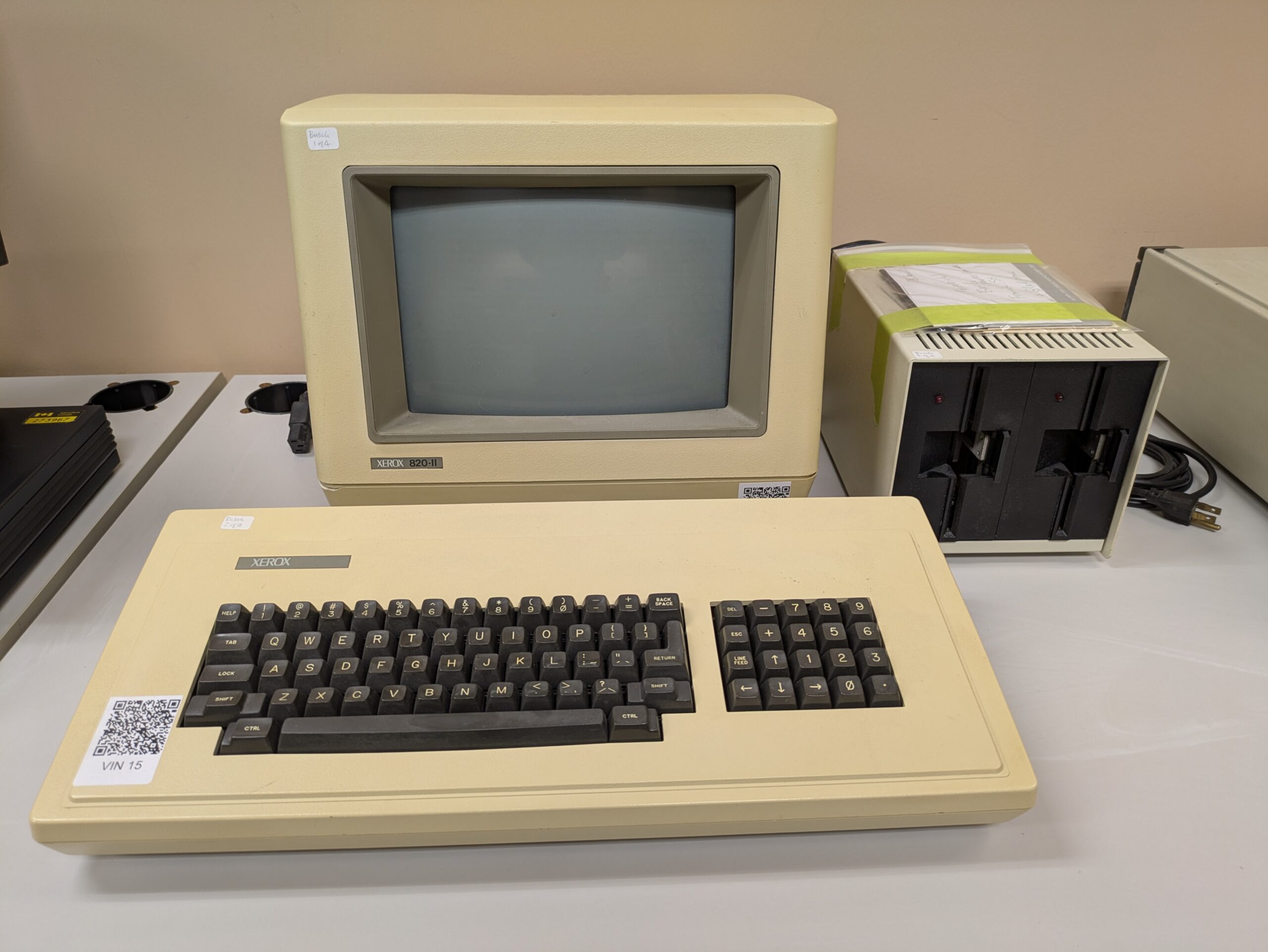
- Manufacturer: Xerox
- Type: Desktop computer
- Release Date: June 1981 (Discontinued 1985)
- Cost at release: USD $2,495 (CAD ~$44,000 adjusted for inflation)
- MIPS: 0.29 (290 KIPS)
Hardware Specifications
- CPU: Zilog Z80A microprocessor, clocked at 2.5 MHz (original 820) or 4.0 MHz (820-II)
- Memory: 64 KB RAM (expandable in later models), 4–8 KB ROM
- Display: 12-inch monochrome CRT display, 80 x 24 characters text, two intensity levels
- Storage options: two 5¼-inch floppy drives (81 KB per diskette) or two 8-inch floppy drives (241 KB per diskette); optional 8.19 MB rigid disk drive in later models
- Ports: two RS-232 serial ports, optional parallel ports, keyboard port, printer port
- Keyboard: 96-character ASCII keyboard with numeric keypad and special function keys
- Weight: approximately 13.6 kg (30 lbs)
Operating System & Programming Languages
-
Operating System: CP/M 2.2 operating system
-
Supported Languages: Microsoft’s BASIC-80, Turbo Pascal, FORTRAN, and PL/I, as well as many other compilers and interpreters available for CP/M systems
Notables
- The Xerox 820 was codenamed “The Worm,” a playful jab at Apple, as Xerox saw Apple as its main competitor.
- Its hardware was based on the Ferguson Big Board kit, making it less innovative and mostly assembled from off-the-shelf components.
- Xerox rushed the 820 to market to beat the IBM PC, resulting in a product criticized for being expensive, slow, and lacking in original design.
- The 820 could switch between 8-bit and 16-bit modes with an optional 8086 processor card in later models, a rare feature at the time.
- Xerox hoped to sell 100,000 units in two years but failed to reach this goal, and the 820 was quickly overshadowed by the IBM PC.
- The 820’s place in history is as Xerox’s first widely marketed personal computer, but it is remembered more for missed opportunities and lack of innovation than for market impact.
Reference: https://en.wikipedia.org/wiki/Xerox_820
Donated by: Arlen Michaels