Nixdorf LK-3000
[Vin152]
This 1979 device qualifies as a modular pocket/handheld/palmtop computer featuring a base unit with just a keyboard, 16-character LED display, cartridge slot, and batteries, no built-in CPU or RAM. Functionality depended entirely on swappable cartridges providing processors (e.g., for calculators, languages, or translators), making it a pioneering example of cartridge-based computing.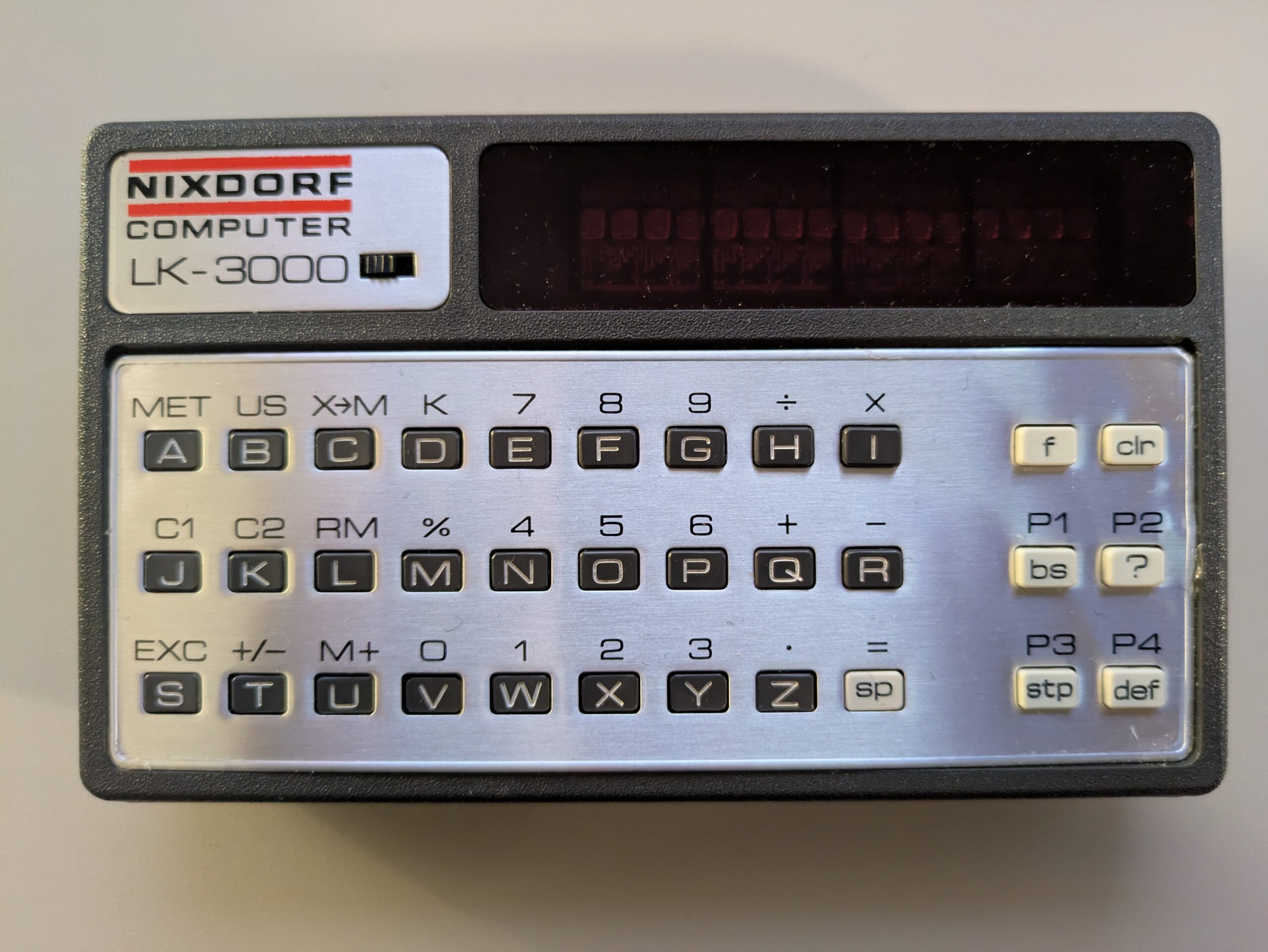
- Manufacturer: Nixdorf Computer AG
- Type: Palmtop PC
- Release Date: 1979
- Cost at release: CAD $2,000 (adjusted for inflation)
- MIPS: ~0.1 (100 KIPS) [ no standardized benchmark exists for this non-general-purpose system]
Hardware Specifications
- Onboard electronics are minimal and support-only: MOS-LSI display controller, keyboard matrix decoder, NiCd battery charger circuit, voltage regulators (for 6V input to logic levels), and power switching for cartridge detection. No main processor or memory chips in base; cartridges supply these (e.g., CMOS RAM with backup battery in notebook module, simple 4/8-bit CPUs in others).
- Keyboard: QWERTY-style, cartridge-dependent keys and functions
- Power: 4× AA NiCd batteries (6V), external AC adapter jack.
- Interfaces: Single proprietary cartridge slot providing compute resources; no ports or storage.
- Dimensions: 159 × 102 × 33 mm (6.25 × 4 × 1.3 inches)
- Weight: 340 grams (12 oz)
Operating System & Programming Languages
- Operating System:The Nixdorf LK-3000 lacks a traditional operating system, as its base unit contains no processor, memory, or firmware, functionality is entirely provided by inserted cartridges, each with its own embedded ROM-based firmware tailored to specific tasks like translation or calculation
- Supported Languages: No high-level computer languages (e.g., BASIC, Forth) could be run natively, as documented cartridges focus on fixed-function appliances rather than programmability.
Notables
- Among earliest cartridge-based pocket “computers,” prefiguring Game Boy or modern app ecosystems; from Nixdorf, Europe’s 4th-largest computer firm and banking tech leader. It was released 10 years before the Atari portfolio.
- Built by Heinz Nixdorf’s firm (founded 1952), which revolutionized affordable office computers like the 820 before merging into Siemens Nixdorf.
- Extremely fragile custom connectors led to high failure rates; preserved in museums like Computer History Museum with original boxes and cases. Not a Computer: Base is inert “dumb” shell cartridges provide everything, even backup batteries
Donated by: Andrew Miles